
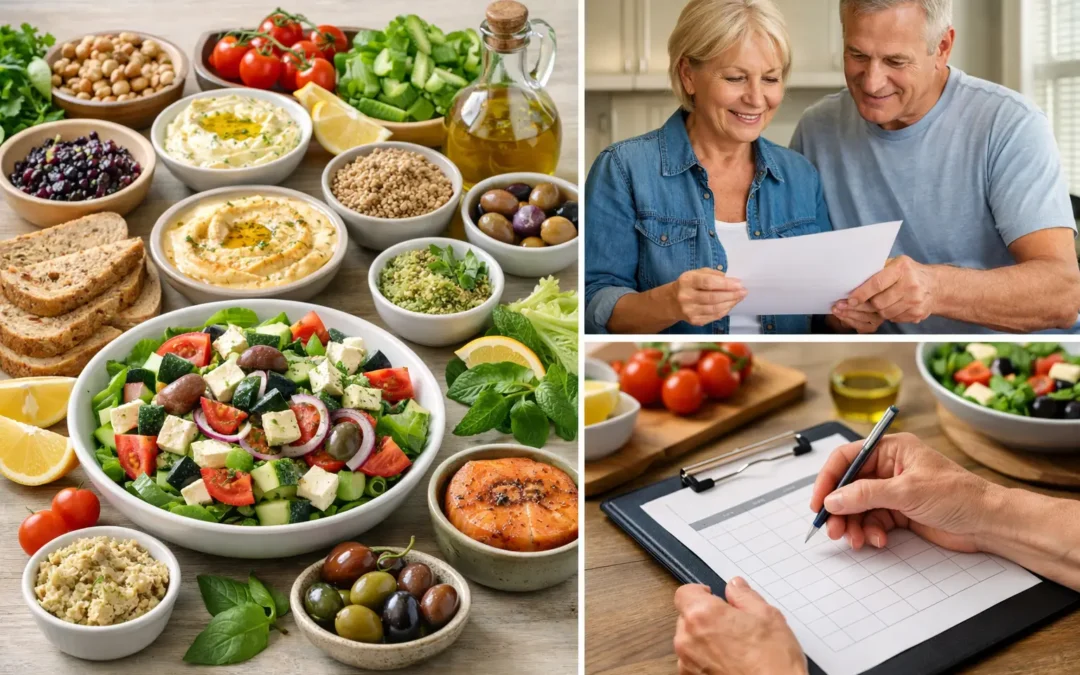
!Featured image: Mediterranean meal prep with olive oil, vegetables, grains and fish on a kitchen bench Alt text: Mediterranean-style meal prep with olive oil, chopped vegetables, whole grains and baked fish on a home kitchen bench
Somewhere around 4 pm, many people hit the wall, stare into the fridge, and wonder how healthy eating became such hard work. If that sounds familiar, a beginner mediterranean diet meal plan printable can take the pressure off. Instead of guessing what to eat, you follow a simple pattern built around vegetables, beans, fish, wholegrains, fruit, yoghurt, nuts and olive oil. Nothing fancy, nothing extreme, and no need to live on lettuce like a sad rabbit.
Quick answer
A beginner mediterranean diet meal plan printable gives you a clear, realistic way to start eating in the Mediterranean style without overthinking every meal. The basic idea is simple: fill most meals with vegetables, add beans, fish, eggs or yoghurt for protein, choose wholegrains more often, use extra virgin olive oil as your main fat, and keep highly processed foods as occasional extras. A 7-day plan works well because it gives structure while still feeling flexible.
3 key takeaways
- The Mediterranean diet is easier to follow when you repeat a few reliable breakfasts, lunches and dinners.
- A good printable plan should be flexible, not rigid. Swaps matter more than perfection.
- For adults over 50, this style of eating can support heart health, steady energy, healthy weight and better long-term eating habits.
Why a beginner mediterranean diet meal plan printable works so well
When you are new to this way of eating, the biggest hurdle usually is not the food itself. It is decision fatigue. If every meal needs a fresh plan, good intentions can disappear the minute life gets busy.
A printable plan solves that by turning healthy eating into a short list of doable meals. You know what to buy, what to prep, and what is for dinner before hunger starts making all the decisions. That is especially helpful if you are trying to eat better for blood pressure, cholesterol, weight, inflammation or simply to feel less flat by mid-afternoon.
The Mediterranean pattern also suits real households. It is built on familiar ingredients, not rare powders or expensive specialty items. Tinned beans, frozen veg, oats, eggs, salmon, yoghurt, brown rice and olive oil do plenty of heavy lifting here.
If you want more simple ways to get started, read our Mediterranean diet for beginners guide.
!In-article image: older couple preparing a Mediterranean dinner with vegetables, herbs and olive oil Alt text: Healthy older couple preparing a Mediterranean-style dinner with fresh vegetables, herbs and olive oil in a home kitchen
Want your own Mediterranean Diet eBook, Reports & Recipes? Get it here for $27.
What to eat on a beginner mediterranean diet meal plan printable
Think less about strict rules and more about a reliable plate. Half the plate is vegetables. Then add a source of protein such as fish, beans, lentils, eggs, yoghurt or a modest portion of chicken. Round it out with wholegrains or starchy veg, then finish with olive oil, herbs, nuts or seeds for flavour and satisfaction.
Fruit usually works well as a snack or simple dessert. Cheese can fit in small amounts. Red meat is better kept occasional rather than daily. Sweets are not banned, but they stop being everyday staples.
It also helps to keep a few backup foods in the pantry and freezer. A tin of tuna, chickpeas, frozen spinach, brown rice packets and soup ingredients can rescue a week that has gone off the rails.
Your simple 7-day starter plan
This 7-day plan is designed to be easy to print and easy to repeat. If a meal does not suit you, swap it with another from the week. That is not cheating. That is normal life.
Day 1
Breakfast is Greek yoghurt with berries, oats and walnuts. Lunch is a wholegrain wrap with hummus, salad and tinned salmon. Dinner is baked chicken, roast pumpkin and green beans with olive oil.
Day 2
Breakfast is porridge topped with sliced apple, cinnamon and almonds. Lunch is lentil soup with a side salad. Dinner is grilled fish with brown rice and steamed broccoli.
Day 3
Breakfast is wholegrain toast with avocado and a poached egg. Lunch is leftover fish rice bowl with cucumber, tomato and herbs. Dinner is chickpea and vegetable stew with a spoon of natural yoghurt.
Day 4
Breakfast is Greek yoghurt with pear and chia seeds. Lunch is a tuna, white bean and tomato salad with olive oil and lemon. Dinner is turkey or chicken meatballs in tomato sauce with wholemeal pasta and spinach.
Day 5
Breakfast is porridge with banana and pumpkin seeds. Lunch is a veggie omelette with a side salad. Dinner is baked salmon, sweet potato and asparagus.
Day 6
Breakfast is toast with peanut butter and sliced banana. Lunch is leftover salmon with mixed leaves and quinoa. Dinner is a bean and vegetable soup with crusty wholegrain bread and a drizzle of olive oil.
Day 7
Breakfast is eggs with sautéed mushrooms and tomato on wholegrain toast. Lunch is hummus, cucumber, capsicum and feta on rye. Dinner is a simple Mediterranean tray bake with vegetables, chickpeas and chicken or extra chickpeas.
How to make the plan easier to follow
A meal plan only helps if it fits your week. If you cook for one, halve recipes and use leftovers on purpose. If you cook for a family, keep the base meal Mediterranean and let others add extras if they want. You do not need to run a short-order kitchen.
Batch cooking helps, but it does not need to turn your Sunday into a military operation. Roast a tray of vegetables, cook a pot of brown rice or quinoa, boil a few eggs, and wash salad greens. That alone can save you from several poor choices during the week.
If mornings are rushed, choose two breakfasts and rotate them. If evenings are your hard spot, make dinner the first thing you simplify.
Want your own Mediterranean Diet eBook, Reports & Recipes? Get it here for $27.
A brief Mediterranean comfort-food recipe
Tomato, white bean and spinach baked eggs
This is the sort of meal that feels cosy without being heavy. Sauté one diced onion and two cloves of garlic in olive oil. Add a tin of crushed tomatoes, one drained tin of white beans, a few handfuls of spinach, dried oregano and black pepper. Simmer for 8 to 10 minutes, then make small wells and crack in 3 to 4 eggs. Cover and cook until the eggs are just set. Finish with parsley and a little feta if you like.
Serve with wholegrain toast.
If beans are not your thing, use chickpeas or lentils. If you avoid dairy, leave out the feta. If eggs do not suit, stir through leftover chicken near the end and warm it through. The point is the pattern: vegetables, protein, olive oil and simple ingredients.
Common mistakes beginners make
The first mistake is trying to be perfect. If your pantry still contains a few old habits, that is fine. Use them up and shift gradually. A plan you can follow at 80 per cent is usually more useful than one you quit after four days.
The second mistake is not eating enough at meals. People sometimes cut back too far, then end up grazing on whatever is nearby. Mediterranean eating should feel satisfying. Olive oil, beans, yoghurt, nuts and wholegrains all help with that.
The third mistake is assuming every meal must be cooked from scratch. It depends on your schedule, energy and budget. A quality tin of fish, bagged salad and microwaved brown rice can still make a very solid Mediterranean lunch.
FAQ
Do I need to give up bread on the Mediterranean diet?
No. Bread can fit well, especially wholegrain or sourdough styles. Portion and what goes with it matter more than avoiding it completely.
Is this way of eating good for weight loss?
It can be, because it tends to be filling and easier to sustain than restrictive plans. Weight loss still depends on overall intake, activity, sleep and consistency.
Can I follow this if I live alone?
Absolutely. In fact, simple Mediterranean meals are often ideal for one or two people because leftovers work beautifully for lunch the next day.
Want your own Mediterranean Diet eBook, Reports & Recipes? Get it here for $27.
Medical disclaimer
This article is for general education only and is not personal medical advice. Speak with your doctor or dietitian if you have a medical condition or take medication.
References
Harvard T.H. Chan School of Public Health Mayo Clinic Oldways Monash University The University of Sydney
A printable plan is not about being strict. It is about making the next meal easier than the last one, so healthy eating finally feels doable on an ordinary Tuesday.
Get well and stay well, Ray Baker


