
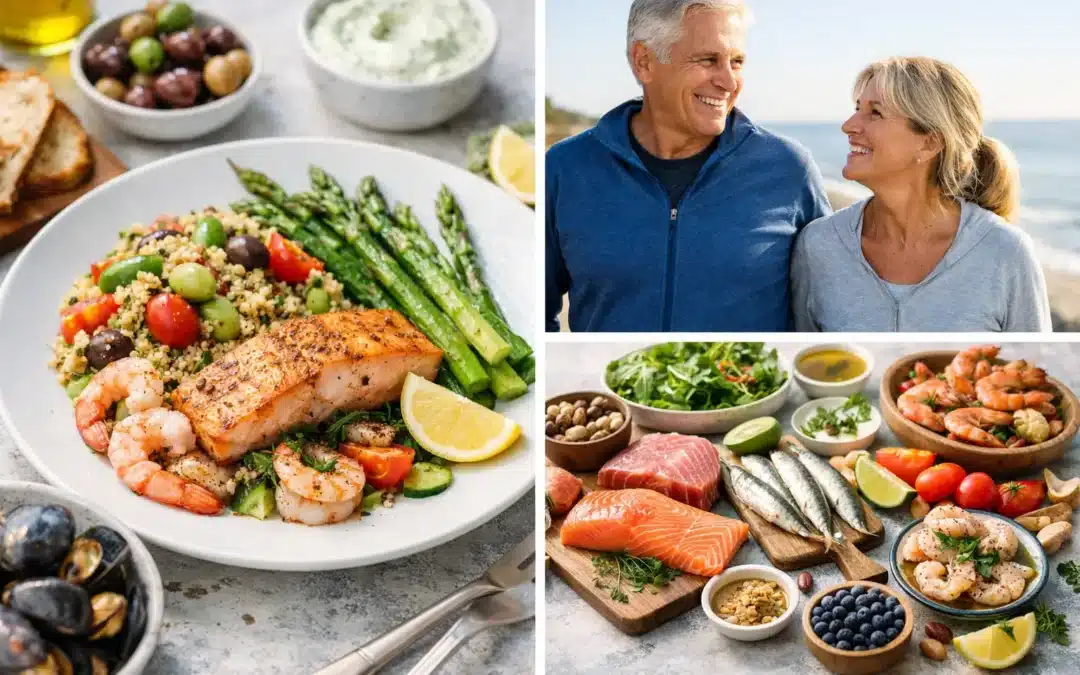
Plenty of people hit the same wall around midlife - they want to eat better, feel lighter, and keep meals heart-friendly, but they do not want to live on salad leaves and good intentions. A pesco mediterranean diet meal plan for beginners solves that nicely. You keep the familiar comfort of simple home cooking, add fish a few times a week, lean on olive oil, beans, grains and vegetables, and skip the fuss. No chef hat required. Just a better way to eat that still feels like real life.
Featured image: `pesco-mediterranean-meal-plan-beginners-salmon-vegetables.jpg` Alt text: Baked salmon with olive oil, roasted vegetables and whole grains on a Mediterranean-style dinner table
Quick answer
A pesco Mediterranean diet meal plan for beginners is a simple way of eating built around fish, vegetables, beans, whole grains, fruit, olive oil, nuts and yoghurt, with less red meat and fewer ultra-processed foods. For most beginners, the easiest start is one fish meal every second day, legumes on the other days, and breakfasts and lunches that repeat enough to stay manageable. Think simple, steady and sustainable, not perfect.
3 key takeaways
- Start with structure, not strict rules. Repeating a few breakfasts and lunches makes the week easier.
- Fish matters, but plants do the heavy lifting too. Beans, oats, veg, olive oil and nuts are part of the magic.
- If a meal plan feels too fancy or too expensive, it probably will not last. Simple wins.
Why the pesco Mediterranean approach works so well for beginners
For many adults over 50, the trouble is not knowing that healthy food exists. It is knowing what to cook on a Tuesday when energy is low and everyone is peckish by six o’clock. The pesco Mediterranean style helps because it gives you a clear pattern without turning dinner into homework.
You focus on fish and seafood as your main animal protein, then build around Mediterranean basics: extra virgin olive oil, vegetables, legumes, whole grains, herbs, fruit, nuts and fermented dairy like yoghurt. That pattern has been linked with better heart health, blood sugar control, inflammation management and long-term wellbeing. It also tastes like food you would actually choose, which helps more than any grand nutrition theory.
There is flexibility here too. If you do not love sardines, start with salmon or tinned tuna. If lentils are not your usual thing, try them in soup first. A beginner plan should feel reassuring, not like you have been dropped in the deep end without your floaties.
Want your own Mediterranean Diet eBook, Reports & Recipes? Get it here for $27.
What to eat on a pesco Mediterranean diet meal plan for beginners
The easiest way to picture your plate is this: half vegetables, a quarter protein, a quarter whole grains or starchy veg, with olive oil bringing the meal together. Fish gets the starring role several times a week, but not at every meal. In fact, relying only on fish can make the plan more expensive and less practical.
A good beginner pantry includes oats, brown rice, quinoa, tinned beans, chickpeas, tinned tomatoes, olive oil, herbs, nuts, Greek-style yoghurt, eggs, wholegrain bread, frozen vegetables and a couple of easy fish options. Fresh fish is lovely, but frozen fillets and good-quality tinned fish count just fine.
The foods to scale back are the usual suspects: processed meats, highly refined snack foods, sugary drinks and heavy takeaway meals that leave you feeling puffed up and underwhelmed. You do not need to ban them forever. You just stop letting them run the household.
In-article image: `mediterranean-meal-prep-fish-beans-olive-oil.jpg` Alt text: Mediterranean-style meal prep with fish, beans, chopped vegetables, olive oil and herbs in a bright home kitchen
If you want a broader starting point, our Mediterranean diet meal plan for beginners article can help you build from the basics before adding more seafood meals.
7-day pesco Mediterranean diet meal plan for beginners
Day 1
Breakfast is Greek-style yoghurt with berries, rolled oats and walnuts. Lunch is a wholegrain wrap with hummus, cucumber, tomato and leftover roast veg. Dinner is baked salmon with quinoa, green beans and a drizzle of olive oil and lemon.
Day 2
Breakfast is porridge with chopped apple, cinnamon and a few almonds. Lunch is lentil soup with a slice of wholegrain toast. Dinner is a chickpea and vegetable stew with a side salad and a spoonful of yoghurt.
Day 3
Breakfast is wholegrain toast with avocado and a poached egg. Lunch is tuna, white bean and parsley salad with olive oil and lemon. Dinner is grilled barramundi or another white fish with roasted sweet potato and broccoli.
Day 4
Breakfast is yoghurt with pear and pumpkin seeds. Lunch is leftover fish flaked into a grain bowl with tomato, cucumber and olives. Dinner is wholemeal pasta with tomatoes, garlic, spinach and sardines, or tinned salmon if sardines are a hard sell.
Want your own Mediterranean Diet eBook, Reports & Recipes? Get it here for $27.
Day 5
Breakfast is oats soaked overnight with chia and blueberries. Lunch is a bean salad with capsicum, red onion and feta. Dinner is prawn stir-fry Mediterranean-style, using olive oil, garlic, courgette, cherry tomatoes and brown rice.
Day 6
Breakfast is scrambled eggs with spinach and wholegrain toast. Lunch is leftover prawn rice bowl with extra greens. Dinner is baked cod or hoki with herbed potatoes and a large mixed salad.
Day 7
Breakfast is yoghurt, banana and chopped nuts. Lunch is tomato and bean soup with wholegrain toast. Dinner is a simple family-style meal of grilled fish, roast vegetables, couscous and fruit for dessert.
If you are cooking for one or two, repeat dinners and use leftovers for lunch. That is not boring. That is efficient, and frankly, a bit of a lifesaver.
How to make this meal plan easier and cheaper
The biggest mistake beginners make is trying to cook seven different elaborate dinners. You do not need a Mediterranean cooking show in your kitchen. You need three or four dependable meals you can rotate.
Tinned fish helps keep costs sensible, especially salmon, tuna and sardines. Frozen fillets are handy when fresh fish is either pricey or looking a bit sad at the shops. Beans stretch meals beautifully, so even a fish dinner can include chickpeas or lentils to make it more filling.
It also helps to choose one prep day. Wash salad greens, cook a grain, chop a few vegetables and make one simple dressing with olive oil, lemon and herbs. Suddenly lunch looks less like a packet of biscuits and a cup of tea.
There is one trade-off worth mentioning. Fish is healthy, yes, but variety matters. If you rely too heavily on large predatory fish, cost and mercury concerns can creep in. Mixing in salmon, sardines, trout, prawns, mussels and plant proteins keeps things balanced.
A simple Mediterranean comfort-food recipe
Tomato, white bean and fish bake
This is the sort of meal that feels cosy without knocking you flat afterwards. In a baking dish, combine one tin of cannellini beans, one tin of chopped tomatoes, two cloves of sliced garlic, a handful of olives, a splash of olive oil and a teaspoon each of oregano and parsley. Nestle two white fish fillets on top, season lightly, then bake at 200°C for about 20 minutes, or until the fish flakes easily.
Serve with steamed greens or a chunk of wholegrain bread. If you do not have white beans, chickpeas work well. If fish is off the menu that day, use extra beans and crumble a little feta over the top. It is forgiving, filling and tastes like you made more effort than you actually did.
Want your own Mediterranean Diet eBook, Reports & Recipes? Get it here for $27.
Common beginner questions about the pesco Mediterranean diet meal plan for beginners
Do I need to eat fish every day?
No. Two to four fish meals a week is a practical place to start for many people. The rest of the time, use beans, lentils, eggs or yoghurt alongside vegetables and whole grains.
Can I lose weight on this way of eating?
Many people do, especially if they move away from ultra-processed foods and oversized portions. But the main goal is a sustainable eating pattern that supports heart health, energy and long-term wellness.
What if I do not like cooking?
Keep it basic. Use tinned fish, bagged salad, microwaveable grains, frozen vegetables and one-pan meals. Healthy eating does not require a rustic farmhouse kitchen and unlimited enthusiasm.
A few final tips before you start
Keep breakfast and lunch simple enough that you can do them half-asleep. Save your effort for a few solid dinners. If one week goes pear-shaped, start again at the next meal rather than waiting for Monday, next month, or some magical future version of yourself who has perfectly labelled containers.
This way of eating works best when it feels normal. More olive oil, more veg, more beans, sensible portions of fish, and meals you would gladly eat again. That is the sweet spot.
Medical disclaimer: This article is for general education only and is not medical advice. Speak with your doctor or dietitian for personal guidance.
References
Harvard T.H. Chan School of Public Health Monash University Oldways Mayo Clinic The Heart Foundation
Get well and stay well, Ray Baker
