
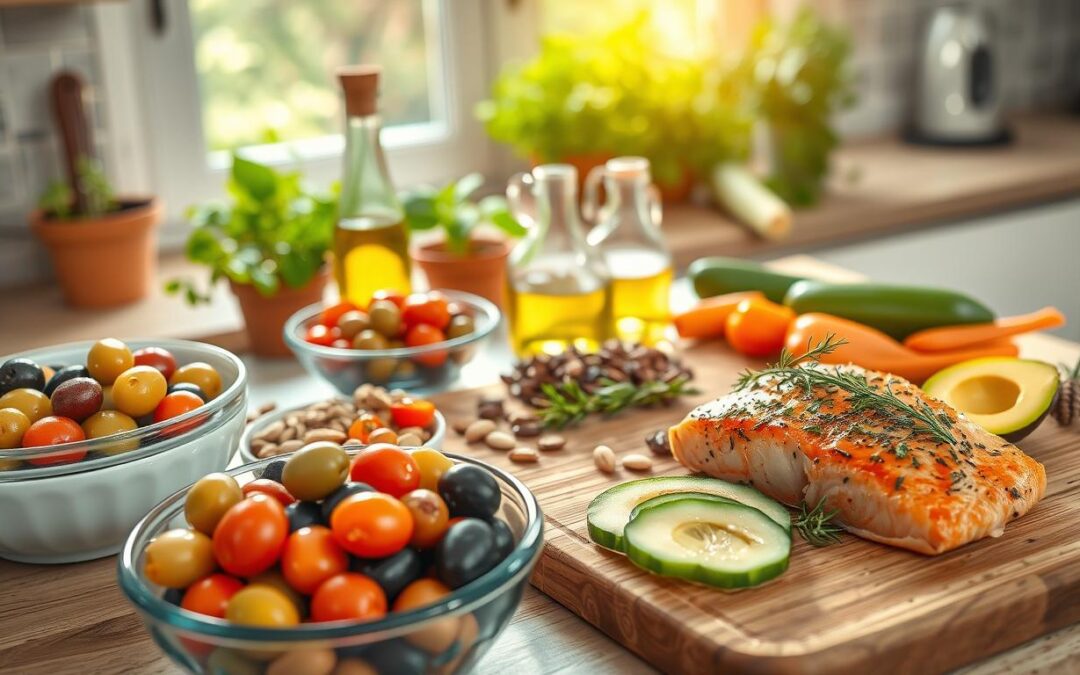
Have you ever wondered if the secret to easing your stiff joints is hiding right inside your kitchen pantry? If you struggle with daily movement, you are not alone. Osteoarthritis affects 10% of men and 18% of women age 60 and older, often turning simple morning routines into a genuine challenge.
Changing your habits is never easy, but it’s worth it. Adopting an anti inflammatory diet for arthritis pain is a science-backed way to feel better. By eating Mediterranean foods, you can naturally reduce swelling and move more easily.
This diet fills your body with antioxidants and healthy fats. These foods soothe your tissues from the inside out. It’s a tasty way to take care of your health without just taking medicine. Are you ready to start feeling better?
Get Your Meal Plan Now
Key Takeaways
- Osteoarthritis impacts a significant portion of the aging population.
- The Mediterranean approach focuses on whole, nutrient-dense ingredients.
- Systemic swelling can be reduced through consistent food choices.
- Small, manageable changes lead to long-term joint comfort.
- Healthy fats and antioxidants are essential for your daily wellness.
The Morning Stiffness Struggle: Why Your Kitchen is Your Best Pharmacy
Do you wake up with a lot of creaks and groans? It feels like you’ve aged a lot in just one night. Getting out of bed is like a slow-motion movie.
It’s not just because you need coffee. Your joints might be fighting back. Your kitchen has simple things to help you feel better in the morning.
Recognizing the Signs of Inflammation
Inflammation is not just a feeling. It’s a sign that your body is in trouble. When your joints hurt or feel stiff, it means your body is sending out signals.
These signals are like red flags. They show that your immune system is stressed. High levels of these signals can hurt your joints a lot.
You might see signs like:
- Persistent morning stiffness that lasts longer than thirty minutes.
- Visible swelling or warmth around specific joint areas.
- A general sense of fatigue that makes daily tasks feel like a marathon.
- Reduced range of motion that seems to improve only after you move around.
The Quick Fix: Small Dietary Shifts for Immediate Relief
Changing your life is not needed. Small changes in your diet can make a big difference. By picking the right foods for joint pain, you can lower inflammation naturally.
Using simple, whole foods is key. You can add these to your meals easily without being a chef:
- Extra virgin olive oil: A natural anti-inflammatory.
- Fatty fish: Full of omega-3s that calm joint pain.
- Berries and leafy greens: Full of antioxidants that protect your cells.
Try swapping one processed snack for walnuts or fruit. These small changes can help your mornings feel better. Remember, it’s about progress, not being perfect.
Understanding the Anti Inflammatory Diet for Arthritis Pain
The Mediterranean diet is more than tasty food. It’s a shield for your joints. It uses whole foods to help your body heal.
This anti inflammatory diet for arthritis pain is not just a trend. It’s a lasting way to feed your body.
How Mediterranean Foods Influence Joint Health
Studies show the Mediterranean diet arthritis plan lowers osteoarthritis risk. These foods calm your immune system. This helps reduce swelling and stiffness.
By choosing these foods, you help keep your cartilage healthy.
- Rich in antioxidants that fight off bad stuff.
- High in healthy fats that soothe your body.
- Fiber-dense plants that keep your gut healthy.
Debunking Myths About Inflammation Diets for Joints
You might think tomatoes or peppers cause joint pain. But there’s no strong scientific evidence for this. Cutting out whole food groups can lead to missing out on important nutrients.
Instead of worrying about specific foods, focus on eating well overall. It’s more important to be consistent than to avoid certain foods.
| Habit Type | Impact on Joints | Key Focus |
|---|---|---|
| Pro-inflammatory | Increases swelling | Processed sugars |
| Anti-inflammatory | Reduces discomfort | Whole plant foods |
| Balanced | Maintains mobility | Healthy fats |
Choosing an anti inflammatory diet for arthritis pain is a smart move. It lets you enjoy many flavors while keeping your joints healthy.
Essential Mediterranean Staples for Joint Health
Make your meals work for you by picking the right Mediterranean foods. Having these items in your kitchen helps you stay healthy and mobile. These foods for joint pain are tasty and easy to use in many dishes.
Healthy Fats: The Role of Extra Virgin Olive Oil
Extra virgin olive oil is key to a healthy heart. It has oleocanthal, which fights inflammation like some pain relievers. Use it instead of butter or processed oils for anti-inflammatory benefits.
Omega-3 Powerhouses: Fatty Fish and Walnuts
Eating fatty fish like salmon and mackerel is great for your joints. They’re full of omega-3s that reduce swelling. Walnuts are a good plant-based choice for a inflammation diet for joints.
Colorful Produce: Antioxidants for Reducing Swelling
Fruits and veggies come in many colors, each with its own benefits. Eating a variety gives you lots of antioxidants. These protect your cartilage and keep your joints flexible.
Leafy Greens and Their Nutrient Density
Leafy greens like spinach are full of vitamins and minerals. They’re rich in vitamin K and antioxidants that fight inflammation. Adding them to smoothies or salads boosts your health.
Berries and Citrus for Vitamin C Support
Berries are full of antioxidants, while citrus fruits are high in vitamin C. Both are important for healthy cartilage. Eating them makes following an inflammation diet for joints fun.
| Food Item | Primary Benefit | Key Nutrient |
|---|---|---|
| Extra Virgin Olive Oil | Reduces inflammation | Oleocanthal |
| Salmon | Lowers joint swelling | Omega-3 Fatty Acids |
| Walnuts | Supports joint health | Alpha-linolenic acid |
| Blueberries | Combats oxidative stress | Anthocyanins |
| Kale | Protects cartilage | Vitamin K |
Beyond the Joints: Boosting Brain Health and Daily Energy
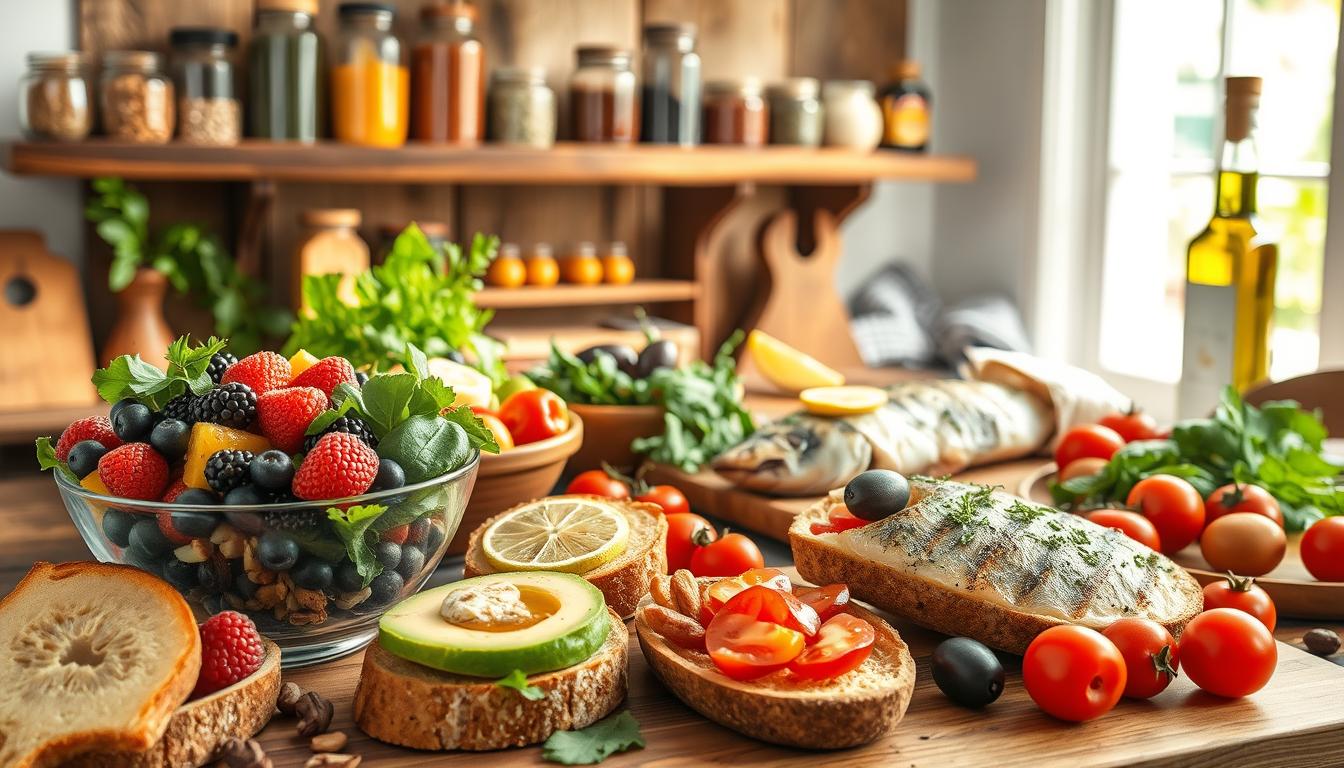
Starting this journey may ease physical pain. You’ll soon see big improvements in your mind. Eating healthy is good for your mood and life quality.
Cognitive Benefits of Mediterranean Nutrition
The same anti-inflammatory effects that help your joints also protect your brain. Studies show that healthy fats and antioxidants boost long-term brain function. You might notice better focus and memory with these foods.
These nutrients fight brain aging. By feeding your brain right, you build a strong defense against tiredness. This keeps your mind sharp like your body.
Sustained Energy Levels Throughout the Day
Your energy levels will stabilize. No more quick sugar crashes. Complex carbs and fiber give you slow-burning energy. This keeps you alert all day.
Stable blood sugar means no afternoon slump. You’ll stay focused without needing extra coffee. Your day will feel smoother.
Mood Regulation Through Gut-Brain Connection
Your gut affects your mood. The gut-brain link shows how food impacts your mental health and mood. Eating fiber and fermented foods keeps your gut happy.
A healthy gut sends good signals to your brain. This can lower stress and anxiety. Eating fresh foods supports your emotional health. It helps you feel balanced and happy every day.
Simple Mediterranean Recipes to Get You Started
Preparing meals at home is great for your joints. You don’t need to be a chef to enjoy the Mediterranean diet for arthritis and joint health. Just use fresh ingredients to make tasty meals that help your body.
The Mediterranean diet is all about eating fresh veggies and fruits three times a day. This habit gives you antioxidants to fight inflammation. Here are some easy recipes to start in your kitchen.
Quick Breakfast Bowls with Greek Yogurt and Berries
Begin your day with a protein-rich bowl in under five minutes. Greek yogurt is creamy, and berries are sweet and full of vitamins.
- Choose plain, unsweetened Greek yogurt to avoid hidden sugars.
- Top with a handful of fresh blueberries, strawberries, or raspberries.
- Add a sprinkle of walnuts or chia seeds for a healthy dose of omega-3 fatty acids.
Hearty Lunch Salads with Chickpeas and Herbs
Lunch should fill you up and give you energy. Chickpeas are a great plant-based protein that goes well with fresh herbs and olive oil.
Mix canned chickpeas with cucumbers, cherry tomatoes, and fresh parsley or mint. Drizzle with olive oil and lemon juice for a fresh taste. This meal is perfect for meal prepping ahead of time.
Dinner Ideas Featuring Baked Salmon and Roasted Vegetables
For dinner, use your oven to make things easy. Salmon is good for your joints, and roasted veggies are full of fiber.
Put a salmon fillet on a baking sheet with broccoli and bell peppers. Season with garlic, oregano, and olive oil. Roast at 400°F until the fish is flaky, for a nutritious and stress-free meal.
| Meal Type | Key Ingredients | Preparation Time |
|---|---|---|
| Breakfast Bowl | Greek Yogurt, Berries, Walnuts | 5 Minutes |
| Lunch Salad | Chickpeas, Cucumber, Herbs | 10 Minutes |
| Dinner Plate | Salmon, Broccoli, Peppers | 25 Minutes |
Your 7-Day Mediterranean Meal Plan
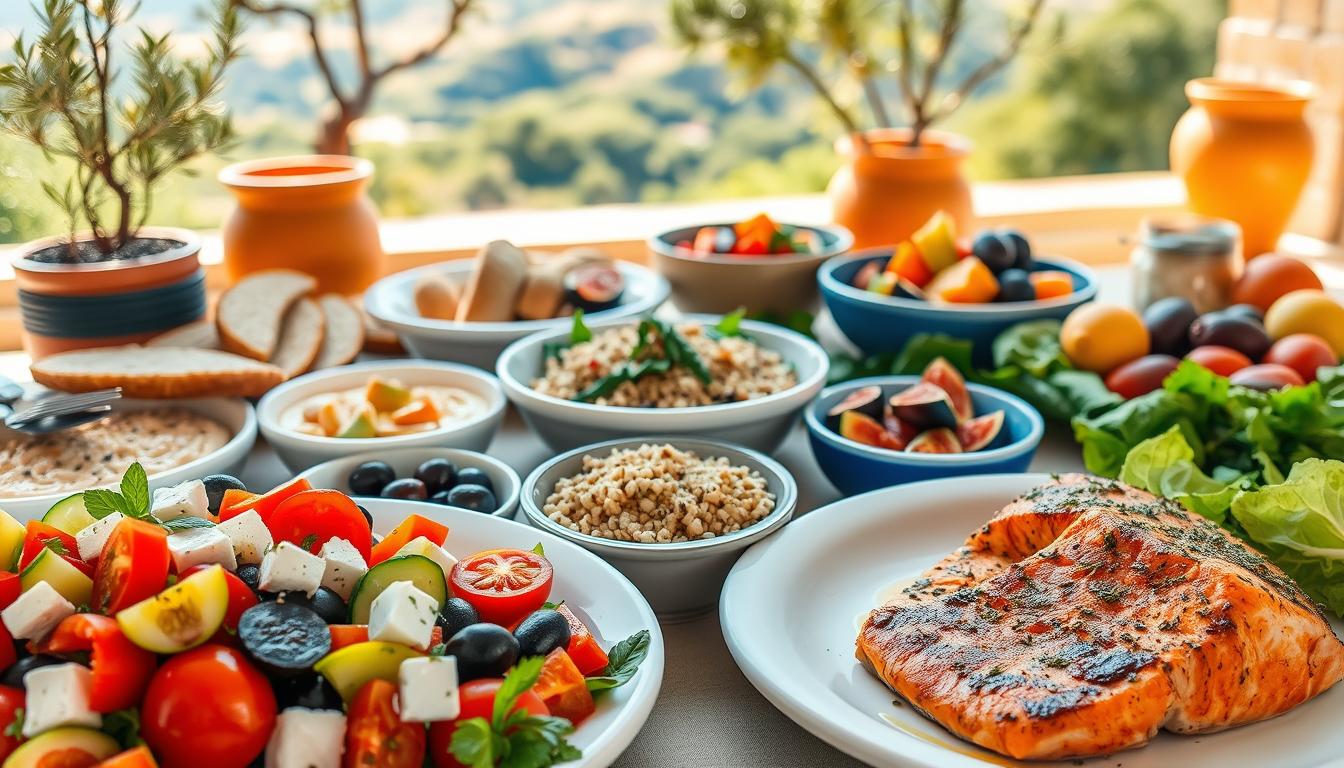
Studies show that sticking to a Mediterranean diet arthritis plan can lower pain risk. Planning your meals ahead eases daily food choices. This plan keeps you on track with foods that fight inflammation.
Structuring Your Week for Success
Being consistent is key when starting a new diet. Spend a few hours on Sunday to prep. This includes grains, veggies, and snacks.
Make your meals rich in whole, plant-based foods. Aim for a mix of healthy fats, lean proteins, and fiber at each meal. This keeps your energy up and supports your joints.
Grocery List Essentials for Your Pantry
A stocked pantry is vital for success. Keep olive oil, chickpeas, lentils, and nuts like walnuts ready. These items make quick, healthy meals easy.
| Day | Breakfast | Lunch | Dinner |
|---|---|---|---|
| Monday | Greek Yogurt | Chickpea Salad | Baked Salmon |
| Tuesday | Oatmeal | Lentil Soup | Grilled Chicken |
| Wednesday | Berry Smoothie | Quinoa Bowl | Roasted Veggies |
| Thursday | Greek Yogurt | Tuna Salad | Baked Cod |
| Friday | Oatmeal | Chickpea Salad | Stir-fry Tofu |
| Saturday | Fruit Bowl | Lentil Salad | Grilled Salmon |
| Sunday | Veggie Omelet | Leftover Feast | Roasted Chicken |
Following this Mediterranean diet arthritis plan can manage symptoms well. Ready to start? Download our full guide below.
Practical Tips for Sustainable Lifestyle Changes
Small, consistent choices build sustainable health changes. An inflammation diet for joints aims for long-term lifestyle, not quick fixes. Enjoying the process comes from adding good things, not just removing bad ones.
Making the Transition Without Feeling Deprived
You don’t need to change everything at once. Start with small steps, like adding walnuts or fatty fish to your day. This way, you learn about the ultimate arthritis diet without feeling stressed.
Here are ways to stay motivated:
- Follow the 80/20 rule: Eat healthy foods 80% of the time, and enjoy others 20%.
- Focus on abundance: Fill your plate with colorful veggies and healthy fats, not just what you can’t have.
- Keep it simple: Use a simple diet plan for inflammation to make meal planning easier.
Socializing and Dining Out While Staying on Track
You don’t have to say no to dinner plans. Restaurants can often help you stay on track if you ask nicely. You can find healthy options that let you enjoy meals with loved ones.
Here’s how to order wisely:
- Check the menu online: Look up the menu before you go to find the best choices.
- Ask for modifications: Ask for olive oil instead of butter, or dressings on the side.
- Prioritize your favorites: Choose one treat at special events and eat a healthy meal earlier.
Remember, your social life is key to your happiness. Being flexible and focusing on the big picture helps you manage joint health while enjoying life.
Conclusion
Your journey to manage arthritis pain starts with small, daily choices. Focus on three main things: eat whole Mediterranean foods, drink plenty of water, and listen to your body. These habits can bring lasting relief.
Do you have questions about this approach? Here are common answers to help you move forward.
Can I eat dairy on this diet? Yes, Greek yogurt is good for protein and probiotics. Is red meat allowed? Eat red meat only sometimes and choose fatty fish like salmon more often. Will I see results right away? Most people feel more energy in weeks, but joint comfort gets better slowly. Can I use frozen produce? Yes, frozen fruits and veggies are great and fit well into your diet.
Always talk to your doctor or a dietitian before changing your diet a lot. This info is just a guide and not medical advice. Your health team knows your history and can help you safely.
You can change your health by what you eat. Start your meals with confidence and enjoy healthy, tasty foods.
