
By Ray Baker
Chronic inflammation can be a quiet troublemaker. Harvard Health explains it may linger at a low level, attacking healthy tissues, and has been linked with heart disease, stroke, diabetes, cancer and dementia [1]. If you are over 50 and tired of waking up stiff, foggy or bloated, the top 20 anti inflammatory foods are a sensible place to start. I have sorted them into a practical list, because most of us need a fridge-friendly plan, not a fridge full of exotic powders.
What are the top 20 anti inflammatory foods?
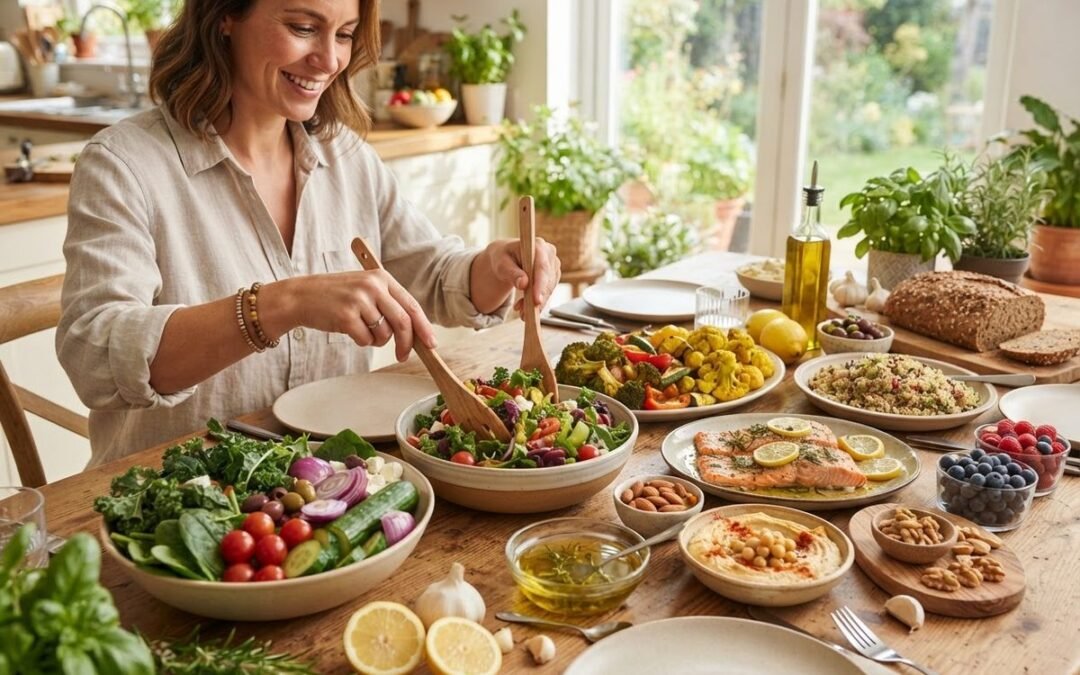
These are everyday whole foods that keep turning up in Mediterranean-style eating patterns. I think of the top 20 anti inflammatory foods as a shopping guide, not a strict prescription: leafy greens, berries, tomatoes, olive oil, walnuts, almonds, salmon, sardines, beans, lentils, whole grains, garlic, turmeric, ginger and avocado, with a few more below.
Key takeaways
- Focus on whole and minimally processed foods, not a single magic ingredient.
- Build plates around vegetables, fruit, beans, whole grains, nuts, seeds and olive oil.
- Add oily fish such as salmon or sardines a couple of times a week if you eat fish.
- Use garlic, turmeric, ginger and fresh or dried herbs instead of reaching for heavy salt.
- Limit sugary drinks, fried foods, processed meats and packaged snacks most days.
Which foods do I keep on my anti-inflammatory list?
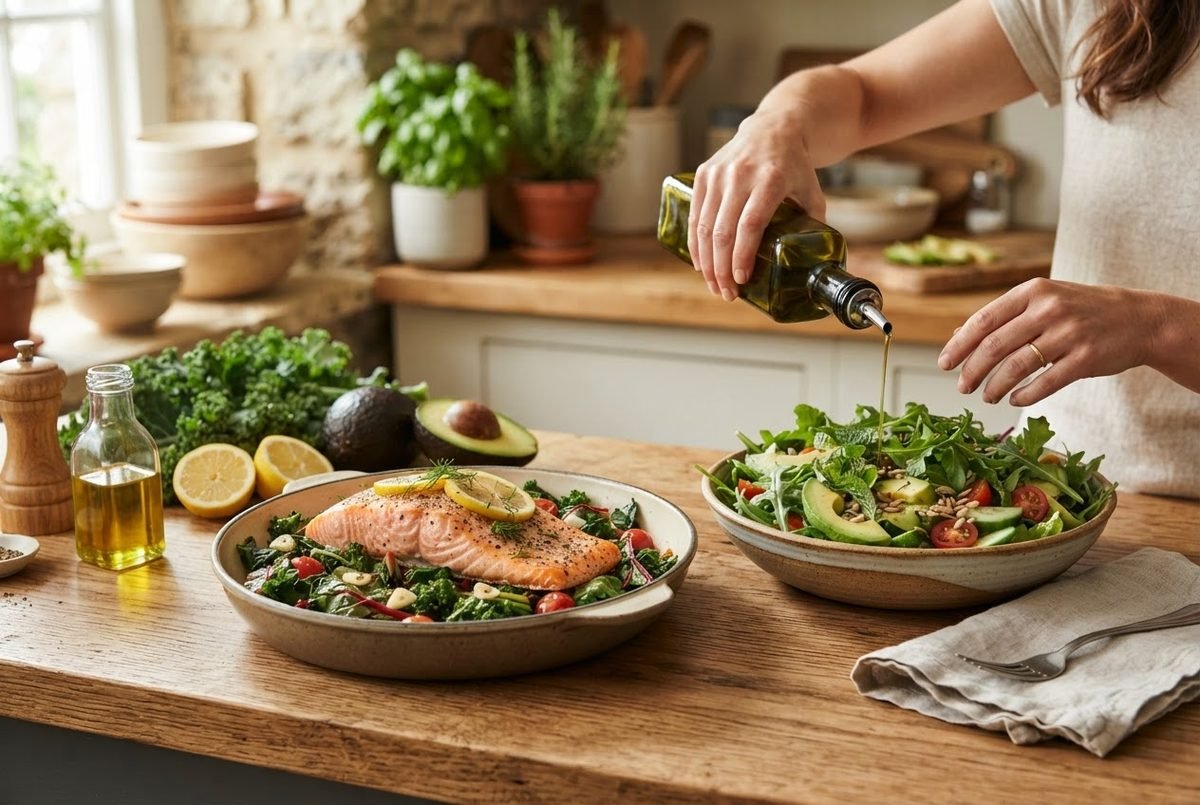
I built this from foods that appear in the Cleveland Clinic’s anti-inflammatory food handout and its everyday anti-inflammatory list [2][3]. These are the top 20 anti inflammatory foods I would build a week around. Most are easy to find in a standard supermarket, and several work from the freezer or pantry just as well as fresh. You do not need to buy every one today, and you do not need a specialty grocer. Some of the cheapest items, such as lentils, oats, tinned sardines and frozen spinach, are also among the most useful.
- Tomatoes
- Extra virgin olive oil
- Leafy greens such as spinach, kale and dark greens
- Broccoli
- Blueberries
- Strawberries
- Cherries
- Oranges
- Avocado
- Walnuts
- Almonds
- Salmon
- Sardines
- Lentils
- Chickpeas
- Oats
- Quinoa
- Garlic
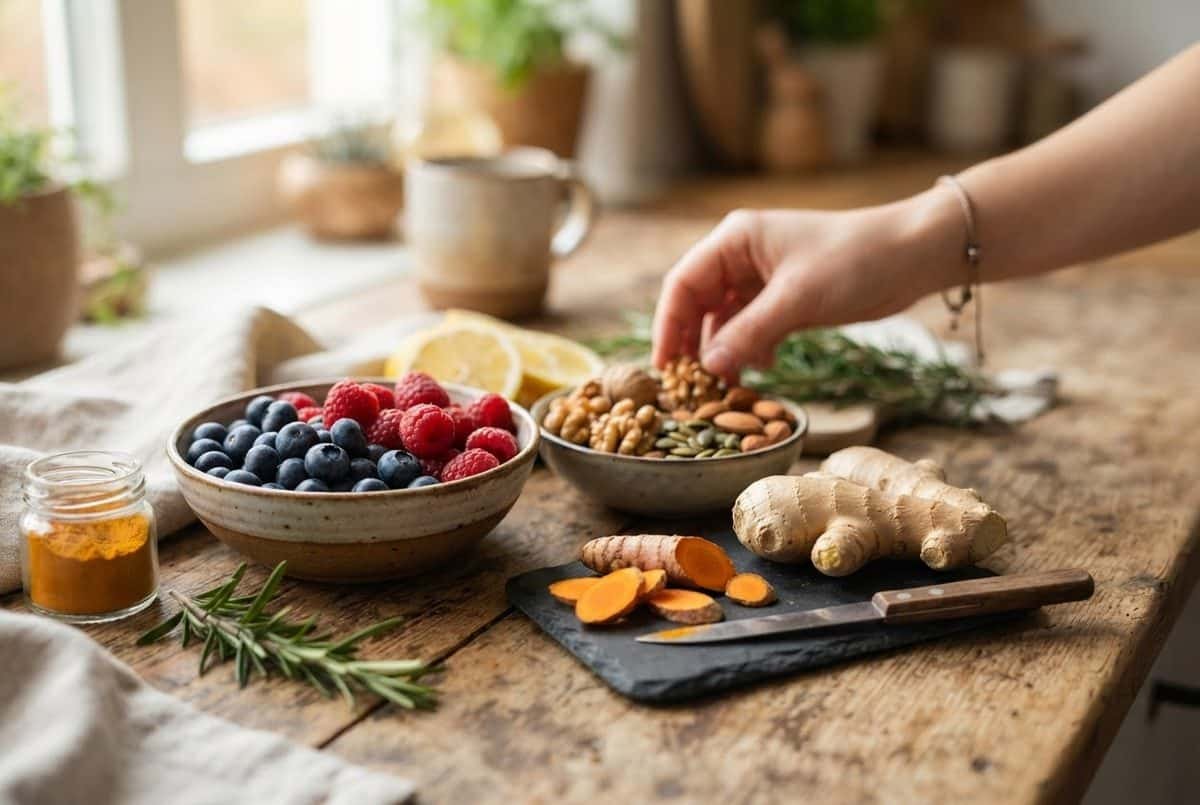
- Turmeric
- Ginger
If you want a simple colour rule for choosing plant foods, our polyphenol foods for inflammation article walks through the Mediterranean colour rule.
Why pick foods instead of just taking a supplement?
I get this question often, usually from people holding a jar of capsules. One narrative review of 24 nutrients and phytonutrients, from acetyl-L-carnitine to zinc, found many are capable of modulating immune function and reducing inflammation according to multiple biomarkers, but the results are not consistent across all patient populations [4]. In plain terms, nutrients can matter, yet a pill is not the same as a meal. An NCBI Bookshelf evidence map adds a careful note: proposed impacts of anti-inflammatory dietary patterns on some chronic diseases and mortality lack a strong evidence base, partly because most studies are observational [5]. The same map says several anti-inflammatory dietary patterns, including the Mediterranean pattern, appear associated with lower risks for some chronic conditions, but the observations could be due to foods excluded as much as foods included [5].
That is why I keep the language cautious. I cannot tell you these foods will erase pain or reverse a diagnosis. What I can say is they are part of a way of eating that has been studied, and the map also notes adverse events or harms associated with these diets are essentially non-existent [5]. This is general information, not medical advice, so please check with your doctor or dietitian before making big changes.
What should I eat less of?
Some foods tend to keep the fire stoked. Cleveland Clinic’s anti-inflammatory guide puts sweets, packaged snacks, processed meats such as bacon and salami, sugary drinks and fried foods on the limit list [3]. Its nutrition handout also lists bacon, butter, cheese, cream, high-fat cuts of meat, refined sugar and white grain products under pro-inflammatory choices [2]. Harvard Health points to the Western diet, with red and processed meats, added sugars and ultra-processed foods, as common inflammation promoters [1]. The National Heart, Lung, and Blood Institute also suggests understanding nutrition labels can help you choose healthier foods [6].
My approach is not to ban everything. It is to crowd the week with the top 20 anti inflammatory foods so there is less room for the heavily processed stuff. If you do most of your shopping around the edges of the supermarket, where the fresh and frozen whole foods tend to live, you will naturally buy fewer packets.
How do I start without a full kitchen overhaul?
This is where I keep it simple. The top 20 anti inflammatory foods only work if they fit your real week, so I would rather see you make one small change most days than chase a perfect plan that collapses by Thursday. These five tips work because they ask for ordinary effort, not willpower heroics.
- Put one of the top 20 anti inflammatory foods in each meal, not all 20 at once.
- Keep plain frozen berries, spinach and fish portions on hand for busy nights.
- Make one batch of lentil or chickpea soup for the week ahead.
- Use extra virgin olive oil as your everyday cooking and salad oil, and keep portions sensible with a thumb-sized amount for oil or a small handful of nuts.
- Swap one sugary drink for water with a slice of orange or lemon [6].
For the daily habits that stop adding fuel, you may like our reduce inflammation habits after 50 guide.
How do I adapt this list if I am cooking for one?
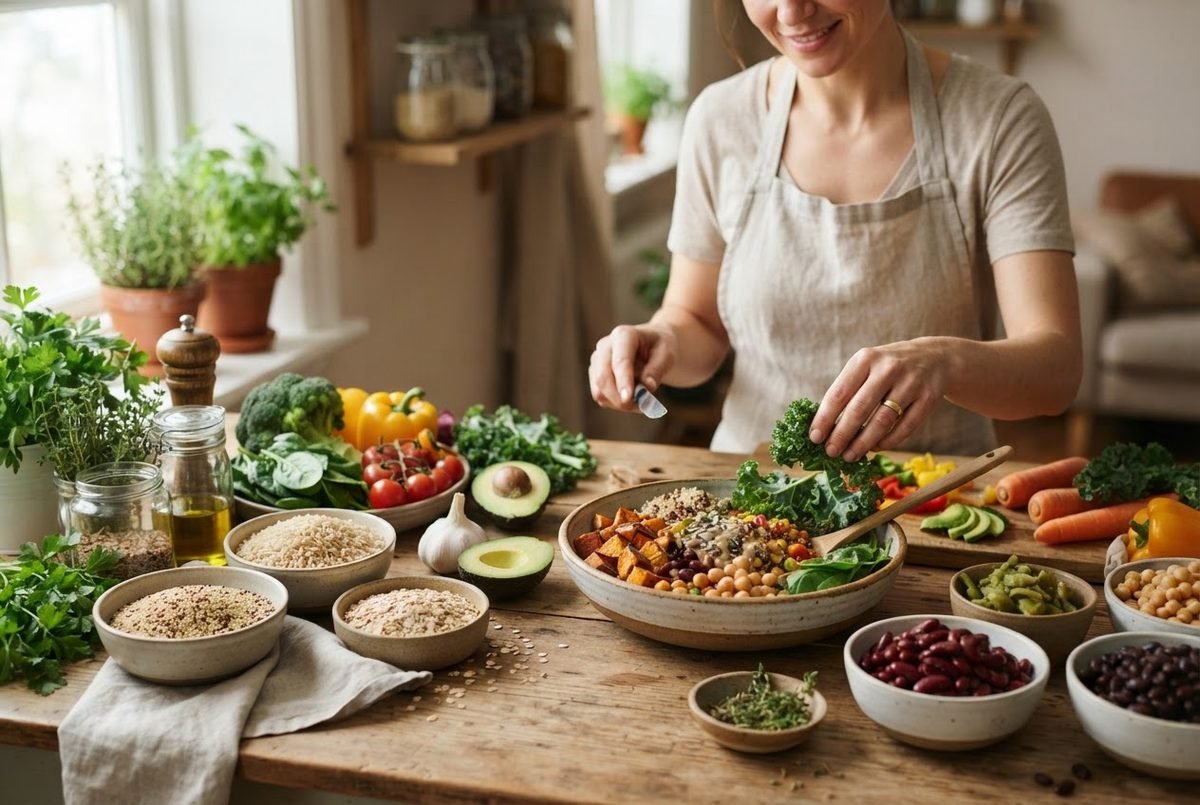
Many of my readers say the hardest part is not knowing what to buy, it is using it before it goes soft. I keep a few rules. Leafy greens and berries freeze well, so buy the bag and use what you need. Tinned sardines, lentils and chickpeas are single-serve friendly. A small head of broccoli or a handful of cherry tomatoes can be roasted in one pan with olive oil and garlic. If you cook grains, make two cups of oats or quinoa and keep the extra in the fridge for the next day. Portion awareness matters here too: a palm-sized piece of salmon, a small handful of nuts and a thumb of oil are enough for one.
How does this fit with a Mediterranean way of eating?
The foods on my top 20 anti inflammatory foods list overlap heavily with the Mediterranean dietary pattern, which has been studied far more than any single anti-inflammatory food. The National Heart, Lung, and Blood Institute’s heart-healthy eating advice also builds meals around vegetables, fruits, whole grains, fish, legumes, nuts and healthy oils such as olive oil, while limiting saturated fats and added sugars [6]. That is why I treat this as a pattern, not a pill.
If you want a closer look at eating this way later in life, our anti-inflammatory foods after 50 article has extra context. If joint pain is what brought you here, our guide on anti-inflammatory diet for arthritis pain explains which of these foods people often start with.
Related reading
- Polyphenol Foods for Inflammation: The Mediterranean Color Rule: Explains the Mediterranean colour rule for choosing plant foods.
- Reduce Inflammation Habits After 50: Daily Choices That Stop Adding Fuel to the Fire: Covers daily habits that stop adding fuel to inflammation.
- Anti-Inflammatory Foods After 50 That Help You Feel Better Naturally: Offers a closer look at anti-inflammatory eating later in life.
- Anti-Inflammatory Diet for Arthritis Pain: Mediterranean Foods Worth Trying: Shows which anti-inflammatory foods people often start with for joint pain.
Frequently asked questions
Do I need to eat all 20 foods every day?
No. The top 20 anti inflammatory foods are a guide, not a daily checklist. A handful of blueberries at breakfast, salad greens at lunch and salmon at dinner already brings several foods together without stress.
What if I do not eat fish?
You can still get plant fats and protein from walnuts, flaxseeds, chia seeds, lentils and chickpeas. If fish is not on your plate, talk with your doctor or dietitian about whether an omega-3 supplement is suitable for you.
Are frozen fruits and vegetables acceptable?
Yes. Plain frozen berries, spinach, broccoli and fish portions are practical and budget-friendly. They can be just as helpful as fresh, especially when fresh produce is costly or out of season.
Can anti-inflammatory foods replace my medicine?
No. Food is a support, not a swap for prescribed treatment. If you take medication for blood pressure, diabetes or pain, do not change it without speaking with your doctor.
Is this the same as the Mediterranean diet?
It overlaps strongly. The Mediterranean pattern includes vegetables, fruits, beans, whole grains, fish, nuts, seeds and olive oil. It is a useful template, but this list also includes specific spices and foods.
How soon could I notice a difference?
There is no set timeline, and responses vary from person to person. Some people notice better digestion or less bloating within weeks, but this is not a promise and depends on the whole pattern.
Honest take
I keep returning to these top 20 anti inflammatory foods because they are ordinary, affordable and easy to cook. I do not overpromise. This is general information, not medical advice, and the evidence is still building. If you are managing a long-term condition, please check with your health professional before making major changes.
References
- Harvard Health. Top anti-inflammatory foods: How your diet can reduce chronic inflammation. https://www.health.harvard.edu/healthbeat/top-anti-inflammatory-foods-how-your-diet-can-reduce-chronic-inflammation
- Cleveland Clinic. Inflammation. https://my.clevelandclinic.org/-/scassets/files/org/rehabilitation-sports-therapy/moving-smarter-nutrition-handout.pdf
- Cleveland Clinic health essentials. Anti-Inflammatory Diet: Foods List and Benefits. https://health.clevelandclinic.org/anti-inflammatory-diet
- The effects of twenty-four nutrients and phytonutrients on immune system function and inflammation: A narrative review. PMC. https://pmc.ncbi.nlm.nih.gov/articles/PMC8259612/
- National Center for Biotechnology Information Bookshelf. Executive Summary, Beyond Diabetes, Obesity, and Cardiovascular Disease: An Evidence Map of Anti-Inflammatory Diet and Related Dietary Interventions for the Prevention and Management of Chronic Health Conditions. https://www.ncbi.nlm.nih.gov/books/NBK614441/
- National Heart, Lung, and Blood Institute. Heart-Healthy Living, Choose Heart-Healthy Foods. https://www.nhlbi.nih.gov/health/heart-healthy-living/healthy-foods
Get well and stay well,
Ray Baker
