
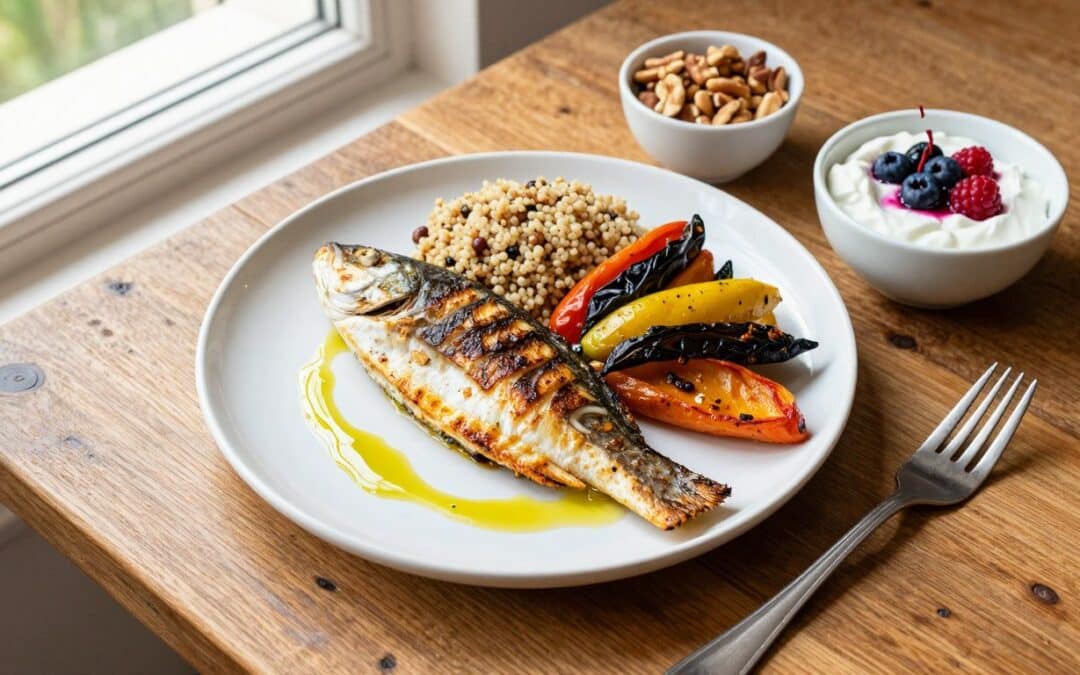
You’ve switched to salads and cut out the chips. You’re eating grilled chicken and steamed vegetables like the magazines suggest. So why are you standing in front of the fridge two hours after dinner, genuinely starving?
If you’re always feeling hungry on a “Healthy” Diet, you’re not lacking willpower. You’re likely missing the Mediterranean portion strategies that actually keep you satisfied. The Mediterranean diet isn’t about deprivation or tiny portions. It’s built around specific food combinations that trigger satiety signals your body recognizes.
Let me show you exactly how to stop the constant hunger cycle while eating foods you’ll genuinely enjoy.
Quick Answer
Mediterranean portion strategies keep you satisfied by combining healthy fats like olive oil with fiber-rich whole grains, lean protein, and vegetables in each meal. This balanced approach slows digestion, stabilizes blood sugar, and triggers fullness hormones that processed foods and low-fat diets often miss. Three core principles solve constant hunger: pairing fats with fiber, including protein at every meal, and eating nutrient-dense foods rather than empty calories.
3 Key Takeaways
- Fat and fiber combinations are the secret to Mediterranean satiety - olive oil with whole grains, nuts with vegetables, and yogurt with fruit create lasting fullness that low-fat diets cannot match
- Portion strategies focus on calorie density, not calorie counting - Mediterranean-style eating emphasizes high-volume, nutrient-rich foods like legumes, vegetables, and whole grains that fill your stomach without excess calories
- Blood sugar stability prevents hunger spikes - balanced meals with protein, healthy fats, and complex carbohydrates maintain steady energy levels throughout the day, eliminating the crash-and-crave cycle of processed foods
The free 28-Day Mediterranean Diet Maintenance Program walks you through implementing these principles with daily meal suggestions and portion guidance tailored for sustainable weight management.
Why Healthy Meals Don’t Keep You Full (And What’s Actually Missing)
The Low-Fat Mistake That Keeps You Hungry
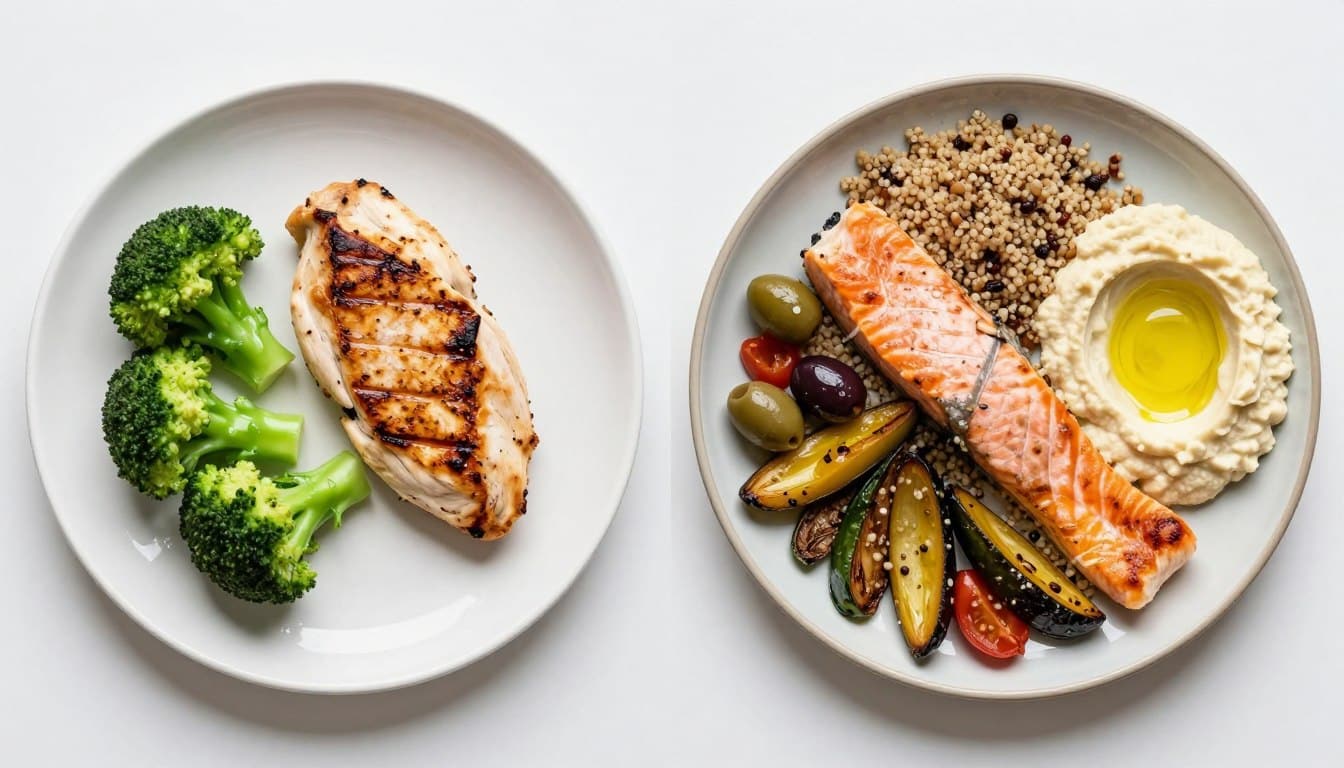
Most “healthy” diet advice from the past few decades taught us to fear fat. Your grilled chicken breast with steamed vegetables contains virtually no fat. That’s the problem.
Dietary fat triggers the release of cholecystokinin, a hormone that signals fullness to your brain. Without adequate fat, your body never receives the “stop eating” message. Research published in Nutrition Journal confirms that meals containing healthy fats increase satiety significantly more than low-fat alternatives.
The Mediterranean approach includes olive oil, nuts, seeds, and fatty fish at every meal. These aren’t treats or add-ons. They’re core components that make the entire eating pattern sustainable.
Missing Fiber Means Missing Satisfaction
White rice, white bread, and processed cereals digest rapidly. They spike blood sugar, then drop it quickly. The result is hunger returning within ninety minutes.
Mediterranean whole grains like farro, bulgur, quinoa, and oats provide substantial fiber that slows digestion. Fiber creates physical bulk in your stomach and feeds beneficial gut bacteria that produce satiety-promoting compounds.
According to research in the American Journal of Clinical Nutrition, increasing daily fiber intake by just ten grams can reduce hunger ratings by fourteen percent. Mediterranean meals naturally contain twenty-five to thirty-five grams of fiber daily through vegetables, legumes, whole grains, nuts, and fruit.
The Protein Distribution Problem
Many people eat minimal protein at breakfast, a moderate amount at lunch, then load up at dinner. This distribution pattern leaves you hungry all day, then oversatisfied at night when you need energy least.
Mediterranean eating distributes protein across three meals. Greek yogurt with nuts at breakfast. Chickpeas or white beans at lunch. Fish or legumes at dinner. Each meal contains fifteen to twenty-five grams of protein, maintaining muscle mass and triggering sustained satiety.
Protein has the highest thermic effect of all macronutrients, meaning your body burns more calories digesting it. It also stimulates glucagon-like peptide-1, a powerful appetite-suppressing hormone that pharmaceutical weight loss medications attempt to mimic.
Mediterranean Fat and Fiber Combinations for Satiety
The Power Pairings That Stop Hunger
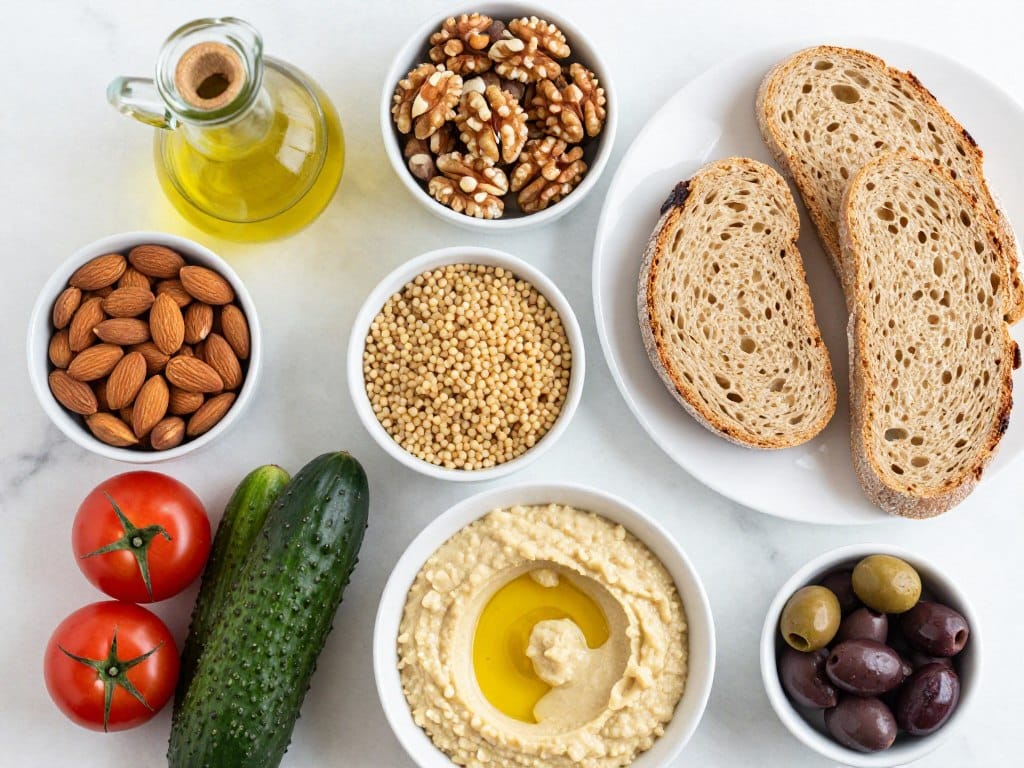
Mediterranean portions work because specific food combinations create synergistic satiety effects. These aren’t random. They’re patterns repeated across Mediterranean cultures for generations.
Morning Combinations
Start your day with oats cooked in water, topped with walnuts, ground flaxseeds, and fresh berries. The oats provide soluble fiber that forms a gel in your stomach. The walnuts add omega-3 fats that slow gastric emptying. This combination maintains fullness for four to five hours.
Alternatively, Greek yogurt with almonds and a drizzle of honey over sliced apple delivers protein, healthy fats, and fruit fiber that stabilize morning blood sugar better than toast or cereal alone.
Midday Combinations
Build lunch around legumes paired with vegetables and olive oil. A chickpea salad with tomatoes, cucumbers, red onion, and two tablespoons of olive oil provides complete protein, substantial fiber, and monounsaturated fats.
The fiber in chickpeas reaches fifteen grams per cup. The olive oil adds seventy calories of pure satisfaction. Together, they create a meal plan foundation that prevents afternoon energy crashes and snack cravings.
Evening Combinations
Dinner centers on fish or occasional poultry with abundant roasted vegetables and a whole grain side. Salmon with roasted Brussels sprouts, sweet potato, and quinoa delivers omega-3 fats, cruciferous fiber, complex carbohydrates, and complete protein.
The vegetables provide volume without excessive calories. The quinoa adds eight grams of protein per cup. The salmon contributes heart-healthy fats that satisfy without heaviness.
Snack Combinations
When hunger strikes between meals, Mediterranean snacks combine fat with fiber. Apple slices with almond butter. Whole grain crackers with hummus. A small handful of mixed nuts with dried figs.
These mini-meals deliver actual nutrition rather than empty calories. They maintain blood sugar stability and prevent the desperate hunger that leads to overeating at the next meal.
Understanding Calorie Density vs. Nutrient Density
The Mediterranean approach emphasizes foods that are nutrient-dense but not calorie-dense. This distinction explains why healthy meals don’t keep you full when they’re built around the wrong foods.
A hundred calories of cooked lentils fills half a cup and provides substantial fiber, protein, and iron. A hundred calories of olive oil is barely one tablespoon. Yet the meal plan combines both because each serves different satiety functions.
Vegetables, legumes, and whole grains provide volume. Olive oil, nuts, and fish provide satisfaction. Together, they create portions that physically fill your stomach while triggering hormonal fullness signals.
Research from Penn State University demonstrates that people eating high-volume, low-calorie-density foods consume fewer total calories while reporting greater satisfaction. Mediterranean meals naturally achieve this balance without requiring calorie counting.
Your Mediterranean Satiety Grocery List
Screenshot and Save: Essential Mediterranean Staples
Healthy Fats (Include Daily):
- Extra virgin olive oil - two to three tablespoons daily
- Raw almonds, walnuts, pistachios - one ounce daily
- Ground flaxseeds or chia seeds - one tablespoon daily
- Fatty fish (salmon, sardines, mackerel) - twice weekly
- Olives and olive tapenade - small portions as desired
Fiber-Rich Whole Grains:
- Steel-cut oats or rolled oats for breakfast
- Quinoa - complete protein and gluten-free
- Farro - nutty flavor with chewy texture
- Bulgur wheat - quick cooking and versatile
- Whole grain bread - look for five grams fiber per slice
- Brown rice or wild rice for variety
Protein Sources:
- Greek yogurt - plain, full-fat for best satiety
- Canned chickpeas, white beans, lentils
- Eggs from pasture-raised chickens
- Wild-caught fish and seafood
- Organic chicken or turkey (occasional)
- Cottage cheese or ricotta for variety
Vegetables (Aim for Seven Servings Daily):
- Leafy greens - spinach, kale, arugula, romaine
- Tomatoes - fresh and canned whole tomatoes
- Cruciferous vegetables - broccoli, cauliflower, Brussels sprouts
- Bell peppers, zucchini, eggplant for roasting
- Onions, garlic, fresh herbs for flavor base
Fruits (Two to Three Servings Daily):
- Berries - blueberries, strawberries, raspberries
- Apples and pears for fiber
- Citrus fruits - oranges, lemons, grapefruit
- Seasonal stone fruit in summer months
- Figs and dates in small portions
Flavor Enhancers:
- Dried oregano, basil, thyme, rosemary
- Fresh parsley and cilantro
- Lemon juice and zest
- Balsamic vinegar and red wine vinegar
- Tahini for homemade hummus
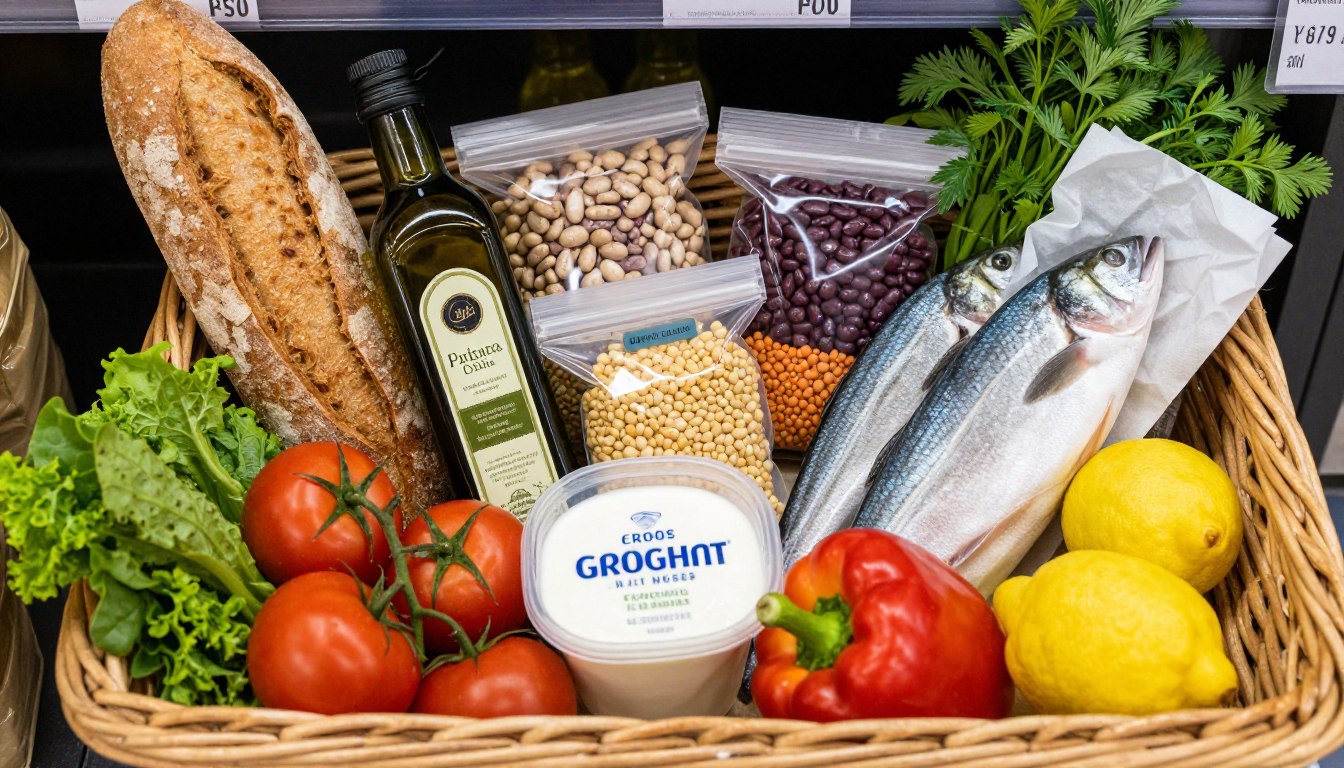
This grocery list focuses on whole foods that support sustainable weight management without processed ingredients. Each item contributes to satiety through fiber, protein, or healthy fats.
How to Balance Meals to Stop Constant Hunger
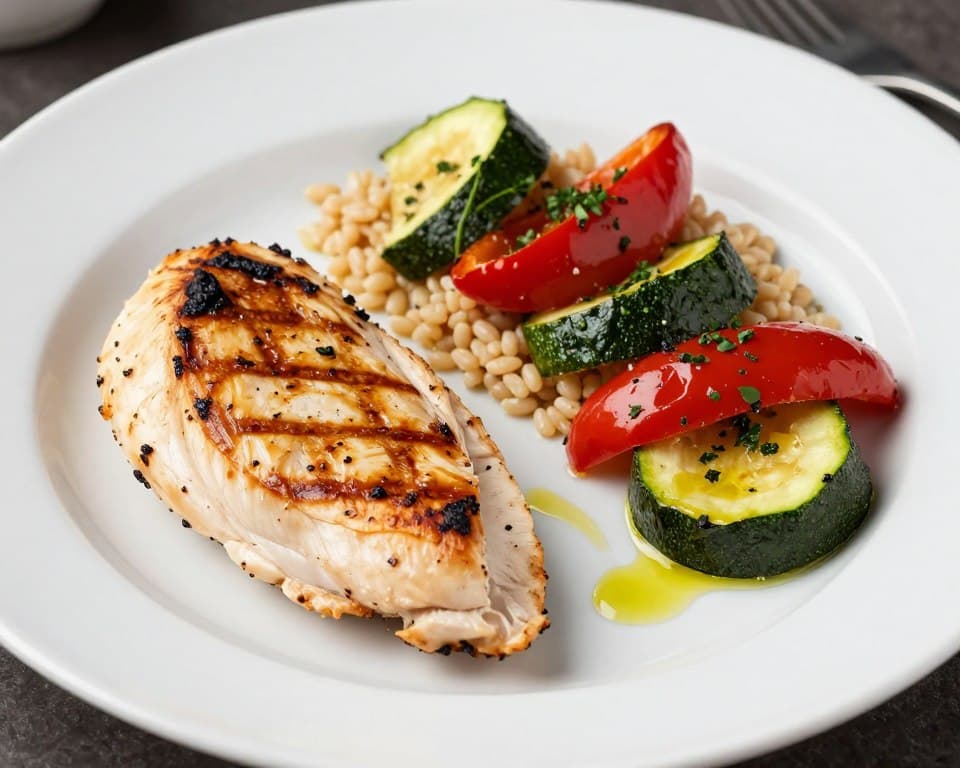
The Mediterranean Plate Method
Forget complicated calorie calculations. The Mediterranean plate method creates balanced portions visually. This approach has supported healthy populations for centuries without requiring measuring cups or food scales.
Picture your dinner plate divided into sections. Half the plate contains vegetables - both raw and cooked. One quarter holds protein from fish, legumes, or occasionally poultry. The final quarter contains whole grains like quinoa, farro, or bulgur.
Add two tablespoons of olive oil drizzled over vegetables or used in cooking. Include a small handful of nuts or seeds as garnish. Finish with fresh fruit for dessert.
This visual method automatically creates the fat and fiber combinations that prevent hunger. The vegetables provide volume and fiber. The protein maintains muscle and triggers satiety hormones. The whole grains deliver sustained energy. The olive oil signals fullness.
Meal Timing for Blood Sugar Stability
Mediterranean eating patterns space meals four to five hours apart. This timing allows complete digestion while preventing excessive hunger that triggers poor food choices.
Breakfast within one hour of waking stabilizes morning cortisol and sets metabolic tone for the day. Lunch four to five hours later maintains energy without afternoon crashes. Dinner completes the pattern, consumed at least three hours before bed to support quality sleep.
When meals are properly balanced with protein, healthy fats, and fiber, most people don’t require snacks. However, if genuine hunger occurs between meals, a small portion of nuts, fruit with nut butter, or vegetables with hummus provides satisfaction without disrupting blood sugar.
Portion Sizes That Satisfy Without Excess
Mediterranean portions focus on sufficiency rather than restriction. The goal is comfortable fullness, not stuffed discomfort or lingering hunger.
| Food Category | Portion Size | Frequency | Satiety Benefit |
| Olive Oil | 2-3 tablespoons daily | With most meals | Triggers fullness hormones, slows digestion |
| Nuts and Seeds | 1 ounce (small handful) | Daily | Protein, fiber, healthy fats combined |
| Whole Grains | 1/2 to 1 cup cooked | 1-2 times daily | Sustained energy, blood sugar stability |
| Legumes | 3/4 to 1 cup cooked | Daily or every other day | High protein and fiber, low calorie density |
| Fish | 4-6 ounces cooked | 2-3 times weekly | Omega-3 fats, complete protein |
| Vegetables | Unlimited - at least 3 cups daily | Every meal | Volume, fiber, micronutrients, low calories |
| Greek Yogurt | 3/4 to 1 cup | Daily, usually breakfast | Protein, probiotics, calcium |
| Fruit | 1 medium piece or 1 cup berries | 2-3 servings daily | Natural sweetness, fiber, antioxidants |
| Cheese | 1-2 ounces | Few times weekly | Concentrated protein and fat |
These portion sizes reflect research on Mediterranean populations with lowest rates of obesity and chronic disease. They’re not arbitrary restrictions but patterns observed in healthy eating communities.
The Core Principles Applied to Every Meal
Three core principles guide Mediterranean portion strategies. First, never eat carbohydrates alone. Pair whole grains or fruit with protein or fat to moderate blood sugar response.
Second, include vegetables at breakfast, not just lunch and dinner. Spinach in your eggs. Tomatoes with your yogurt. This early fiber sets digestive rhythm for the day.
Third, prioritize food quality over quantity. Two tablespoons of authentic extra virgin olive oil provide more satisfaction than four tablespoons of refined vegetable oil. Real cheese in moderate portions satisfies more than larger amounts of processed cheese products.
The Mediterranean-style eating pattern naturally supports weight management because these principles reduce total calorie intake while increasing satisfaction. You eat less without feeling deprived.
7-Day Mediterranean Starter Meal Plan
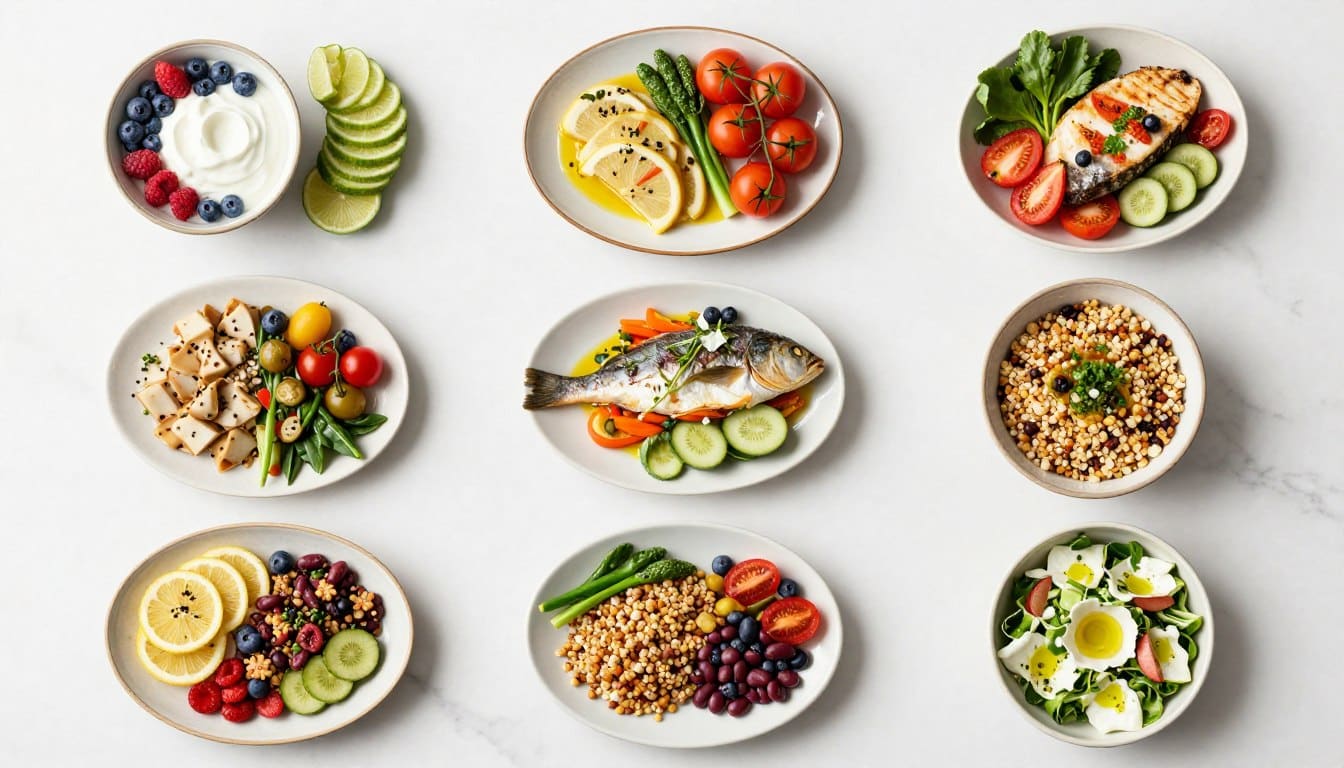
Your First Week of Satisfied Eating
This seven-day meal plan demonstrates how to apply Mediterranean portion strategies daily. Each day follows the fat-fiber-protein pattern that prevents constant hunger. The free 28-Day Mediterranean Diet Maintenance Program expands on this foundation with additional variety and seasonal adaptations.
Day 1
Breakfast: Greek yogurt with walnuts, ground flaxseeds, and mixed berries
Lunch: Chickpea salad with tomatoes, cucumber, red onion, feta cheese, olive oil and lemon dressing
Dinner: Grilled salmon with roasted Brussels sprouts and quinoa, drizzled with olive oil
Day 2
Breakfast: Steel-cut oats cooked with cinnamon, topped with sliced apple and almond butter
Lunch: Mediterranean white bean soup with kale, carrots, celery, whole grain bread
Dinner: Baked cod with lemon and herbs, farro pilaf with vegetables, side green salad
Day 3
Breakfast: Veggie omelet with spinach and tomatoes, whole grain toast with olive oil
Lunch: Lentil and vegetable stew, mixed green salad with olive oil dressing
Dinner: Grilled chicken breast with roasted eggplant, zucchini, bell peppers, and bulgur wheat
Day 4
Breakfast: Whole grain toast with mashed avocado, poached eggs, sliced tomatoes
Lunch: Quinoa bowl with roasted vegetables, chickpeas, tahini dressing, and pumpkin seeds
Dinner: Baked sardines with lemon, roasted sweet potato, and steamed broccoli with garlic and olive oil
Day 5
Breakfast: Greek yogurt parfait with granola, sliced banana, and a drizzle of honey
Lunch: Tuscan white bean and tomato salad with fresh basil, served with whole grain crackers
Dinner: Grilled mackerel with herb-roasted cauliflower and wild rice pilaf
Day 6
Breakfast: Overnight oats with chia seeds, walnuts, and fresh strawberries
Lunch: Mediterranean chickpea wrap with hummus, vegetables, and feta in whole wheat tortilla
Dinner: Baked salmon with rosemary, roasted root vegetables, and farro salad with herbs
Day 7
Breakfast: Scrambled eggs with sautéed spinach and mushrooms, whole grain toast with olive oil
Lunch: Greek salad with olives, tomatoes, cucumber, red onion, feta, olive oil dressing, with whole grain pita
Dinner: Grilled sea bass with lemon, quinoa tabbouleh with fresh herbs, roasted asparagus
Daily Snack Options (if needed between meals):
- Small handful of mixed nuts (almonds, walnuts, pistachios)
- Apple slices with two tablespoons almond butter
- Whole grain crackers with hummus and sliced vegetables
- Greek yogurt with a sprinkle of nuts and cinnamon
- Fresh vegetables with tzatziki or baba ganoush
This meal plan provides approximately eighteen hundred to two thousand calories daily, appropriate for most adults over fifty seeking sustainable weight management. Portions can adjust based on individual activity levels and goals.
Each day includes twenty-five to thirty-five grams of fiber, seventy to ninety grams of protein, and abundant healthy fats from olive oil, nuts, seeds, and fish. These macronutrient ratios explain why you’ll feel satisfied rather than restricted.
Mediterranean Comfort Food: Creamy White Bean and Vegetable Stew
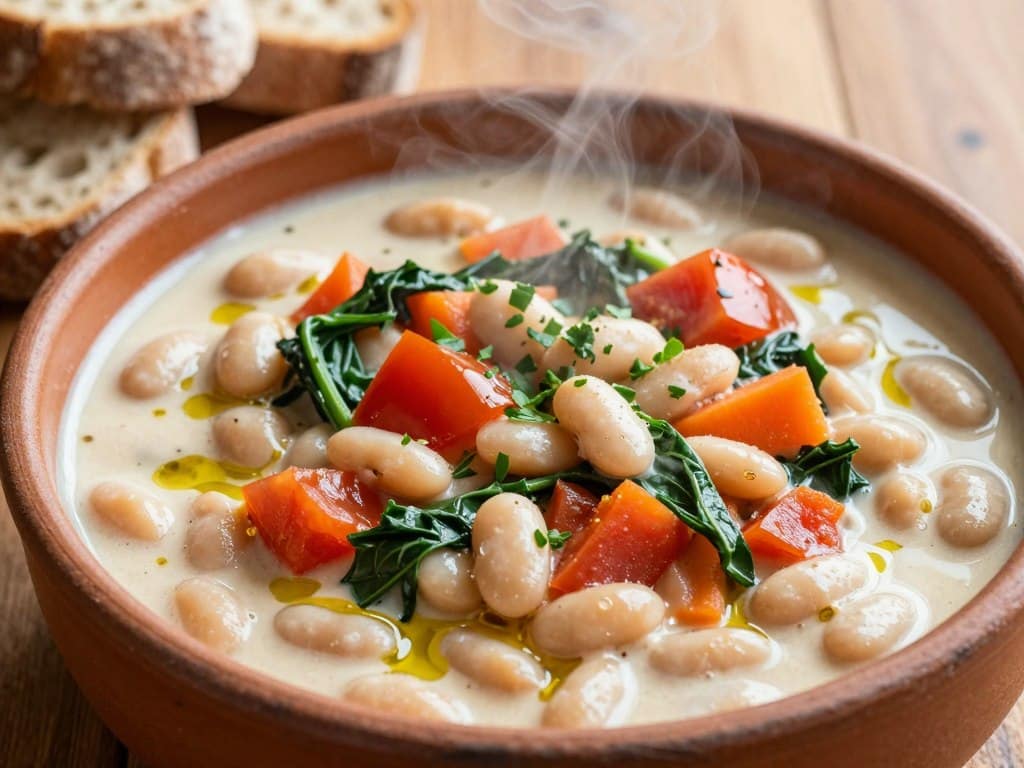
This recipe demonstrates how Mediterranean comfort food delivers satisfaction without excess calories. The combination of legumes, vegetables, and olive oil creates the fiber-fat pairing that keeps you full for hours.
Ingredients (Serves 4)
Base:
- 3 tablespoons extra virgin olive oil, divided
- 1 large onion, diced
- 3 cloves garlic, minced
- 2 carrots, diced
- 2 celery stalks, diced
- 1 teaspoon dried oregano
- 1/2 teaspoon dried thyme
Main Components:
- 2 cans (15 oz each) white beans (cannellini or great northern), drained and rinsed
- 1 can (14 oz) diced tomatoes with juice
- 4 cups low-sodium vegetable broth
- 2 cups chopped kale or spinach
- 1 bay leaf
- Salt and black pepper to taste
- Fresh parsley for garnish
- Lemon wedges for serving
Instructions
- Heat two tablespoons olive oil in large pot over medium heat. Add onion, carrots, and celery. Cook until softened, about eight minutes, stirring occasionally.
- Add garlic, oregano, and thyme. Cook one minute until fragrant.
- Add white beans, tomatoes with juice, vegetable broth, and bay leaf. Bring to boil, then reduce to simmer.
- Cook uncovered for twenty minutes, allowing flavors to blend and broth to reduce slightly.
- Add chopped kale or spinach. Cook until wilted, about three minutes.
- Remove bay leaf. Season with salt and pepper to taste.
- Serve in bowls, drizzled with remaining tablespoon olive oil. Garnish with fresh parsley and lemon wedge.
Simple Substitutions
- For creamier texture: Mash half the beans before adding to pot, or blend one cup of the finished stew and stir back in
- For more protein: Add four ounces diced cooked chicken or two cans of drained tuna in final step
- For different vegetables: Swap kale for Swiss chard, add zucchini or bell peppers with the onions
- For spice: Add red pepper flakes with the garlic, or finish with a dash of hot sauce
- For heartier meal: Serve over cooked farro or with a side of whole grain bread
Nutritional Benefits
Each serving provides approximately fifteen grams of fiber from the beans and vegetables, twelve grams of protein, and healthy fats from olive oil. Total calories per serving are around two hundred eighty, yet the portion is generous and deeply satisfying.
The white beans deliver resistant starch that feeds beneficial gut bacteria and improves insulin sensitivity. The vegetables add vitamins, minerals, and additional fiber. The olive oil provides oleic acid, which triggers satiety receptors in your small intestine.
This stew keeps well in the refrigerator for four days or freezes for up to three months, making it practical for meal planning. The flavors actually improve overnight as ingredients meld together.
Why Processed Foods Hijack Your Hunger Signals
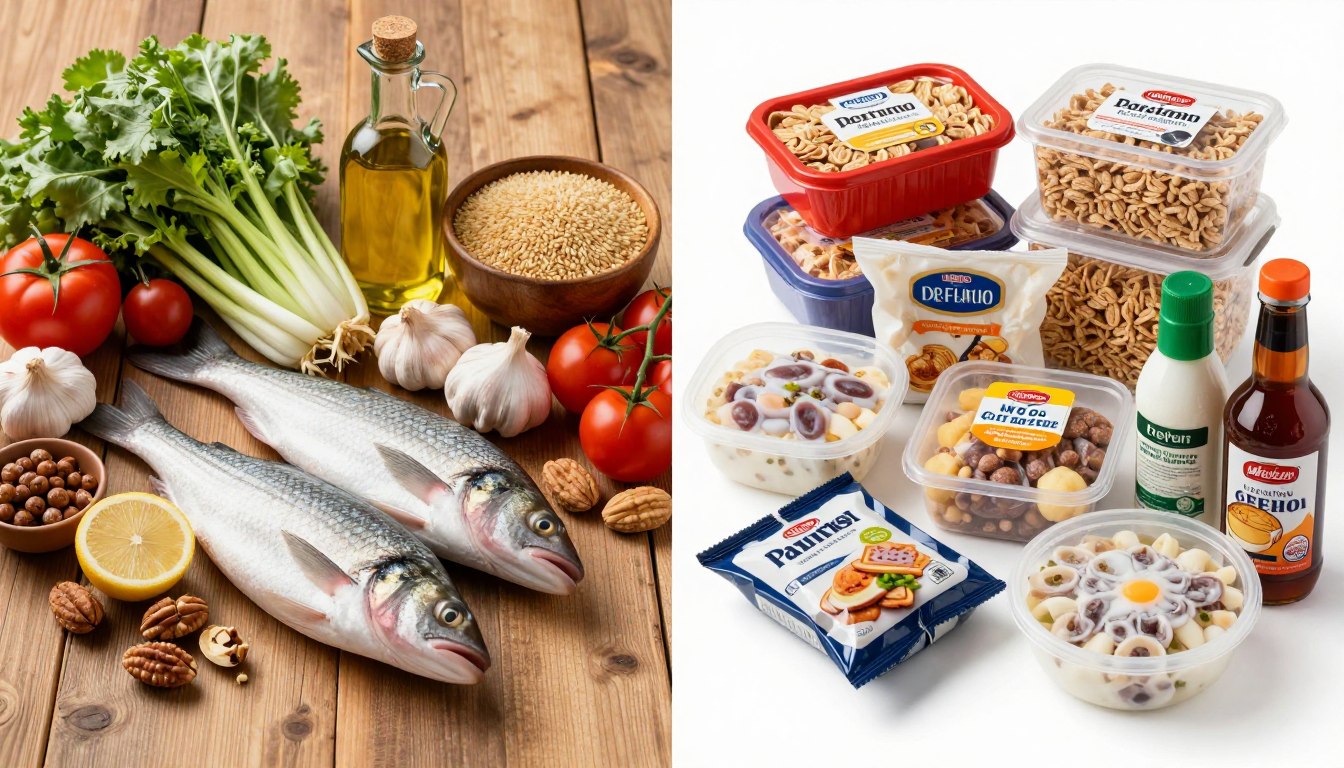
The Engineered Appetite Problem
Food manufacturers engineer processed products to bypass natural satiety mechanisms. They combine sugar, refined flour, and vegetable oils in ratios that trigger dopamine release without satisfying actual hunger.
Research published in Cell Metabolism demonstrates that ultra-processed foods cause people to consume five hundred more calories daily compared to whole food diets, even when both provide identical macronutrients. The processing itself disrupts satiety.
Mediterranean eating eliminates this problem by focusing on whole foods in their natural state. An apple provides fiber that slows sugar absorption. Apple juice removes that fiber, creating a blood sugar spike. Whole oats digest slowly. Instant oatmeal processes rapidly.
Hidden Ingredients That Increase Hunger
Many foods marketed as “healthy” contain ingredients that actually increase appetite. High-fructose corn syrup doesn’t trigger leptin, the hormone that signals fullness. Artificial sweeteners may disrupt gut bacteria involved in appetite regulation.
MSG and other flavor enhancers override natural taste preferences, making whole foods seem bland by comparison. Partially hydrogenated oils interfere with cellular signaling that communicates energy status to your brain.
The Mediterranean diet avoids these appetite-disrupting ingredients naturally. Extra virgin olive oil is a whole food. Nuts are whole foods. Fish is a whole food. Vegetables, legumes, and whole grains are whole foods. There’s nothing to engineer or manipulate.
Transitioning from Processed to Whole
If your current diet relies heavily on packaged foods, transition gradually. Replace one processed item weekly with a Mediterranean alternative.
Swap breakfast cereal for oats with nuts and fruit. Replace sandwich bread with whole grain versions containing visible seeds and grains. Exchange bottled salad dressing for olive oil with lemon juice. Trade afternoon chips for a handful of almonds.
Your taste preferences will adapt within two to three weeks. Foods that once seemed satisfying will taste overly sweet or artificially flavored. Whole foods will begin to taste more complex and interesting as your palate recalibrates.
The Science Behind Mediterranean Weight Management

Why Mediterranean Eating Supports Sustainable Weight Loss
Multiple large-scale studies confirm that Mediterranean meal plans produce superior weight management compared to low-fat diets. The PREDIMED trial, published in the New England Journal of Medicine, tracked over seven thousand participants for five years.
Those following a Mediterranean diet with olive oil or nuts experienced greater weight loss and waist circumference reduction than low-fat diet groups. More importantly, they maintained results long-term because the eating pattern felt sustainable rather than restrictive.
The Mediterranean approach works for weight management through several mechanisms. Healthy fats slow gastric emptying, extending the time you feel full. Fiber from vegetables, legumes, and whole grains adds bulk without calories. Protein from fish and legumes preserves muscle mass during calorie reduction.
Metabolic Advantages of Mediterranean Eating
Beyond satiety, the Mediterranean diet improves metabolic function in ways that support weight management. Studies show it enhances insulin sensitivity, reducing the tendency to store excess calories as body fat.
The anti-inflammatory compounds in olive oil, fatty fish, nuts, and vegetables reduce chronic inflammation that interferes with leptin signaling. When leptin works properly, your brain receives accurate information about energy stores and appetite adjusts accordingly.
Research published in Diabetes Care found that Mediterranean eating improved insulin resistance markers by thirty-five percent compared to conventional low-fat approaches. Better insulin function means more stable blood sugar and less hunger-driven overeating.
Long-Term Adherence Rates
The critical factor in any weight management approach is whether people can maintain it beyond initial motivation. Mediterranean-style eating shows adherence rates of sixty to seventy percent at five years, compared to twenty to thirty percent for restrictive calorie-counting diets.
People stick with Mediterranean eating because it doesn’t feel like a diet. The food tastes good. Portions are satisfying. Social eating remains enjoyable. There are no forbidden foods, just an emphasis on certain food groups over others.
According to research in Obesity Reviews, sustainable weight management requires an eating pattern you can maintain indefinitely. Mediterranean approaches meet this standard while low-fat, calorie-restricted diets typically do not.
Making Mediterranean Portions Work in Real Life

Planning Ahead Without Stress
Mediterranean eating doesn’t require elaborate meal prep, but a bit of planning makes daily execution simpler. Cook a large batch of whole grains on Sunday. Roast multiple trays of vegetables at once. Hard-boil eggs for quick breakfast protein.
Keep your pantry stocked with canned legumes, tomatoes, olive oil, nuts, and whole grains. These staples enable quick meals when fresh ingredients run low. A pantry Mediterranean meal might be white beans with canned tomatoes, garlic, olive oil, and whatever vegetables you have on hand.
Prepare simple vinaigrettes in larger batches. Olive oil, lemon juice, garlic, and herbs keep well in the refrigerator and make vegetables more appealing throughout the week.
Restaurant and Social Situations
Mediterranean principles apply easily when eating out. Request olive oil instead of butter. Choose grilled fish or chicken over fried options. Ask for extra vegetables. Start with a salad dressed with olive oil and vinegar.
Skip the bread basket if it’s made from refined white flour, but enjoy whole grain bread if available. Choose vegetable-based appetizers like hummus, baba ganoush, or roasted vegetables over fried starters.
At social gatherings, fill your plate first with vegetables and salads. Add protein and whole grains next. This pattern ensures you get satisfying fiber and nutrients even if other options are limited.
Adjusting Portions for Your Individual Needs
The portions suggested in this article suit most adults over fifty with moderate activity levels. You may need adjustments based on your specific situation.
Very active individuals may need larger portions of whole grains and legumes to fuel exercise. Those with minimal activity might reduce grain portions slightly while increasing vegetables. The key is maintaining the proportion of vegetables, protein, and healthy fats while adjusting total volume.
Listen to actual hunger and fullness signals rather than external cues like clock time or plate emptiness. Mediterranean eating restores these natural signals over time as processed foods leave your system and blood sugar stabilizes.
For more guidance on getting started with Mediterranean eating, including detailed shopping guides and meal planning templates, explore our comprehensive Mediterranean Diet Getting Started Guide.
Frequently Asked Questions
How quickly will I stop feeling constantly hungry after switching to Mediterranean portion strategies?
Can I still lose weight eating the amount of olive oil recommended in Mediterranean portions?
What if I don’t like fish or can’t afford it regularly?
How do Mediterranean portions compare to standard American diet serving sizes?
Your Path Forward: From Hungry to Satisfied

You now understand why healthy meals don’t keep you full when they’re missing the Mediterranean fat and fiber combinations your body needs. The constant hunger you’ve experienced on restrictive diets isn’t a character flaw or lack of discipline. It’s biology responding to inadequate satiety signals.
Mediterranean portion strategies work because they address actual hunger mechanisms. Healthy fats from olive oil, nuts, and fish trigger hormones that tell your brain you’ve eaten enough. Fiber from vegetables, legumes, and whole grains creates physical fullness and feeds beneficial gut bacteria. Protein from fish, yogurt, and beans maintains muscle mass and extends satisfaction between meals.
The seven-day meal plan, grocery list, and white bean stew recipe give you practical tools to start implementing these strategies immediately. You don’t need special ingredients or complicated cooking techniques. You need whole foods combined in the proportions that Mediterranean populations have used for generations.
Blood sugar stability, sustainable weight management, and freedom from constant hunger are possible. The path forward is clear: build each meal around vegetables, add appropriate protein, include whole grains in moderate portions, and embrace healthy fats as essential components rather than optional extras.
Start with one meal. Then one day. Then one week. Your hunger signals will normalize. Your energy will stabilize. The standing-in-front-of-the-fridge-two-hours-after-dinner pattern will fade as your body receives the nutrition it actually needs.
Medical Disclaimer
This article provides general nutritional information based on Mediterranean dietary patterns and published research. It is not intended as medical advice or to replace consultation with qualified healthcare providers. Individual nutritional needs vary based on health conditions, medications, and personal circumstances. Consult your physician before making significant dietary changes, especially if you have diabetes, cardiovascular disease, kidney conditions, or take prescription medications. The portion sizes and meal suggestions represent general guidelines that may require adjustment for your specific health needs.
References
- Nutrition Journal - research on dietary fat and satiety mechanisms
- American Journal of Clinical Nutrition - fiber intake and hunger reduction studies
- Harvard Health Publishing - Mediterranean diet health benefits
- New England Journal of Medicine - PREDIMED trial long-term results
- Cell Metabolism - ultra-processed foods and calorie consumption research
- Diabetes Care - Mediterranean diet and insulin sensitivity improvements
- Obesity Reviews - long-term diet adherence and weight management
- Penn State University - food volume and calorie density research
- Nutrients Journal - Mediterranean dietary patterns and metabolic health
