

By Ray Baker
If you’ve ever stood in front of the fridge wondering what to eat to feel better after 50, you’re not alone. A 2025 report from Italian scientific societies and the National Institute of Health found that the Mediterranean diet significantly reduces all-cause mortality in the general population and cardiovascular morbidity and mortality.
That’s why a simple Mediterranean diet 12 ingredients 21 days plan can cut through the confusion and give you a clear, doable start. It’s not about strict rules. It’s about building a handful of habits with foods you can find at any supermarket.
What is the Mediterranean diet 12 ingredients 21 days?
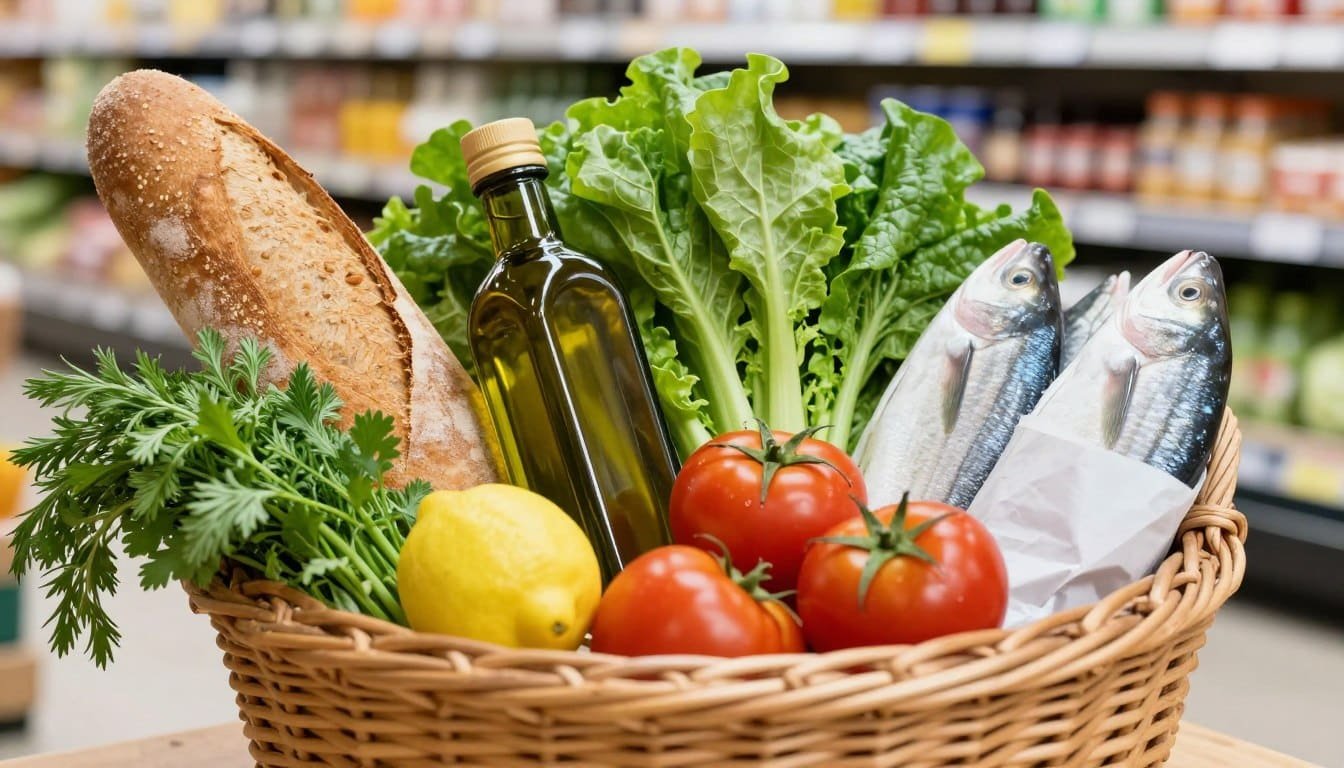
It’s a practical, 3-week eating plan built around 12 core Mediterranean ingredients: extra virgin olive oil, vegetables, fruits, whole grains, legumes, nuts, fish, poultry, eggs, dairy, herbs and spices, and optional red wine. Simple daily and weekly serving goals help you build lasting habits. The idea is to focus on these whole foods for 21 days, long enough to feel a difference but short enough to stay motivated.
You don’t need exotic ingredients or complicated recipes; it’s about getting comfortable with a new rhythm of eating.
Key takeaways
- A Mediterranean diet 12 ingredients 21 days plan focuses on 12 whole-food staples over three weeks to form healthy habits.
- The 12 ingredients include extra virgin olive oil, vegetables, fruits, whole grains, legumes, nuts, fish, poultry, eggs, dairy, herbs, and optional wine.
- Following this pattern is linked to lower rates of stroke and type 2 diabetes.
- Daily and weekly serving goals, like at least 3 servings of vegetables per day and 3 servings of fish per week, guide how much of each food you need.
- The 21-day timeline is long enough to see small changes but short enough to feel manageable.
Why 12 ingredients?
I settled on 12 because it covers the full range of foods that appear in the traditional Mediterranean diet without overwhelming you. The Harvard School of Public Health was one of the groups that introduced the Mediterranean Diet Pyramid in 1993 as a guide to help familiarize people with the most common foods of the region.
From that, I pulled the 12 that show up in nearly every version: olive oil, vegetables, fruits, whole grains, legumes, nuts, fish, poultry, eggs, dairy, herbs and spices, and wine (if you drink). Each one brings something different, such as healthy fats, fibre, lean protein or antioxidants, so your meals feel varied and satisfying.
These 12 ingredients also match the serving goals that dietitians recommend. For example, the serving guidance suggests at least 3 servings of vegetables daily, 3 servings of fish weekly, and 1 to 4 servings of the oil per day. By sticking to these 12, you naturally crowd out the ultra-processed snacks and takeaways that can leave you feeling sluggish.
5 easy tips for your first 7 days
Getting started is the hardest part. Here’s how I’d approach week one if I were doing this myself.
- Clear out the pantry. Remove biscuits, chips, and sugary cereals. Replace them with a few tins of chickpeas, a bag of walnuts, and a good bottle of olive oil. Having the 12 ingredients visible makes it easier to reach for them.
- Plan three simple dinners. You don’t need a new recipe every night. Pick three meals that use fish, legumes, and plenty of vegetables, like baked salmon with roasted veg, lentil soup, and a chicken and vegetable stir-fry. Cook enough for leftovers.
- Use olive oil as your main fat. Swap butter for olive oil when you sauté onions or dress a salad. Aim for 1 to 4 servings of that oil per day, with a serving size of 1 tablespoon. It’s a small change that adds up.
- Snack on nuts and fruit. Instead of a biscuit, have a small handful of almonds and an apple. Nuts give you staying power, and the fruit adds natural sweetness. Keep a mix of raw, unsalted nuts in a jar on the bench.
- Don’t stress about perfection. If you have a slice of cake at a birthday, enjoy it and move on. The 21-day plan is about progress, not punishment. Just aim to include most of those 12 most days.
For a handy shopping list you can print and take to the shops, see our printable Mediterranean diet food list PDF.

What does a typical day look like?
Here’s a sample day that uses all 12 and keeps portions sensible. For breakfast, I’d have a bowl of porridge made with rolled oats, topped with a handful of walnuts and a cup of fresh berries. That covers whole grains, nuts, and fruit.
Lunch could be a large salad with chickpeas, cucumber, tomato, red onion, and a generous drizzle of olive oil, plus a slice of wholegrain bread. That’s vegetables, legumes, olive oil, and grains. Dinner might be a piece of grilled salmon with roasted sweet potato and steamed green beans, seasoned with dried oregano and lemon.
That’s fish, starchy vegetables, and herbs. A small pot of natural yogurt with a teaspoon of honey rounds off the day as a treat. You’ll notice there’s little or no red meat and little or no butter, just simple whole foods that align with the Mediterranean pattern.
Can I really stick with this for 21 days?
I think so, if you keep it flexible. The beauty of the Mediterranean diet 12 ingredients 21 days approach is that it’s not a rigid menu. You can swap salmon for sardines, chickpeas for lentils, or spinach for kale depending on what’s in season or on special.
If you’re eating out, choose grilled fish with vegetables and ask for olive oil on the side. If you’re short on time, a tin of tuna mixed with cannellini beans and a splash of olive oil makes a quick lunch.
The key is to keep them in rotation, not to follow a strict meal plan. Many people find that after two weeks, the new choices start to feel automatic. If you’re curious about other eating patterns that share similar principles, take a look at our article on diets similar to Mediterranean diet, explained.
What health changes might I notice?
I’m not going to promise you’ll drop a dress size or fix a health condition in 21 days. That’s not how it works. But research gives us a good idea of what’s possible over time.
An umbrella review of 238 randomised controlled trials found that the Mediterranean diet can reduce fatal cardiovascular disease outcome risk by 10% to 67% and non-fatal cardiovascular disease outcome risk by 21% to 70%, especially in people with established cardiovascular disease. The same review noted that the evidence was stronger for secondary prevention, meaning if you’ve had a heart problem, this way of eating may offer extra protection.
The 2025 national guidelines also highlight reduced incidence and progression of cognitive decline and type 2 diabetes, and high-quality evidence supports the protective role against stroke. While 21 days is just the start, many people report feeling less bloated, having more stable energy, and sleeping better once they cut back on processed foods and up their vegetable intake. It’s a gentle shift that your body tends to appreciate.

Related reading
Frequently asked questions
What are the 12 ingredients exactly?
A Mediterranean diet 12 ingredients 21 days plan simply keeps those twelve in regular rotation.
Do I need to count calories?
No. The plan focuses on food quality and sensible portions, not numbers. Serving sizes like ½ cup of cooked grains or 3 to 4 ounces of fish guide you naturally.
Can I have red wine?
If you already drink, a moderate amount of wine with meals is traditional, but if you don’t already drink, don’t start.
Is this suitable for weight loss?
While not designed as a weight-loss diet, many people lose a few kilos because they replace processed foods with filling, nutrient-dense options. The Mayo Clinic Diet notes a Mediterranean-style plan can support healthy weight loss.
What if I don’t like fish?
You can still follow the plan by focusing on plant-based proteins like lentils, chickpeas, and nuts, plus poultry and eggs. The key is to get healthy fats from olive oil and nuts instead.
Honest take
In my view, the Mediterranean diet 12 ingredients 21 days approach works best for people who want a clear, no-fuss framework to start eating better. It’s not a magic fix, but it cuts through the noise. The biggest mistake I see is trying to be perfect from day one.
Just aim to include most of those 12 most days, and you’ll be on the right track. This is general information, not medical advice. If you have a health condition, speak with your doctor before making big changes.
References
- Italian Scientific Societies and the National Institute of Health. 2025 National Guidelines on the Mediterranean Diet: Executive Summary of a Joint Report. 2025. https://pmc.ncbi.nlm.nih.gov/articles/PMC13752420/
- Cleveland Clinic. Mediterranean Diet: Food List & Meal Plan. n.d. https://my.clevelandclinic.org/health/articles/16037-mediterranean-diet
- Cleveland Clinic. How To Follow the Mediterranean Diet. 2023. https://health.clevelandclinic.org/how-to-get-started-on-the-mediterranean-diet-aka-the-healthiest-diet-for-your-heart
- Harvard School of Public Health. Diet Review: Mediterranean Diet. n.d. https://nutritionsource.hsph.harvard.edu/healthy-weight/diet-reviews/mediterranean-diet/
- The effectiveness of the Mediterranean Diet for primary and secondary prevention of cardiovascular disease: An umbrella review. 2025. https://pmc.ncbi.nlm.nih.gov/articles/PMC11795232/
- Mayo Clinic Diet. Mediterranean Meal Plan. n.d. https://diet.mayoclinic.org/us/meal-plans/mediterranean-meal-plan/
Get well and stay well,
Ray Baker
