
By Ray Baker
In 2020, a meta-analysis published in Nutrients found that older adults who stuck to a Mediterranean eating pattern had significantly lower levels of C-reactive protein (CRP), a key marker of inflammation [1]. If that has you hunting for a straightforward Mediterranean anti inflammatory diet food list, I don’t blame you. The good news is the list is neither exotic nor punishing. It’s built around everyday staples you can find at any supermarket, and I’m going to walk you through it without the hype.
A Mediterranean anti inflammatory diet food list?
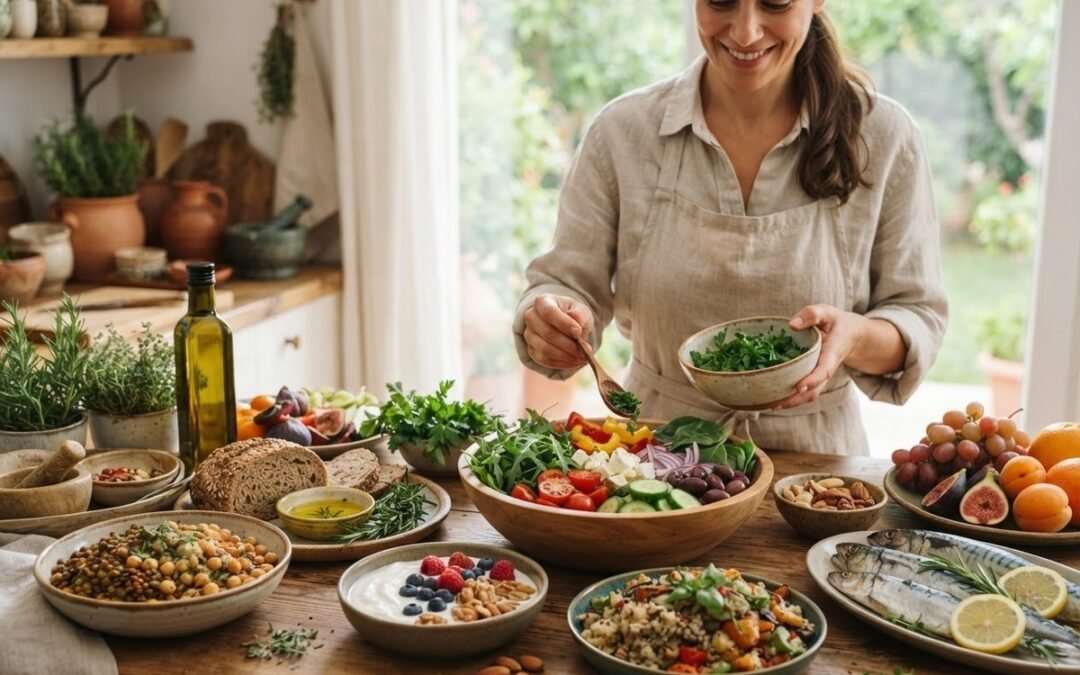
A Mediterranean anti inflammatory diet food list is the whole foods at the heart of Mediterranean eating that research links to lower inflammation in older adults. Think extra virgin olive oil, leafy greens, berries, oily fish, legumes, nuts, seeds, and herbs. It is about what you add, not what you give up. This is general information, not medical advice.
Key takeaways
- Vegetables, fruit, whole grains, legumes, fish, nuts, and extra virgin olive oil form the foundation of this anti-inflammatory Mediterranean pattern.
- Herbs and spices like turmeric, oregano, and cinnamon add flavour while letting you cut back on salt and added sugar.
- Poultry, eggs, and dairy have a moderate place, but red meat and sugary treats are for special occasions, not daily habits.
- Portion awareness matters just as much as which foods you choose; I often point people to the serving goals outlined by the Cleveland Clinic [2].
- You don’t have to follow it perfectly. A handful of walnuts here, a tin of sardines there, and more leafy greens are small steps that add up.

Which foods anchor the list?
The real workhorses are the foods you eat several times a day or at least several times a week. According to Harvard Health, a high-intake Mediterranean pattern means enjoying fruits, vegetables, whole grains, nuts, legumes, and extra virgin olive oil several times a day [3]. On the fish and seafood front, the Cleveland Clinic suggests three servings per week, with a focus on omega-3-rich options like salmon, sardines, and mackerel [2]. For me, this is where the anti-inflammatory power really shows up: brightly coloured produce, whole grains like barley and oats, and a steady rotation of oily fish.
The Cleveland Clinic’s anti-inflammatory food list echoes the same theme, naming berries, dark leafy greens, walnuts, and turmeric among the foods to eat more often [4]. I’m not one to chase silver bullets, but combining these staples day after day gives your body a steady supply of polyphenols and healthy fats. That’s the essence of a Mediterranean anti inflammatory diet food list: it is built on frequency, not perfection. The Cleveland Clinic also suggests rounding out your daily routine with a tablespoon or two of extra virgin olive oil and a handful of raw nuts [2].
What science says about diet and inflammation
The 2020 meta-analysis I mentioned earlier pooled five cross-sectional studies and found a statistically significant association between eating a Mediterranean pattern and lower CRP in older adults [1]. That does not mean popping a single food will dial down aches overnight. The researchers were careful to note that most of the data came from observational studies, and they called for more long-term randomised controlled trials to confirm cause and effect [1].
More recently, a 2024 evidence map from the US National Center for Biotechnology Information concluded that multiple anti-inflammatory dietary patterns, including the Mediterranean diet, appear to be associated with lower risks for high blood pressure, some cancers, and liver conditions [5]. Still, the authors highlighted that the evidence is moderate at best, and the benefits could come from foods the diet includes as much as from foods it excludes [5]. The evidence map also found that these eating patterns are not linked to any real harm, which is comforting when you’re making changes later in life [5]. No one is handing out guarantees, but there’s an encouraging signal here for anyone who wants to eat better long term. If you’re curious how a Mediterranean approach plays out for chronic inflammation, my article on healthy eating for chronic inflammation ties the research to practical meal ideas.
5 easy tips to build your own list
As you build your shopping list around these staples, these five habits make the process simpler and more affordable.
- Pick one new vegetable each week. I favour dark leafy greens like silverbeet or rocket, but any colour works. Roast a tray of carrots and red capsicum with a drizzle of extra virgin olive oil to get started.
- Swap butter for extra virgin olive oil. According to Cleveland Clinic guidance, using EVOO instead of animal fats is a signature move [2]. I use it in salad dressings and for gentle sautéing.
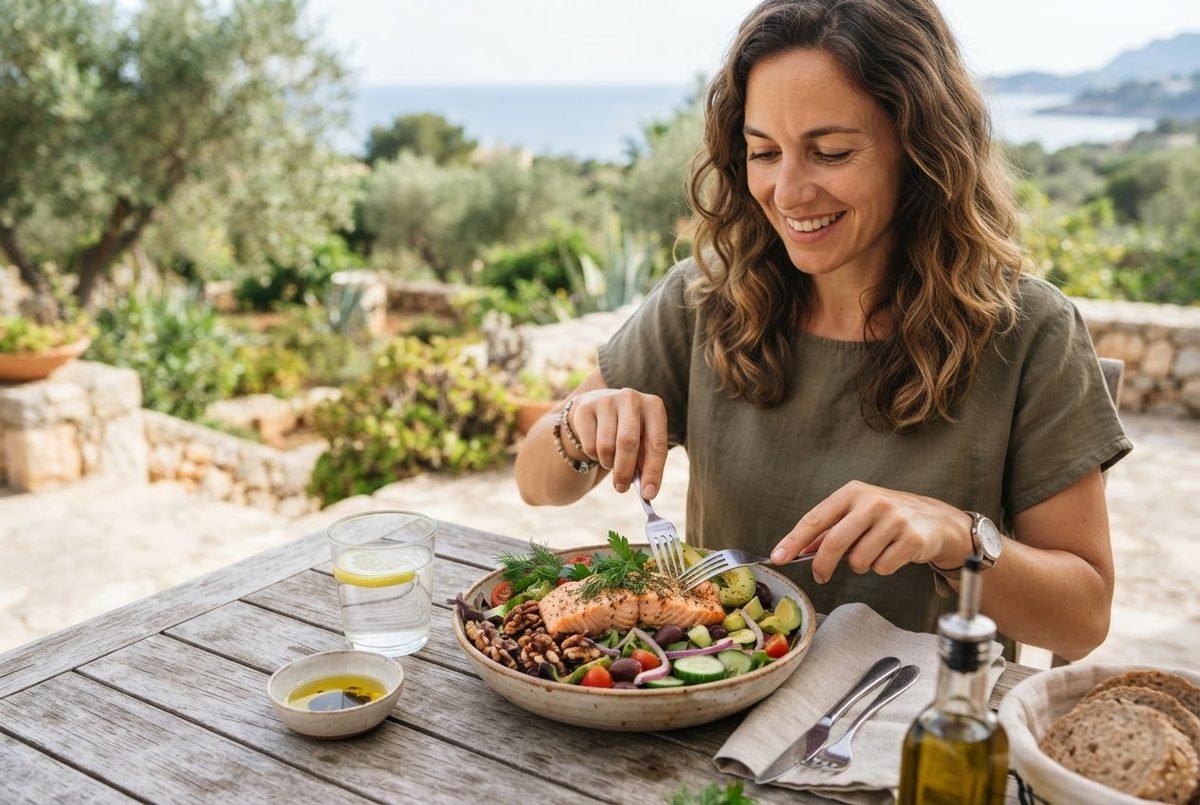
- Keep tinned sardines or salmon in the pantry. Three servings of fatty fish per week is the target, and tinned is just as good as fresh for omega-3s. It’s one of the more budget-friendly proteins you can put on this list.
- Add a small handful of walnuts to your morning oats. Nuts appear on every anti-inflammatory shortlist I’ve seen, and walnuts are a favourite because they’re easy to sprinkle over porridge or yogurt. The Cleveland Clinic specifically calls out walnuts as a smart choice [4].
- Season with herbs and spices, not just salt. Turmeric, oregano, and cinnamon bring flavour and colour. I also like a pinch of chilli for warmth. These replace salty processed seasonings and brighten up simple meals.
If you’re cooking for someone who winces at the word “healthy,” I’ve written about simple swaps that do not feel extreme so you can ease into this gently.
What foods do I personally limit?
I don’t ban anything, but I keep some foods to small portions and special occasions. Red meat, for example, is a once-a-week choice at most, leaning toward lean cuts like sirloin or tenderloin [2]. Commercially baked goods, packaged snacks, sugary drinks, and processed meats like salami or bacon are on the “choose less” list in every major guide I trust [4][3]. When I look at my own Mediterranean anti inflammatory diet food list, sweets are not a daily event; they’re for celebrations. I treat them the same way. I also steer clear of deep-fried foods, which the Cleveland Clinic’s anti-inflammatory guide lists among foods to limit [4].
My rule of thumb is this: if an ingredient list reads more like a chemistry set than a recipe, I leave it on the shelf. That approach lines up with what Cleveland Clinic experts suggest when they recommend whole foods over manufactured alternatives [4]. If you want to see how this looks on a plate for older adults, take a look at my article on gentle everyday Mediterranean meals for seniors.
Is this just anti-inflammatory or Mediterranean?
The short answer is both. The Mediterranean diet is frequently cited as one of the prime examples of an anti-inflammatory eating pattern. Harvard’s Nutrition Source points out that there is no single official “anti-inflammatory diet,” and the Mediterranean and DASH diets already showcase most of the foods thought to dampen inflammation [6]. So when you pull together a Mediterranean anti inflammatory diet food list, what you’re really doing is taking the foods that define the Mediterranean tradition and organising them through an anti-inflammatory lens. The same pot of lentil soup drizzled with olive oil, the same bowl of berries with yogurt, the same piece of grilled salmon, they all sit comfortably under both labels. I’ve written more about this connection in how anti-inflammatory foods in the Mediterranean diet promote long-term health if you want a deeper dive.
Related reading
- Healthy Eating for Chronic Inflammation: A Mediterranean Starting Point: Why this matters for chronic inflammation
- Mediterranean Diet for Picky Eaters: Simple Swaps That Do Not Feel Extreme: Simple swaps for fussy eaters
- Anti-Inflammatory Diet for Seniors: Mediterranean Foods That Make Everyday Meals Easier: Gentle meals for seniors
- How Anti-Inflammatory Foods in the Mediterranean Diet Promote Long-Term Health: How these foods support long‑term health
Frequently asked questions
Can I still eat bread on this food list?
Yes, a Mediterranean anti inflammatory diet food list includes whole-grain or sourdough bread over white, and I watch the portion. I typically stick to one slice and mop up olive oil instead of butter.
Do I need fish every day to fight inflammation?
No, the consistent advice is three servings of fatty fish per week [2]. I often buy tinned sardines and wild salmon to keep it budget friendly.
Is a glass of red wine required?
Not at all. The Cleveland Clinic notes that wine is optional, and the American Heart Association cautions against starting to drink for health reasons [2]. If you enjoy a small glass with dinner, fine; if not, water with lemon is a better choice.
Can a vegetarian follow this way of eating?
Absolutely. This way of eating works just as well with legumes, nuts, seeds, eggs, and fermented dairy providing the protein. I lean on lentils, chickpeas, and tofu regularly.
Is this way of eating expensive?
It does not have to be. Frozen berries, tinned legumes, home-brand extra virgin olive oil, and in-season local vegetables keep costs down without stretching the weekly shop.
Will this food list cure my arthritis or joint pain?
No single food list can cure any condition. This is general information, not medical advice. Some people find eating this way helps them feel better day-to-day, but talk to your doctor about managing joint pain.
Honest take
I’ve spent years reading the studies and listening to people over 50 who want their meals to support their health. The Mediterranean anti inflammatory diet food list isn’t a miracle. It’s a sensible, colourful, and sustainable way to eat that may help your body fight low-grade inflammation over time. I’d never pretend it replaces medical care, but if you’re looking for a pattern that feels good and tastes even better, this is where I’d start.
References
- Ko, et al. The Mediterranean Dietary Pattern and Inflammation in Older Adults: A Systematic Review and Meta‑analysis. 2020. https://pmc.ncbi.nlm.nih.gov/articles/PMC8009747/
- Cleveland Clinic. Mediterranean Diet: Food List & Meal Plan. https://my.clevelandclinic.org/health/articles/16037-mediterranean-diet
- Harvard Health Publishing. Guide to the Mediterranean diet. https://www.health.harvard.edu/healthy-aging-and-longevity/guide-to-the-mediterranean-diet
- Cleveland Clinic. Anti‑Inflammatory Diet: Foods List and Benefits. https://health.clevelandclinic.org/anti-inflammatory-diet
- National Center for Biotechnology Information. Evidence Map of Anti‑Inflammatory Diet and Related Dietary Interventions for the Prevention and Management of Chronic Health Conditions. 2024. https://www.ncbi.nlm.nih.gov/books/NBK614441/
- Harvard T.H. Chan School of Public Health. Diet Review: Anti‑Inflammatory Diet. https://nutritionsource.hsph.harvard.edu/healthy-weight/diet-reviews/anti-inflammatory-diet/
Get well and stay well,
Ray Baker
