
By Ray Baker
Fewer than one in five Americans follows the common advice to eat fish twice a week, even though fish is one of the simplest protein switches you can make [1]. If you are over 50 and keep a few cans of tuna in the cupboard, you may have asked me about the benefits of eating tuna everyday. I get the appeal: it is cheap, quick, needs no fancy cooking and lasts for months on the shelf. The honest answer is yes, tuna has real nutritional value, but daily tuna needs a little caution, mainly because of mercury and the need for variety, so weigh the benefits of eating tuna everyday against those limits. I see many people over 50 treat canned tuna as a safety food because it is predictable, and that is fine as long as it does not become the only fish on the plate. This is general information, not medical advice, so please talk with your own doctor or dietitian about what suits you.
What are the benefits of eating tuna everyday?
Tuna gives you lean protein, selenium and some omega-3 fats, so it can support a varied Mediterranean-style plate. But eating it every single day raises mercury exposure, especially for people over 50 who value steady energy and memory. I would treat tuna as a useful regular fish, not a daily one.
Key takeaways
- Tuna is a lean, convenient fish that provides protein and useful nutrients.
- Fresh tuna and the tinned variety do not count as oily fish [2].
- A healthy, balanced diet should include at least 2 portions of fish a week, including 1 of oily fish, and a portion is around 140g [2].
- Large predatory fish are more likely to have high levels of mercury because they eat many smaller fish [3].
- Tuna fits a Mediterranean plate best alongside vegetables, olive oil and whole grains.

Is tuna a good everyday fish for over-50s?
Tuna is very practical as you get older. It is shelf-stable, quick to open and usually kind to a fixed budget, and a tin can sit in the cupboard for months without waste. But “everyday” is where I would pause. The advice is to eat at least 2 portions of fish a week, including 1 of oily fish, and a portion is around 140g [2]. Tuna can fill one of those fish slots, but it should not crowd out oily fish like salmon or sardines. If you are currently eating very little fish, having tuna twice a week is already a step forward, and it is one of the simplest benefits of eating tuna everyday to build on. Try it steamed, baked or grilled rather than fried, because frying can raise the fat content [2]. For people over 50, that small switch can make the meal lighter and easier to digest.
What nutrients does tuna actually give you?
Fish are a source of other nutrients like protein, vitamin B12, vitamin D, and selenium too [4]. Salmon, mackerel, tuna, herring, and sardines contain high amounts of EPA/DHA [5]. That said, fresh and canned tuna do not count as oily fish [2]. So I think of tuna as a good protein food with a modest omega-3 contribution, not as a replacement for oily fish. If you are watching blood pressure, our Mediterranean diet for blood pressure article shows simple food swaps that pair well with this pattern.

How does canned tuna compare with fresh tuna?
Canned tuna is the budget-friendly, shelf-stable choice I see people over 50 reach for most often. Fresh tuna steaks are lovely grilled but they cost more and go off quickly, so many of us keep both in rotation. Fresh and canned tuna are not considered oily fish [2]. The main difference is practical: canned tuna is already portioned and easy to add to salads or pasta, while fresh tuna asks for a hot pan or barbecue. Whichever you choose, the same mercury and variety advice applies, so do not let the convenience of one can become an automatic daily habit. If you like canned tuna, check the label so you know whether you are buying it in spring water, oil or a flavoured sauce.
What is the mercury concern if I eat tuna daily?
Mercury is the main reason I would not make tuna a daily habit. People are mainly exposed to methylmercury when they eat fish and shellfish that contain the compound [3]. Exposure to mercury, even small amounts, may cause serious health problems, and is a threat to the development of the child in utero and early in life [3]. Such predators tend to contain high levels of mercury as a result of eating many smaller fish [3]. Tuna is a longer-lived predatory fish, so its mercury level tends to be higher than small fish like sardines. The EPA says fish are an important part of a healthy diet, but some fish and shellfish may contain chemicals, bacteria and/or viruses that could pose health risks to people [6]. For an adult over 50, this is about steady, sensible intake rather than panic. I would not measure every tin, but I would limit tuna to a few meals a week and lean on smaller fish more often.

How do I fit tuna into a Mediterranean-style week?
You do not have to give up tuna. I just shape it into a varied week. Here are 5 easy tips I would use myself.
- Keep tuna to two or three meals a week, and choose a different fish, such as sardines or salmon, for another weekly slot.
- Pick canned tuna in spring water rather than oil, and drain it well before adding it to a meal.
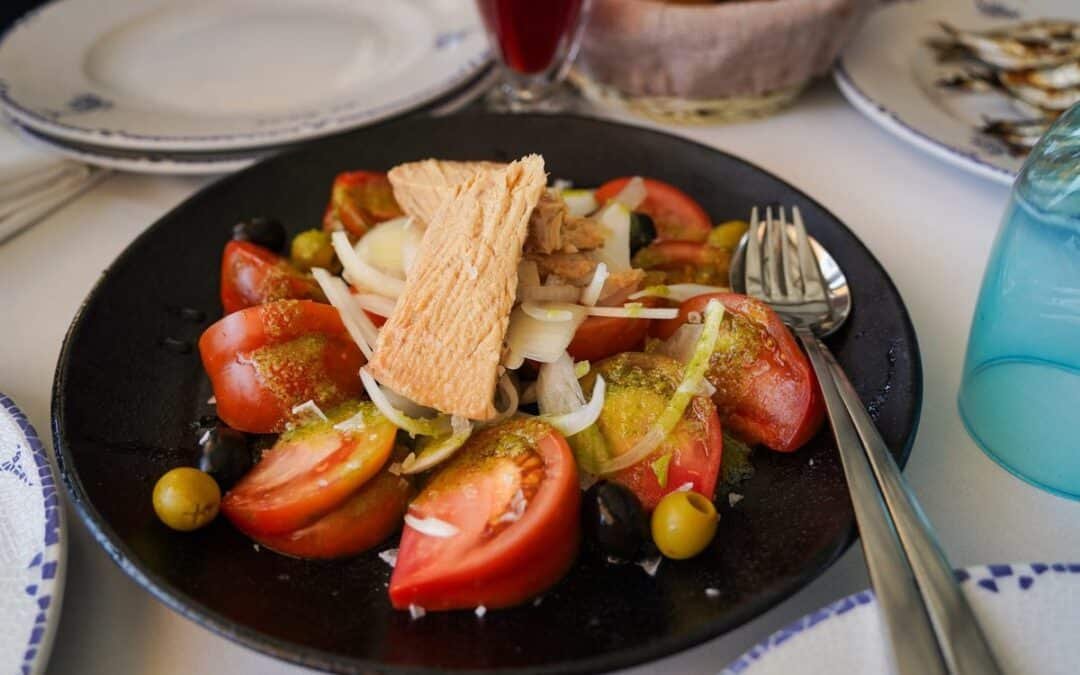
- Use tuna as a topping for a big vegetable salad with olive oil, lemon and a slice of wholegrain bread.
- Try a tuna and white bean bowl with chopped parsley and tomatoes for a quick lunch that does not need cooking.
- States, territories and Tribes issue advisories to protect people from potentially contaminated fish and shellfish caught in local waters [6].
This keeps the benefits without building the whole week around one fish. For days when tuna is not on the menu, our Mediterranean diet without fish guide has plant-based swaps that work well.
Where the eBook fits
If the mercury question makes planning feel complicated, that is exactly where a simple written plan helps. My Ray’s Mediterranean diet eBook with meal plans, shopping lists and recipes (US$27) builds a varied week with fish choices spread across salmon, sardines and tinned tuna, so you are not guessing about portions or frequency. The shopping lists keep the budget side realistic, and the recipes show you how to turn a can of tuna into a proper meal with vegetables, beans and olive oil. It is a calm, practical way to follow the pattern without turning every meal into a research project.
Related reading
- Mediterranean Diet for Blood Pressure: Simple Food Choices to Start With: For readers watching blood pressure, this article pairs simple food swaps with the fish advice.
- Mediterranean Diet Without Fish: How to Stil Get the Benefits: For days when tuna is not on the menu, this guide offers plant-based swaps within the same eating pattern.
Frequently asked questions
Can I eat canned tuna every day if I am over 50?
It is not something I would recommend daily. Mercury bioaccumulates in fish and shellfish, and large predatory fish tend to contain elevated amounts of this metal because they eat numerous prey fish [3]. Better to use tuna a few times a week and vary with salmon or sardines.
Is fresh tuna safer than canned tuna?
Fresh and canned tuna do not count as oily fish [2]. Fresh tuna may cost more, but safety depends more on portion size and variety than form.
How much tuna is a sensible weekly portion?
There is no single tuna-only limit in the sources I use. A healthy, balanced diet should include at least 2 portions of fish a week, including 1 of oily fish, and a portion is around 140g [2].
Does tuna give you omega-3?
Salmon, mackerel, tuna, herring, and sardines contain high amounts of EPA/DHA [5].
Should I worry about mercury in tinned tuna?
You do not need to panic, but you should be mindful. Large predatory fish are more likely to carry elevated amounts of this metal as a result of consuming numerous prey fish [3].
Honest take
My honest take is that the benefits of eating tuna everyday are real but modest, and the mercury trade-off is not worth making it a daily default. If you are over 50 and want steady energy, memory and a calm eating pattern, I would choose tuna for two or three meals a week and let salmon, sardines, beans and vegetables do the rest, keeping the benefits of eating tuna everyday in mind without overdoing it. The best plan is a varied one, and that is easier to follow when the week is written down. This is general information, not medical advice.
References
- The Nutrition Source. Fish: Friend or Foe?. https://nutritionsource.hsph.harvard.edu/fish/
- NHS. Fish and shellfish. https://www.nhs.uk/live-well/eat-well/food-types/fish-and-shellfish-nutrition/
- World Health Organization. Mercury and health. 2024. https://www.who.int/news-room/fact-sheets/detail/mercury-and-health
- FDA. Advice About Eating Fish. https://www.fda.gov/food/consumers/advice-about-eating-fish
- The Nutrition Source. Omega-3 Fatty Acids: An Essential Contribution. https://nutritionsource.hsph.harvard.edu/what-should-you-eat/fats-and-cholesterol/types-of-fat/omega-3-fats/
- U.S. Environmental Protection Agency. Choose Fish and Shellfish Wisely. https://www.epa.gov/choose-fish-and-shellfish-wisely
Get well and stay well,
Ray Baker
