

You’re standing in the kitchen holding a 2 kg bag of spuds, with a Mediterranean diet plan stuck to the fridge and a nagging little voice asking whether the two can be mates. So, can you eat potatoes on the Mediterranean diet, or have you just bought the world’s most expensive bag of guilt?
Here’s the quick fix: yes, you can, and you don’t need to sneak them in after dark. The trick is not the potato itself. It’s how it’s cooked, how much lands on the plate, and what it’s sitting next to. Let’s sort it out, with the research, not the rumours.
Quick answer
Yes, potatoes can fit the Mediterranean diet. Choose boiled, baked or olive-oil-roasted potatoes, keep the skin on, aim for about a half-cup cooked serving as part of your starchy vegetables, and pair them with vegetables, beans or fish. Limit deep-fried potatoes such as French fries. Large US cohort data link fries, not baked or boiled potatoes, with higher type 2 diabetes risk (BMJ, 2025).
Three key takeaways
- Method beats the spud. Boiled, baked and roasted potatoes sit comfortably in a Mediterranean-style pattern. Fries are the one to keep as an occasional extra.
- What you swap matters. Replacing potatoes with whole grains looked helpful in the research, but replacing them with white rice did not.
- Cool, skin-on and sensible. Leaving the skin on and letting cooked potatoes cool before eating are two easy habits that fit the plan.
Can you eat potatoes on the Mediterranean diet? What the experts actually say
The first thing to know is that there isn’t one official rulebook. Different health organisations draw the Mediterranean diet slightly differently, and potatoes are where they politely disagree.
Cleveland Clinic lists potatoes under “whole grains and starchy vegetables”, suggests three to six servings a day from that group, and specifically recommends baking or roasting red-skin potatoes or sweet potatoes (Cleveland Clinic). One serving there is half a cup of cooked starchy vegetables, or a slice of whole-grain bread.
The Mayo Clinic’s Mediterranean handout takes a more cautious line and suggests limiting how often you choose starchy vegetables such as potatoes, corn, peas and winter squash (Mayo Clinic, patient handout MC6815). Meanwhile the Nordic Nutrition Recommendations 2023 say potatoes can be part of a healthy diet, prefer boiled or baked potatoes made with little fat and salt, and say deep-fried potatoes should be limited (Nordic Nutrition Recommendations, 2023).
Put those together and a sensible, honest answer appears. Potatoes are welcome, they’re just not the star. In a Mediterranean-style pattern the stars are vegetables, legumes, fish, nuts, whole grains and extra virgin olive oil. The potato is a reliable supporting actor, a bit like the mate who always turns up to help you move house but doesn’t need a speech.
Can you eat potatoes on the Mediterranean diet if you’re watching blood sugar?
If you’re thinking about the bigger picture, such as keeping blood sugar steadier and protecting your heart as you get older, the potato question is worth a closer look. Food is one supporting habit among several here. Movement, sleep, not smoking and regular check-ups all do their share of the heavy lifting.
The fries problem
In 2025 a team led by Harvard T.H. Chan School of Public Health published a large analysis in the BMJ. It followed 205,107 men and women from three long-running US cohorts for more than 30 years, during which 22,299 participants reported developing type 2 diabetes (Harvard T.H. Chan School of Public Health, 2025).
The headline: every three extra weekly servings of French fries were associated with a 20% higher rate of type 2 diabetes. Baked, boiled and mashed potatoes, combined, were not significantly associated with risk (BMJ, 2025). In other words, the trouble followed the fries rather than the humble boiled spud.
What you swap them for matters more than the potato
This is the part most blog posts skip. The researchers also ran “substitution” estimates. Replacing three weekly servings of potatoes with whole grains was estimated to lower type 2 diabetes rates, with the biggest gain from swapping out fries (BMJ, 2025). Replacing fries with vegetables, legumes or even refined grains was also linked with lower risk. On the other hand, replacing baked, boiled or mashed potatoes with white rice was associated with a higher risk.
So the lesson isn’t “ban potatoes” or “potatoes are a superfood”. It’s “think about what’s on the plate instead”. If your normal Tuesday is fries, swapping to roasted potatoes with a big salad is a step in the right direction. If your normal Tuesday is white rice, a baked potato with beans isn’t a disaster.
An honest caveat
These were observational studies, which means they show patterns, not proof of cause and effect. Participants reported their own eating, and the people who eat lots of fries often differ from other people in plenty of ways. A Nordic scoping review also noted the overall evidence on potatoes is limited and that effects vary a lot by cooking method (Food & Nutrition Research, Nordic scoping review). Treat the findings as a useful nudge, not a verdict.
The cooking-method cheat sheet
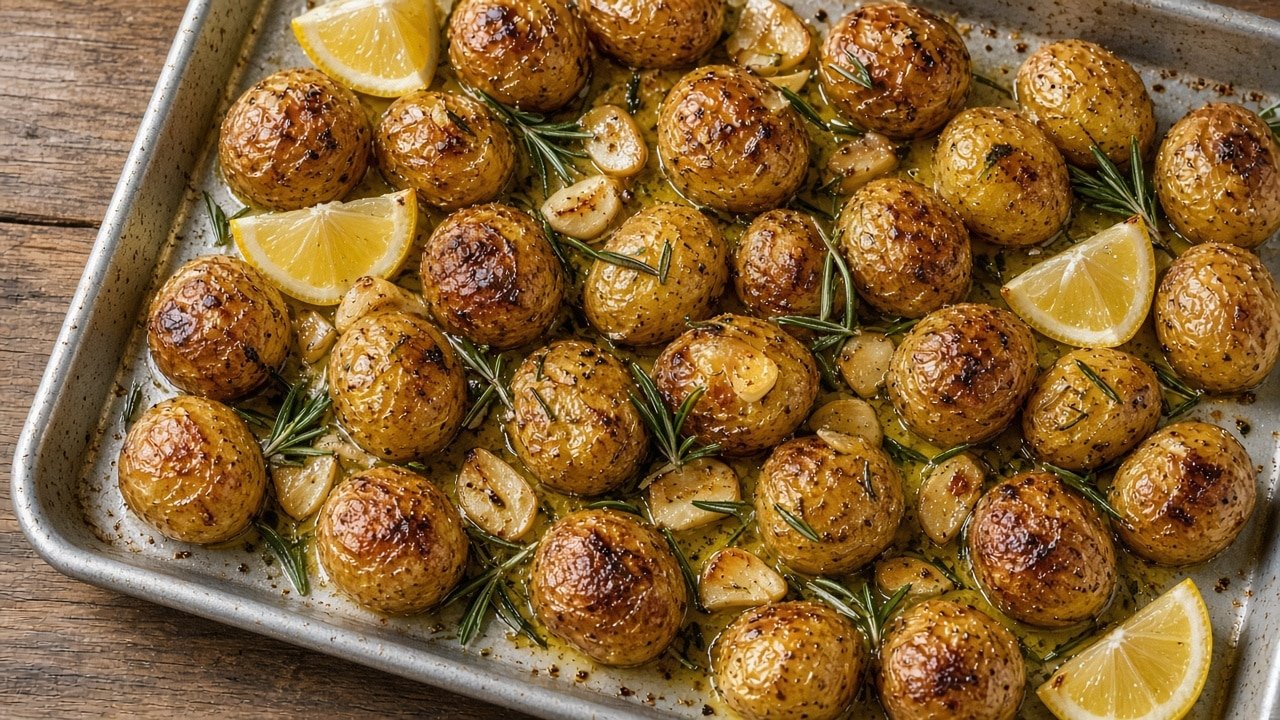
Here’s the simple table I wish more sites had published. It’s based on the guidance above, not on invented numbers.
| How it’s cooked | Fits the Mediterranean pattern? | Quick note |
|---|---|---|
| Boiled (skin on) | Yes, regularly | Great in salads with olive oil, lemon and herbs |
| Baked | Yes, regularly | Top with beans, tuna, tomatoes or yoghurt rather than butter and bacon |
| Roasted in olive oil | Yes, in sensible portions | Measure the oil with a spoon, not a heavy hand |
| Cooked, then cooled (e.g. potato salad) | Yes | Cooling raises resistant starch; skip heavy mayo, use olive oil or yoghurt dressing |
| Mashed | Yes, with tweaks | Use olive oil and a splash of the cooking water instead of lots of butter and cream |
| French fries, chips, crisps | Occasional only | This is the form linked with higher diabetes risk in the BMJ research |
How to fit potatoes on your plate without overthinking it
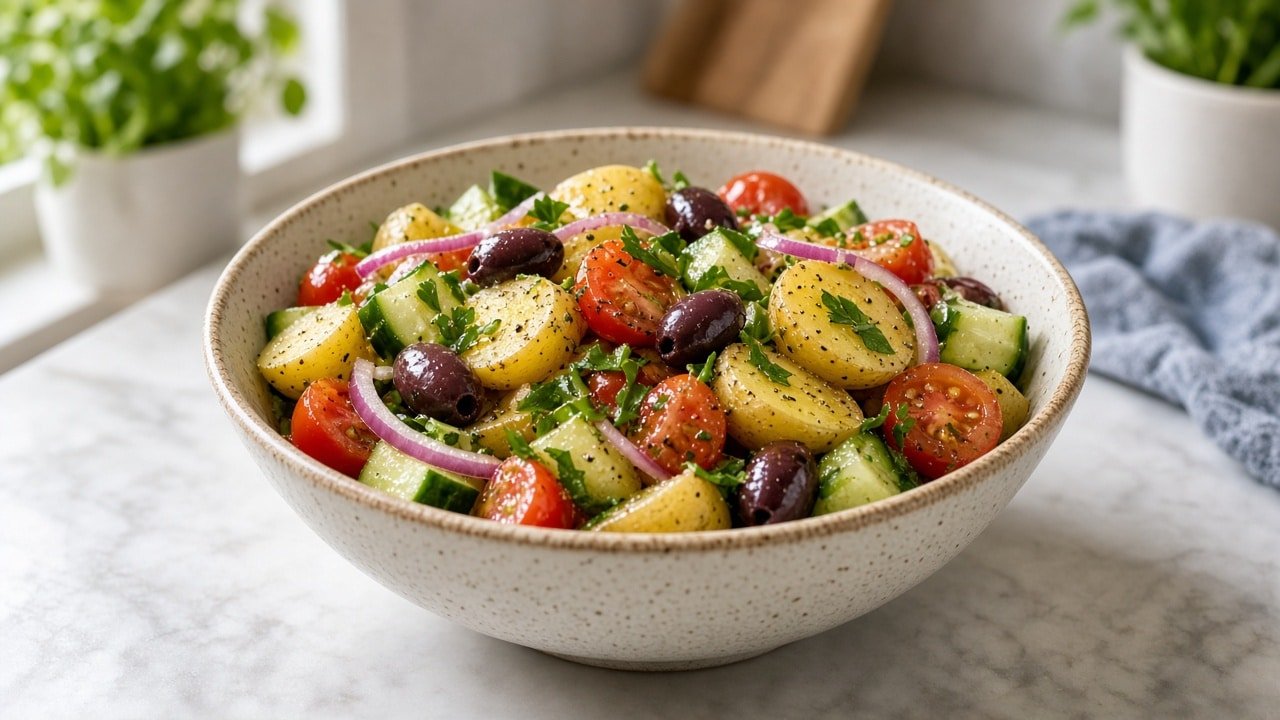
You don’t need a food scale and a spreadsheet. Here’s the easy version.
Use the plate as your guide. Fill about half your plate with vegetables, a quarter with protein such as fish, chicken, eggs or beans, and a quarter with your starchy food. That quarter can be potato one night, whole-grain pasta or bread the next, and barley or brown rice after that. Variety keeps things interesting and spreads the nutrients around.
Keep to a serving or two. Cleveland Clinic counts half a cup of cooked starchy vegetables as one serving. As a rough rule of thumb, a fist-sized potato is a decent single portion for most people, though your own needs may differ. If you’ve got diabetes or are managing your weight, your doctor or dietitian can tailor this for you.
Keep the skin on. Potatoes eaten with their skin keep more of their fibre, and it saves you peeling. Laziness and nutrition on the same side for once.
Cool them down, then eat them
Here’s a handy kitchen trick. When you cook and then chill potatoes, some of their starch changes into resistant starch, which isn’t digested the same way. A 2021 review on resistant starch in the Mediterranean diet notes that cooling cooked potatoes can substantially increase their resistant starch content (Foods, 2021). Reheating them afterwards is fine, and the leftovers make a cracking next-day potato salad.
One housekeeping note: refrigerate cooked potatoes promptly (within two hours) and eat them within a few days. Leftover spuds are a classic way to turn a nice dinner into a bad night.
Why potatoes still earn their place
It’s easy to focus on what potatoes might do wrong and forget what they bring. They’re a source of potassium, vitamin C, vitamin B6 and folate, plus some fibre, especially when eaten with the skin (Eufic; Nutrients, 2018). Potassium matters for muscle and nerve function and for regulating blood pressure.
That’s a nice supporting role for a food that costs very little and keeps well. For those of us over 50, with grocery bills as lively as the evening news, cheap and filling counts for something. The goal is a pattern you can actually stick with for years, because a Mediterranean-style way of eating works through consistency, not perfection.
For ideas on keeping potatoes in the right company, you might like our guide to low-glycemic Mediterranean meals, or the practical tips in portion control without calorie counting. If you’re after something to serve alongside your spuds, have a browse of these Mediterranean snack and side dish recipes, and for the fibre side of the story, high-fibre meals for gut health is worth a read.
A very short comfort recipe: olive oil mash with white beans
For nights when only mashed potato will do. Serves 2 to 3.
- Boil 500 g (about 1 lb) skin-on potatoes in salted water until tender, about 15 to 20 minutes.
- Add a drained can of white beans for the last 3 minutes.
- Drain, keeping a mug of the water. Mash roughly with 2 tablespoons extra virgin olive oil, a crushed garlic clove, the juice of half a lemon, salt and pepper, loosening with the cooking water.
- Finish with chopped parsley and a good grind of black pepper.
Substitutions: swap white beans for chickpeas or lentils; use plain Greek yoghurt for part of the oil if you prefer it creamier; use sweet potato for half the spuds; leave out garlic if it doesn’t agree with you.
Shareable: your potato-friendly grocery list
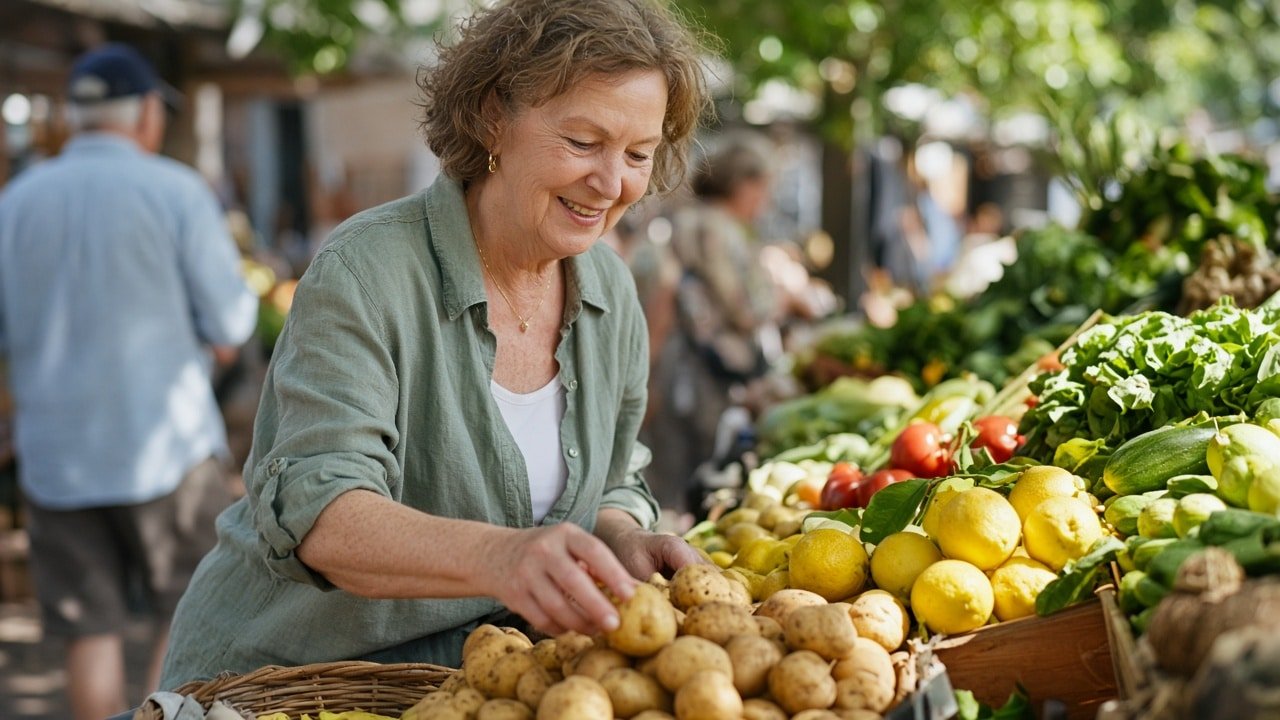
- Small waxy or red-skin potatoes (1 to 2 kg), sweet potatoes (optional)
- Extra virgin olive oil, lemons, garlic
- White beans or chickpeas (canned is fine), lentils
- Leafy greens, tomatoes, cucumber, capsicum (bell pepper)
- Fish: salmon, sardines or canned tuna
- Eggs, plain Greek yoghurt
- Whole-grain bread or pasta, barley or brown rice
- Fresh parsley, oregano, rosemary
- Olives and a handful of nuts for snacking
Shareable: a 7-day potato-smart plan
Potatoes appear on four of seven days, in sensible portions. Swap freely.
- Monday: Grilled fish, boiled baby potatoes with lemon and herbs, big green salad.
- Tuesday: Lentil and vegetable soup with whole-grain bread.
- Wednesday: Baked potato topped with white beans, tomatoes and a spoon of Greek yoghurt.
- Thursday: Chicken and vegetable tray bake with whole-grain couscous.
- Friday: Cold potato salad (made Thursday night) with tuna, olives and parsley.
- Saturday: Whole-grain pasta with tomato, vegetables and a little cheese.
- Sunday: Roast vegetables and olive-oil roasted potatoes, with salmon or chickpeas.
Shareable: a message to send a friend
Got a mate who thinks the Mediterranean diet means giving up chips for life? Copy and paste this:
Good news: you don’t have to give up potatoes on the Mediterranean diet. Boiled, baked or olive-oil roasted with the skin on is fine. It’s mainly the deep-fried stuff to keep as a treat. Try swapping fries for a baked potato with beans this week and let me know how you go!
Frequently asked questions
Can you eat potatoes every day on the Mediterranean diet?
Some versions of the diet count potatoes within a daily group of whole grains and starchy vegetables, while others suggest limiting how often you choose them. A moderate serving on some days, mixed with other starchy foods, is a sensible middle path. If you have diabetes or are watching your weight, ask your doctor or dietitian what suits you.
Are sweet potatoes better than white potatoes?
Both fit. Cleveland Clinic lists red-skin potatoes and sweet potatoes as good starchy vegetable choices. Sweet potatoes offer orange-coloured plant pigments, and white potatoes offer potassium and vitamin B6, so mixing them up is a good plan.
Is potato salad allowed?
Yes, when it’s made the Mediterranean way: boiled potatoes, olive oil, lemon or vinegar, herbs, and perhaps olives, tuna or beans. Skip the heavy mayonnaise, and refrigerate it promptly.
Should I avoid potatoes if I’m worried about type 2 diabetes?
Not necessarily, but be selective. The 2025 BMJ research linked French fries, not baked or boiled potatoes, to higher risk, and whole grains looked like a better swap than white rice. Because individual needs vary, talk to your doctor or an accredited dietitian before changing how you manage diabetes.
Disclaimer
This article is for general information only and isn’t medical advice. It doesn’t replace advice from your doctor or an accredited dietitian, especially if you have diabetes, kidney disease or another health condition, or take medication. Always check with a health professional before changing your diet.
References
BMJ (2025); Harvard T.H. Chan School of Public Health (2025); Cleveland Clinic; Mayo Clinic, patient handout MC6815; Nordic Nutrition Recommendations (2023); Food & Nutrition Research; Foods (2021); Nutrients (2018); Eufic.
Get well and stay well,
Ray Baker
