
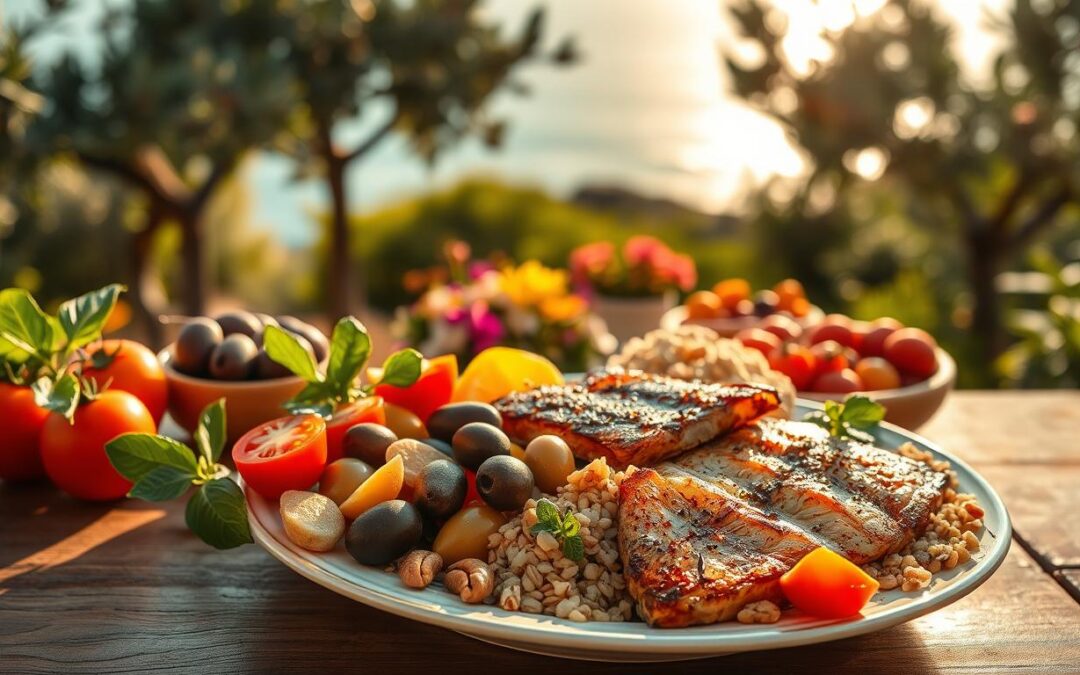
Are you tired of logging every single bite into a mobile app? Many people find it stressful. It takes the fun out of eating.
Looking for a better way to manage your health? You’re not alone.
The good news is you can control portions without counting calories. Just change how you arrange your plate. Focus on the quality of your food, not just numbers.
Eating like a Mediterranean helps you eat better. You focus on veggies, healthy fats, and lean proteins. This way, you build a healthier relationship with food.
It’s time to stop counting and start enjoying your meals again.
Ready to get started? Click the button below to download our simple Mediterranean starter guide. Start your journey to balanced, stress-free eating today.
Key Takeaways
- Focus on food quality instead of tracking numbers to reduce mealtime stress.
- The Mediterranean Plate method provides a simple, visual way to balance your nutrients.
- Intuitive eating helps you recognize fullness cues more effectively.
- Small, consistent changes lead to long-term health improvements for adults over 50.
- Enjoying whole, vibrant foods makes healthy living feel like a reward.
The Mediterranean Plate: Mastering Portion Control Without Calorie Counting
Long-term wellness is about visual cues, not just numbers. Many find counting calories stressful. It turns meals into a chore, not a joy.
Why Counting Calories Feels Like a Full-Time Job
Tracking every bite is hard and tiring. It makes eating feel like work, not pleasure. This can lead to burnout, making it hard to stick to a mediterranean diet maintenance plan for over years of age.
Instead, try the plate method diet. It’s easy and lets you enjoy your food. You don’t need scales or calculators.
The Shift Toward Mindful Eating After 50
As you get older, your body needs a more natural way to eat. Mindful eating is key. It helps you know when you’re really hungry.
Eating slowly is important for healthy portions after 50. It lets your body feel full before you eat too much. This habit helps avoid discomfort and keeps your metabolism healthy.
Quick Answer: The Mediterranean Plate Method Explained
The Mediterranean Plate is a simple guide. Fill half your plate with veggies, a quarter with protein, and a quarter with grains or legumes. This balance gives you the nutrients you need without counting calories.
It’s not a strict diet but a way of life. Focus on the visual parts of your meal. This makes Mediterranean portion control easy.
- Visual Simplicity: Use your plate as a guide instead of a calculator.
- Nutrient Density: Prioritize whole foods to stay satisfied longer.
- Mindful Pacing: Eat slowly to respect your body’s 20-minute fullness signal.
| Feature | Calorie Counting | Plate Method Diet |
|---|---|---|
| Primary Focus | Mathematical Data | Visual Balance |
| Mental Effort | High (Constant Tracking) | Low (Intuitive) |
| Sustainability | Often Leads to Burnout | High (Lifestyle Friendly) |
| Goal Achievement | Short-term Weight Loss | Long-term Vitality |
Why Your Brain and Body Crave Mediterranean Nutrition
The Mediterranean diet is more than just food. It’s a path to long-term health. It uses foods rich in nutrients to help your body and mind work well.
Learn about the health benefits of the Mediterranean diet. See how it can help you live longer.
Fueling Cognitive Clarity with Healthy Fats
Your brain is mostly fat. So, picking the right fats is key for it to work well. Foods like extra virgin olive oil, avocados, and walnuts are great for your brain.
These fats help keep your brain cells strong. They also help your brain talk to itself better.
Choosing these fats helps you focus better. Many people notice they can concentrate more when they eat these foods instead of processed oils. This is important for keeping your mind sharp as you get older.
Mood Stability Through Whole Food Choices
What you eat affects how you feel. Whole foods give you steady nutrients that help your mood. They keep your emotions balanced.
Fiber-rich foods like lentils, whole grains, and berries are key. They make digestion slow, keeping your blood sugar steady. This helps you stay calm and happy.
Energy Levels That Last All Day
Many people feel tired in the afternoon. They might drink coffee or eat sweets. But, you can avoid this by eating foods that give you lasting energy.
Sustained vitality comes from eating Mediterranean-style foods. Your body gets the energy it needs from these foods. You won’t need to constantly look for energy boosts.
Building Your Plate: A Simple Visual Guide
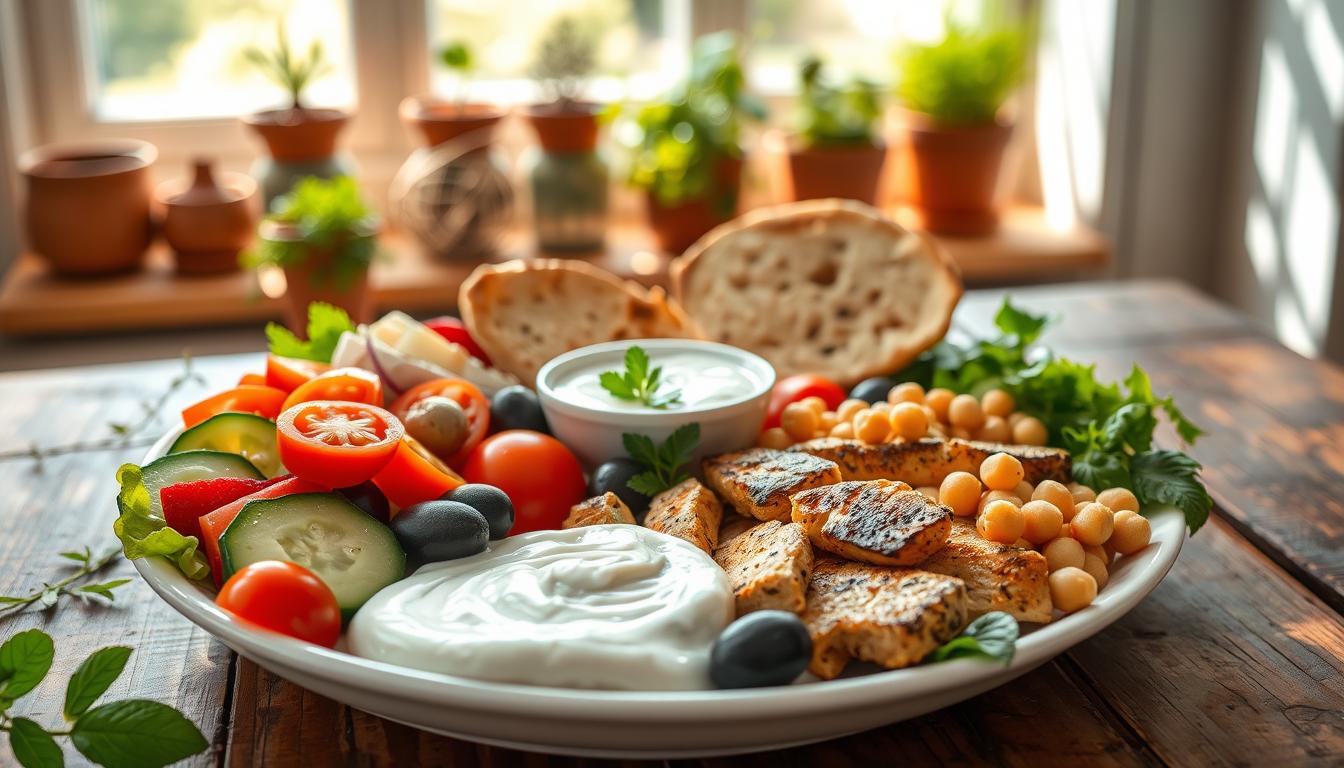
Starting your health journey is easy with a simple guide to portioning food. Use the Mediterranean portion control method for meals that feel right without counting. This way, you make a balanced plate every time you eat.
The Half-Plate Rule for Vegetables
Start with half your plate for colorful veggies. Choose from broccoli, leafy greens, or peppers. These foods are full of fiber and nutrients, making you feel full longer.
Selecting Your Protein and Healthy Fats
After veggies, fill a quarter with protein. Good options are salmon, chicken, chickpeas, or yogurt. Use olive oil or avocado as a tasty topping, not the main part.
Portioning Whole Grains and Legumes
Save the last quarter for whole grains like quinoa or brown rice. These give you energy all day. Use your hand to measure, so you don’t overeat.
| Food Category | Portion Size | Examples |
|---|---|---|
| Vegetables | 1/2 Plate | Spinach, Carrots, Zucchini |
| Protein | 1/4 Plate | Fish, Beans, Poultry |
| Whole Grains | 1/4 Plate | Quinoa, Barley, Oats |
Tips for Dining Out Without the Stress
Eating out doesn’t have to mess up your diet. Look for dishes with protein and veggies. Ask for extra greens instead of starch.
Keep a shareable grocery list on your phone for Mediterranean foods. Text a friend to join you for a healthy meal: “I’m trying a new way to eat better. Want to join me for a healthy meal this week?”
Sustaining Your Energy with a 28-Day Mediterranean Plan
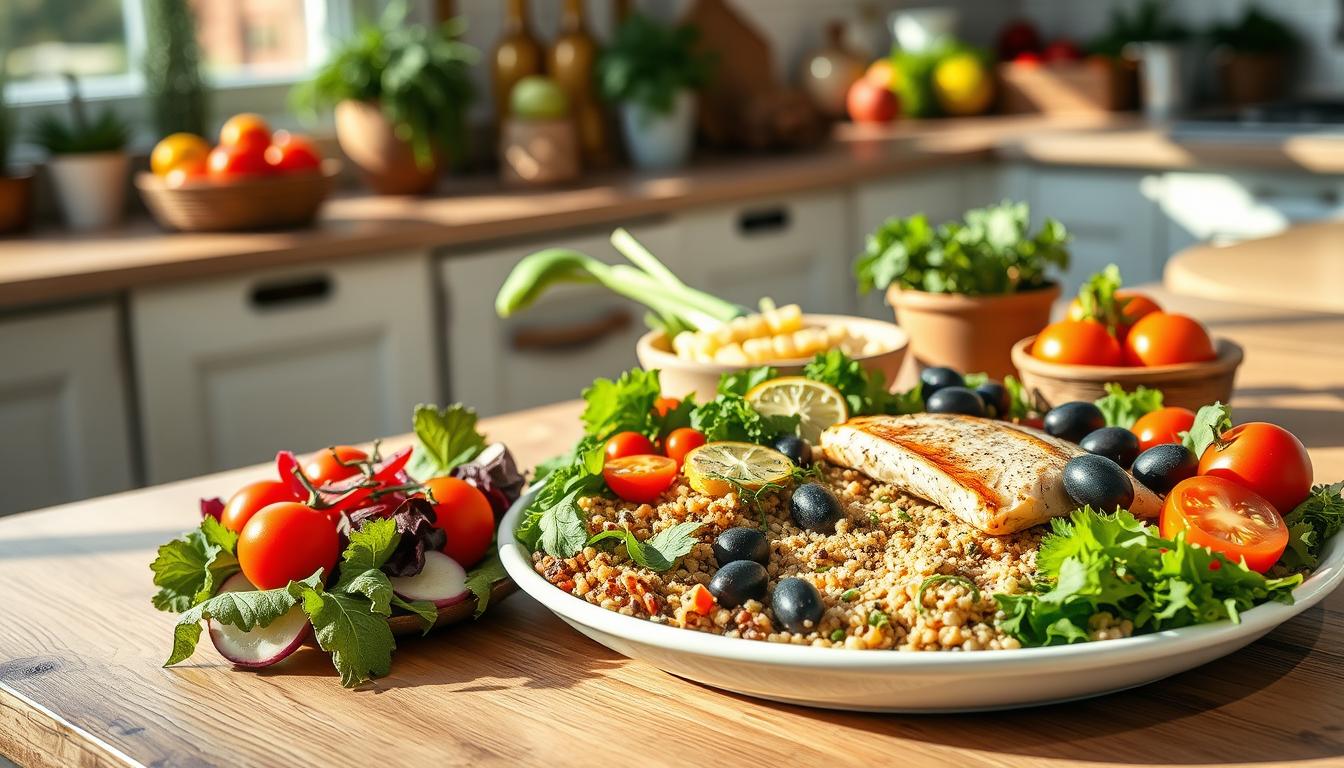
Follow this simple 28-day plan to master healthy portions after 50. It focuses on eating lots of veggies. These foods make you feel full and happy all day.
Week One: Establishing Your New Routine
The first week is about starting a new habit. Swap processed snacks for fruits and veggies. Small changes are easier to keep than big ones.
Week Two: Incorporating Seasonal Mediterranean Recipes
Start using fresh, seasonal foods in week two. Go to the farmers’ market for the best flavors. Olive oil and herbs make your meals tasty without hard cooking.
Week Three: Managing Social Situations and Travel
When eating out or traveling, be flexible. Choose lean proteins and grilled veggies. Remember, one meal doesn’t ruin your health goals.
Week Four: Long-Term Habits for Lasting Vitality
By week four, you’ll feel more energetic and digest better. Keep listening to your body for healthy portions. These habits help you stay well for years.
| Day | Breakfast | Lunch | Dinner |
|---|---|---|---|
| Monday | Greek Yogurt | Lentil Salad | Grilled Salmon |
| Tuesday | Oatmeal | Hummus Wrap | Roasted Chicken |
| Wednesday | Fruit Bowl | Quinoa Bowl | White Fish |
| Thursday | Scrambled Eggs | Greek Salad | Stuffed Peppers |
| Friday | Chia Pudding | Chickpea Soup | Shrimp Skewers |
| Saturday | Whole Grain Toast | Tuna Salad | Vegetable Pasta |
| Sunday | Veggie Omelet | Bean Salad | Baked Cod |
Ready to improve your health? Click the button below for our 28-day program. Get personalized coaching and support.
Join the 28-Day Program
Conclusion
Your journey to better health is about keeping good habits. Using portion control without counting calories lets you enjoy food and stay healthy. You have the tools to change how you see every meal.
Frequently Asked Questions
Does this plan limit fat intake? No, it encourages healthy fats like olive oil for your heart. Can I use portion control without calorie counting when eating out? Yes, just think about your plate’s size at any restaurant. Is this way of eating good for life? It’s all about balance, making it easy to keep up for a long time. Do I need special tools? No, your plate is all you need.
Disclaimer: This content provides general information and does not replace professional medical advice. Always consult with your doctor or a registered dietitian before making significant changes to your diet.
References
Mayo Clinic Diet, USDA FoodData Central, American Heart Association.
