
By Ray Baker
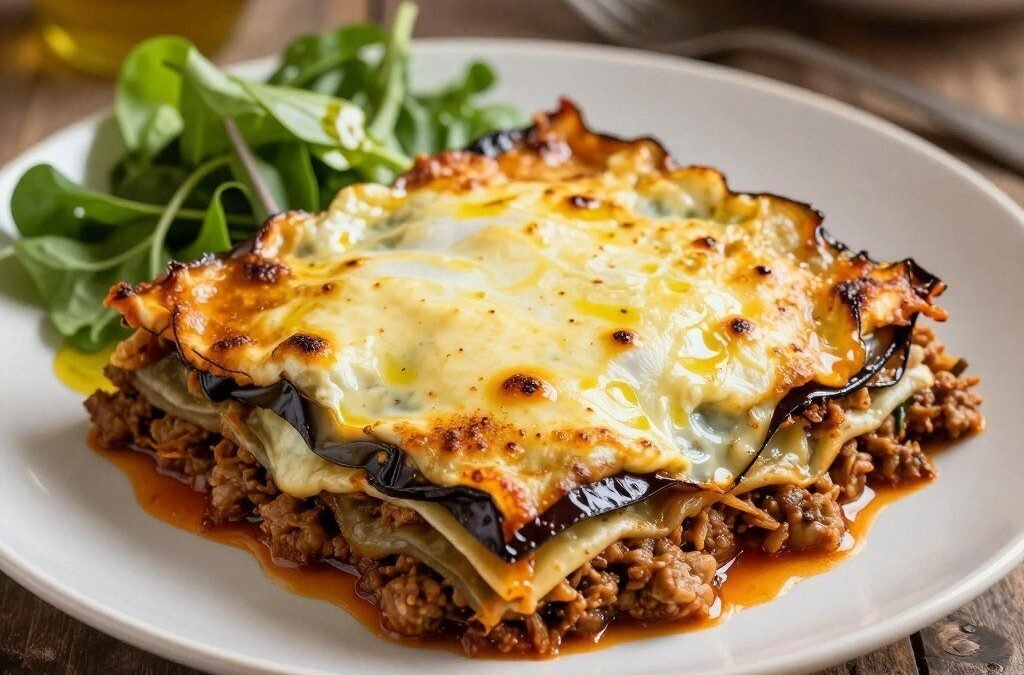
If your moussaka has ever come out of the oven with slippery aubergine slices and a runny top, you have met the real challenge behind the most famous Greek dish with aubergines. The BBC Good Food recipe describes moussaka as a classic Greek dish of layered thinly sliced potato, aubergine and lamb topped with a creamy béchamel sauce [1]. The good news is that the technique is learnable, and it does not require a restaurant kitchen.
I say that after making it enough times to know which steps save you from a watery tray. This is general information, not medical advice.
What is the classic Greek dish with aubergines?
Moussaka is the classic Greek dish with aubergines. It layers fried aubergine with lamb mince, a tomato and red wine sauce, and a creamy béchamel topping, then bakes [1]. Think of it as a structured casserole, not a free-form stew, so each layer matters.
Key takeaways
- Moussaka layers fried aubergine, thinly sliced potato, lamb mince and béchamel in one baked dish [1].
- Aubergine slices are fried in several batches for 5-7 mins until golden brown and beginning to soften [1].
- The meat sauce is simmered gently, uncovered, for 20 mins, stirring occasionally until the sauce has thickened [1].
- The serving size reflects the amount that people typically eat or drink; it is not a recommendation of how much you should eat or drink [2].
- The Mediterranean diet is mainly fruits and vegetables, beans, nuts, whole grains, fish, olive oil, small amounts of dairy, and red wine [3].
How do you prepare the aubergines?
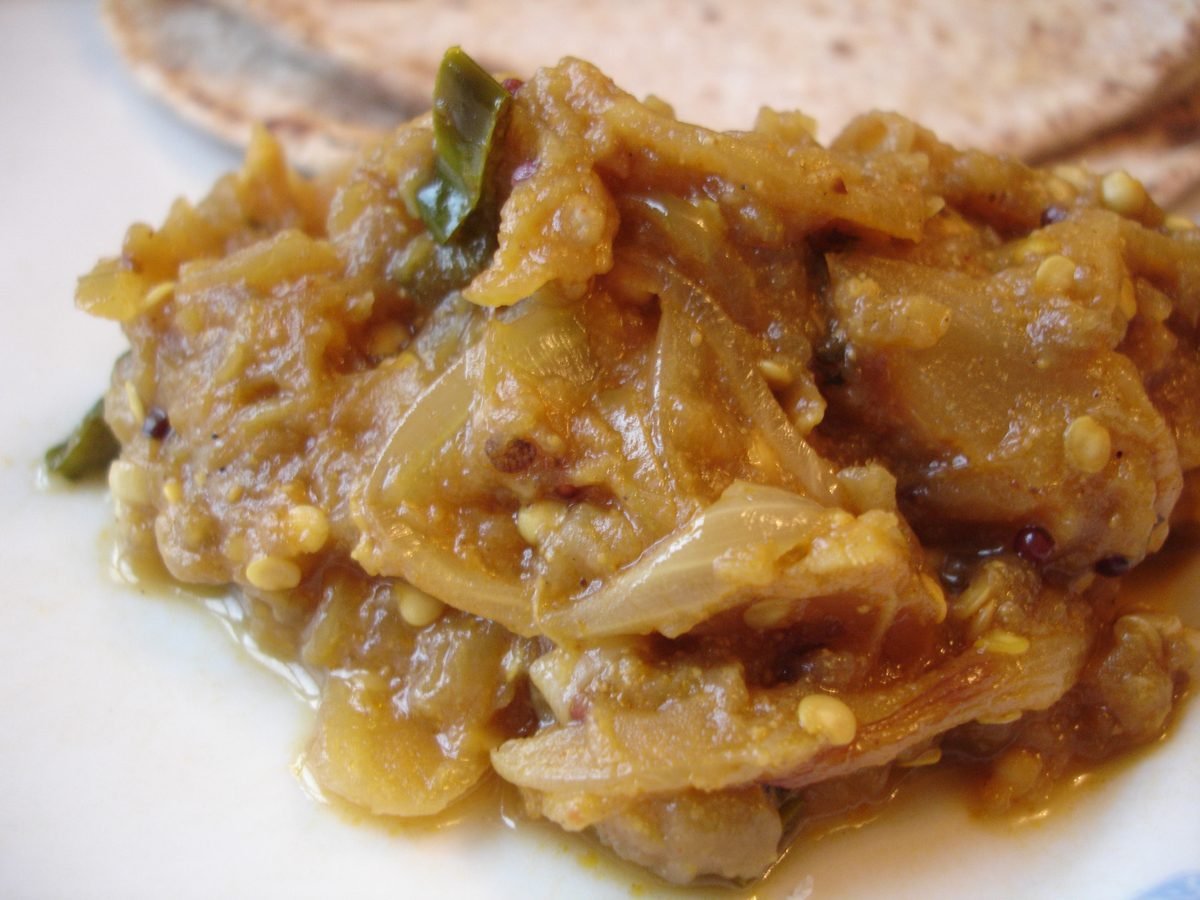
I like to start with the aubergine because it sets the texture. Cut them into 5mm rounds and drizzle with olive oil. Fry in several batches for 5-7 mins until golden brown and beginning to soften; if they look a little dry during cooking, add a dash more olive oil [1]. Set the cooked slices aside on a plate lined with kitchen paper [1]. The goal is colour on the outside and some give in the middle, not a raw, spongy slice. If aubergines are expensive, use them as the star layer and let potatoes take up some of the volume.
What goes into the sauce and béchamel?
Start with the meat sauce because it benefits from a low simmer. Brown the lamb mince deeply for 8 to 10 minutes, then set it aside. Tip in the onion with a pinch of salt and fry gently until softened and turning translucent, add the garlic, oregano, cinnamon and bay, return the lamb, pour in the red wine and reduce by half, then stir through the tomatoes, tomato purée and brown sugar, along with water [1]. Simmer uncovered for about 20 minutes, stirring now and then, until the sauce is thick enough to hold its shape. If lamb is not in your budget, beef mince works in the same method.
For the topping, melt the butter, stir in the flour, then whisk in the milk, pouring in a bit at a time, until smooth [1]. Whisk through the parmesan, a little grated nutmeg and some seasoning, and finally the whole egg as well as the yolk [1]. The egg helps the topping set as it bakes, so do not skip it unless you have a reason to.
How do you assemble and bake moussaka?
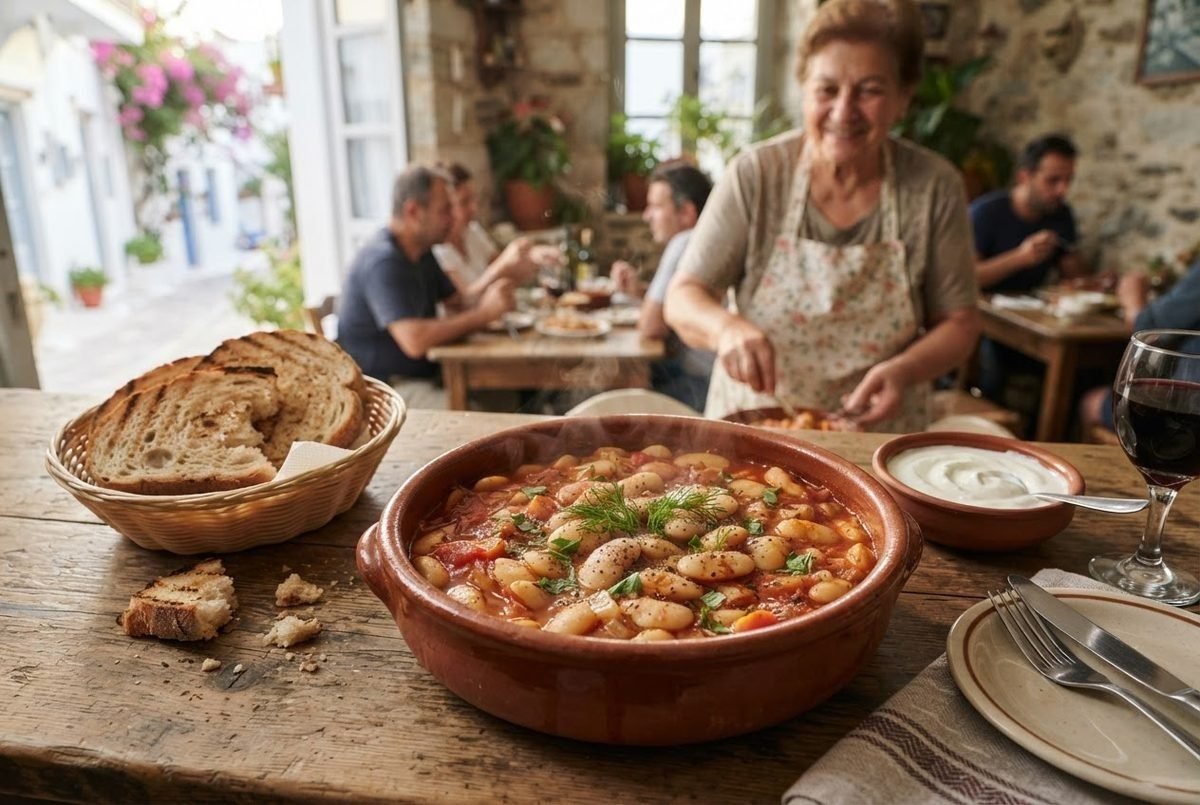
Boil the sliced potatoes for 6 minutes, drain them, and leave to steam dry for 10 mins [1]. Then layer in a large rectangular ovenproof dish: meat first, followed by aubergine and potato, then more meat, aubergine and potato, and finish with the béchamel [1]. Heat the oven to 200C [1]. I let it sit for a few minutes before slicing; if you need more detail, the site’s moussaka guide walks through each layer slowly.
What are 5 easy tips for a better moussaka?
- Set the fried aubergine aside on a plate lined with kitchen paper [1].
- Fry the aubergine slices in several batches for 5-7 mins or until golden brown and beginning to soften [1].
- Pour in the red wine, bring to a bubble and reduce the wine by half, then stir through the tomatoes [1].
- Leave the boiled potato slices to steam dry for 10 mins before layering [1].
- Rest the baked dish for a short while before cutting so the layers stay put.
How does moussaka fit a Mediterranean pattern?
Eating this way is not an all-or-nothing test. The Mediterranean diet is a primarily plant-based eating plan that includes daily intake of whole grains, olive oil, fruits, vegetables, beans and other legumes, nuts, herbs, and spices, with the preferred animal protein being fish and seafood and red meat limited to a few times per month [3]. Moussaka is richer because it includes lamb and butter-based béchamel, so I treat it as an occasional centrepiece rather than a daily staple. WHO guidance says the four core principles of adequacy, balance, moderation and diversity should be the foundation of any healthy diet [4]. The plate guide suggests making most of your meal vegetables and fruits, 1/2 of your plate, whole grains 1/4 of your plate, and protein 1/4 of your plate [5]. The potatoes in moussaka are not off the table, but I treat them as part of that balance; if you want more on this, see how potatoes fit into this way of eating.
How can you keep portions sensible?
Because this Greek dish with aubergines contains richer components, the serving size matters. The label guidance notes that all the nutrient amounts shown on the label, including the number of calories, refer to the size of the serving, and if you ate two cups (two servings), you would need to double the nutrient and calorie amounts [2]. The serving size reflects the amount that people typically eat or drink; it is not a recommendation of how much you should eat or drink [2]. For moussaka, I cut a neat square rather than spooning freely, and I pair it with a large salad so the plate leans toward vegetables.
How do you shop and cook on a budget?
Aubergines and lamb are the two items that decide the cost of the tray. I buy aubergines when they feel heavy for their size and the skin is tight and glossy, because a light, dull one tends to be spongy inside. Mince is often cheaper in a larger pack, so I weigh out what I need and freeze the rest rather than letting it sit in the fridge.
Timing is worth planning. The recipe lists 30 minutes of preparation and 2 hrs and 15 mins of cooking, so it suits a slow afternoon rather than a rushed evening [1]. I cook the sauce and fry the aubergines in the morning when I have more patience, then assemble and bake later. Leftovers keep well and reheat gently in a low oven, covered, so the top does not dry out.
Two small changes keep the cost down without hurting the flavour. Use 3 medium aubergines cut into 5mm rounds so they soften properly [1]. And swap half the mince for cooked lentils, which stretch the sauce and take on the oregano and cinnamon readily. Neither change alters the method; you still fry, layer and bake in the same order.
Related reading
- Moussaka: The Ultimate Greek Eggplant Casserole: Step-by-step moussaka layering guide
- Can You Eat Potatoes on the Mediterranean Diet? Yes, Here’s How: How potatoes fit the Mediterranean pattern
Frequently asked questions
Can I use beef or lentils instead of lamb?
Yes. Many home cooks use beef mince or a chunky lentil and mushroom mix. Keep the sauce thick and check the seasoning, because lentils absorb more salt than lamb does.
Why is my moussaka watery?
Crowded aubergines steam rather than brown, and wet potatoes or a thin sauce add extra moisture. Fry the aubergines in several batches, drain the potatoes, and simmer the sauce uncovered for 20 mins [1].
Do I need to salt the aubergines?
Not necessarily. The recipe relies on frying and draining on kitchen paper to remove moisture, so salting is optional. If you prefer a firmer, drier slice, salt the rounds first.
Can moussaka be made ahead?
You can assemble it a day ahead, cover and refrigerate before baking. Allow a little extra oven time if it goes in cold, and check the béchamel is fully set.
Is it okay to eat on a balanced plan?
A moderate slice with a large salad fits the balanced plate idea, because vegetables and fruits make up half of your plate and protein a quarter [5]. Treat moussaka as an occasional centrepiece.
Honest take
I think moussaka earns its place as the famous Greek dish with aubergines because it turns inexpensive vegetables into something deeply savoury. The work is in the layering, not in fancy ingredients. For four to six people, I would make it on a weekend and let it rest before cutting. Keep the portion moderate, add a coarse salad, and you have a plate worth serving. My one caution is the béchamel. It is easy to make it too thin, so let it cool a little before spreading, and use a spatula, not a spoon.
References
- BBC Good Food. Moussaka recipe. https://www.bbcgoodfood.com/recipes/moussaka
- FDA. How to Understand and Use the Nutrition Facts Label. https://www.fda.gov/food/nutrition-facts-label/how-understand-and-use-nutrition-facts-label
- The Nutrition Source. Diet Review: Mediterranean Diet. https://nutritionsource.hsph.harvard.edu/healthy-weight/diet-reviews/mediterranean-diet/
- WHO. Healthy diet. 26 January 2026. https://www.who.int/news-room/fact-sheets/detail/healthy-diet
- The Nutrition Source. Healthy Eating Plate. https://nutritionsource.hsph.harvard.edu/healthy-eating-plate/
Get well and stay well,
Ray Baker
