
By Ray Baker
I hear it all the time: ‘Ray, I want to eat the Mediterranean way, but I just don’t like fish.’ If that sounds like you, you are not alone. A Mediterranean diet no seafood is not only possible; it can be just as nourishing and enjoyable. The real heart of the eating pattern is plants, not fish. In fact, the Mediterranean diet is a primarily plant-based eating plan, with daily intake of whole grains, olive oil, fruits, vegetables, beans, nuts, herbs and spices.
Can you really follow a Mediterranean diet no seafood?
Yes, absolutely. The Mediterranean diet is built around plants, not fish. You can get all the protein and healthy fats you need from legumes, nuts, seeds, eggs, dairy and small amounts of poultry, while still enjoying the traditional flavours and health benefits. No seafood required.
Key takeaways
- The Mediterranean diet is primarily plant-based, so skipping seafood is fine.
- You can get omega-3s from walnuts, flaxseeds, chia seeds and leafy greens.
- Eggs, yogurt, cheese and poultry provide protein without fish.
- Extra virgin olive oil remains the main fat source, no matter your protein choices.
- Budget-friendly legumes and canned beans make it easy to eat well without seafood.
What can I eat instead of fish?
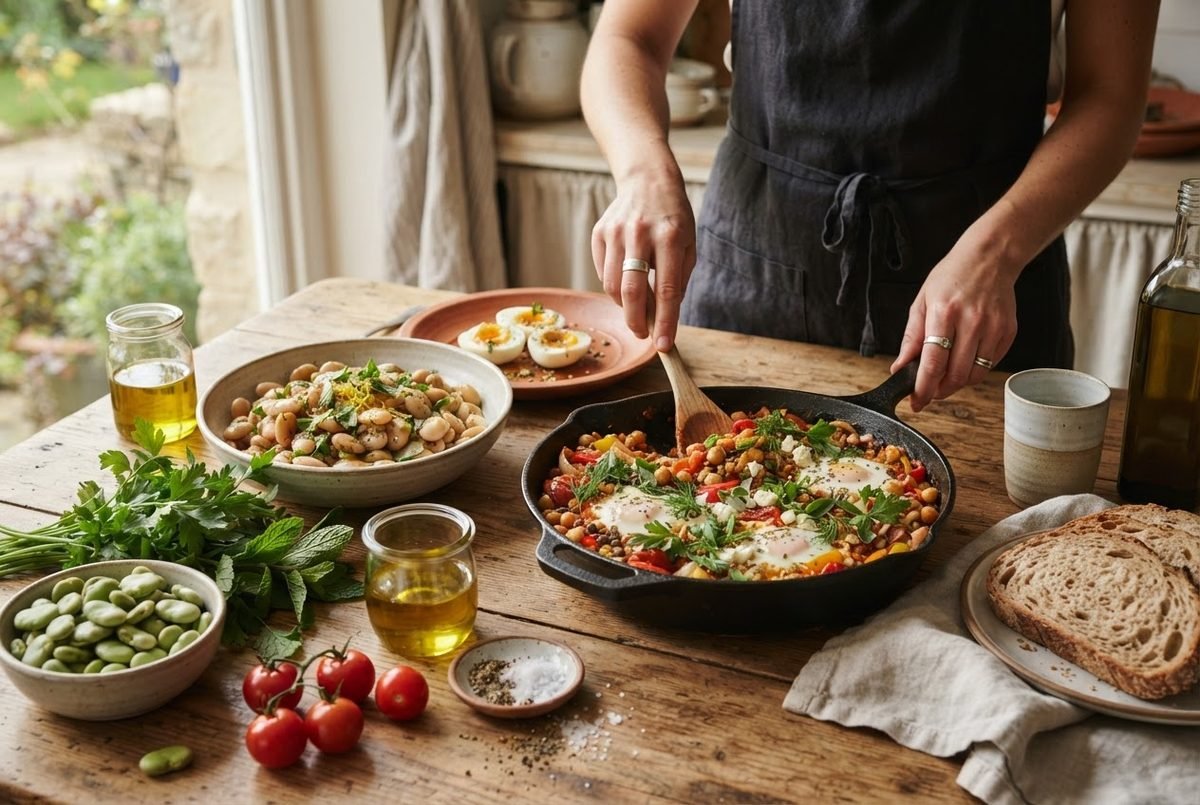
Building a Mediterranean diet no seafood is simple. The Mediterranean diet offers plenty of protein options that don’t swim. Legumes like chickpeas, lentils and cannellini beans are staples. Eggs, eaten a few times a week, fit perfectly. Cheese and yogurt, eaten in smaller portions, add more protein. Poultry, such as chicken or turkey, can appear in smaller portions a couple of times a week. Red meat is limited to a few times a month, so you won’t miss it. The key is building your plate around vegetables, whole grains and olive oil, then adding whichever protein you enjoy. Think lentil soup with a swirl of olive oil, a spinach and feta omelette, or a warm bowl of gigantes plaki (Greek baked beans). These dishes are traditional and naturally seafood-free. For a full day’s worth of ideas, see my article on Mediterranean diet for breakfast, lunch and dinner.
How do I get enough omega-3s without seafood?
Following a Mediterranean diet no seafood doesn’t mean missing out on omega-3s. Omega-3 fatty acids are important for heart health, and oily fish is a well-known source. But you can get them from plant foods too. The NHS heart-health guide from Royal United Hospitals Bath suggests walnuts, linseeds, soya and green leafy vegetables for people who dislike oily fish. A small handful of walnuts on your morning oats or a sprinkle of ground linseed on a salad does the job. I often add a tablespoon of ground linseed to my porridge or mix chia seeds into yogurt. It’s a small habit that pays off. You don’t need fish to meet your needs.
Is a Mediterranean diet no seafood still heart-healthy?
Yes, the heart benefits come from the whole eating pattern, not just fish. Harvard’s Nutrition Source says research has consistently shown the Mediterranean diet reduces the risk of cardiovascular disease and overall mortality, and it describes a study of nearly 26,000 women in which those who followed this style of eating had 25% less risk of developing cardiovascular disease over 12 years. The protective effects are linked to healthy fats, plenty of fibre, and antioxidants from plants, all of which you get without seafood. As long as you stick to the core principles, your heart still wins. The 2025 Italian national guidelines on the Mediterranean diet also report high-quality evidence for its protective role against heart attack and stroke. If you want a gentle, senior-friendly start, read my lazy Mediterranean diet for senior beginners.
5 easy tips for a seafood-free Mediterranean plate
These five tips will help you build a satisfying Mediterranean diet no seafood.
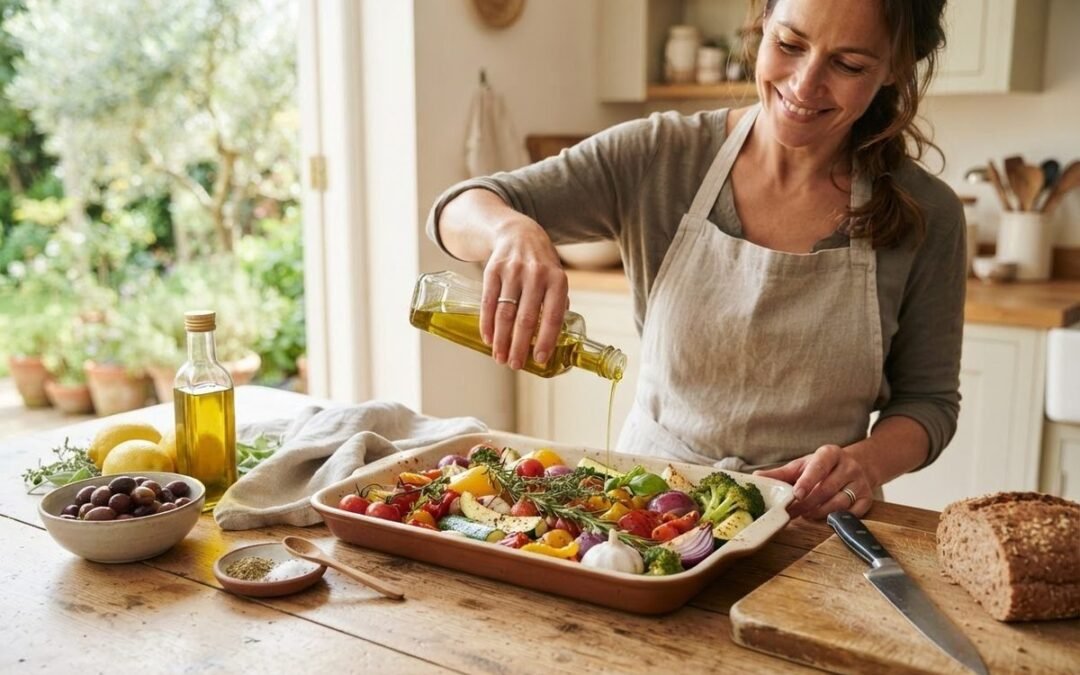
- Start with a generous base of vegetables. Roast a tray of capsicum, zucchini, eggplant and cherry tomatoes with olive oil and herbs. That becomes your main event.
- Swap fish for legumes. A warm chickpea and spinach salad with lemon and olive oil is filling and cheap. Canned lentils work just as well.
- Use eggs for quick meals. A vegetable frittata or a simple poached egg on whole-grain toast takes minutes and needs no seafood.
- Season boldly. Herbs and spices are part of the daily Mediterranean pattern. Oregano, rosemary, cumin and smoked paprika give deep flavour without fish.
- Keep extra virgin olive oil front and centre. It’s the primary fat, whether you’re dressing a bean salad or drizzling over roasted vegetables. No fish oil needed.
What about budget? Is it expensive without fish?
A Mediterranean diet no seafood can be very affordable. In fact, skipping seafood can save you money. Dried lentils, chickpeas and canned beans cost very little. Eggs are an affordable protein. Frozen vegetables and tinned tomatoes keep costs down. A bottle of extra virgin olive oil lasts weeks. I find that buying dried legumes in bulk and soaking them overnight is even cheaper than canned, and the texture is better. But when time is short, canned beans are a lifesaver. Originally, the Mediterranean eating pattern was the diet of the poor, built on locally grown, seasonally fresh foods. You can eat well on a modest budget, with or without fish. For budget-friendly recipes that keep portions sensible, see my Mediterranean recipes under 500 calories.
Can I still enjoy Mediterranean flavours?
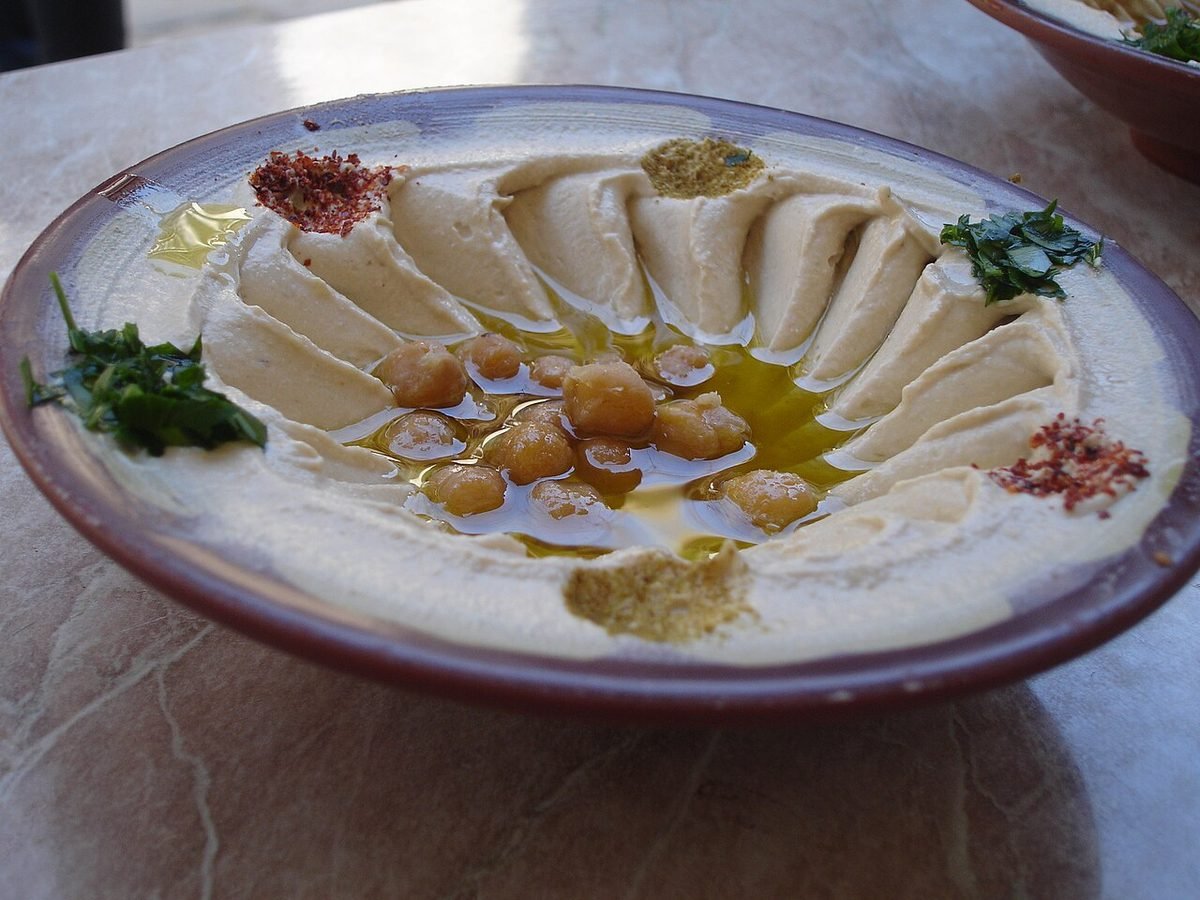
A Mediterranean diet no seafood is full of flavour. The flavours come from olive oil, garlic, lemon, not from fish. A simple dish of roasted vegetables with oregano and a splash of red wine vinegar tastes unmistakably Mediterranean. Hummus, baba ghanoush, tabbouleh and lentil soup are all traditional seafood-free dishes. You won’t feel like you’re missing out. For a comprehensive food list that works without seafood, see my Mediterranean anti-inflammatory diet food list.
What does a day of eating look like?
Here is a simple day on a Mediterranean diet no seafood. Breakfast: Greek yogurt with a handful of walnuts, a drizzle of honey and fresh berries. Lunch: a large salad with chickpeas, cucumber, tomato, red onion, olives and a lemon-olive oil dressing, plus a slice of whole-grain bread. Dinner: roasted eggplant and zucchini with a poached egg on top, sprinkled with feta and fresh oregano. Snacks: an apple or a few almonds. It’s filling, affordable and completely fish-free.

Related reading
- Your Mediterranean Diet for Breakfast Lunch and Dinner: Full day plan ideas
- Lazy Mediterranean Diet for Senior Beginners: Senior-friendly, easy start
- Mediterranean Recipes Under 500 Calories: Filling Meals for Sensible Weight Loss: Budget-friendly, portion-aware recipes
- Your Mediterranean Anti Inflammatory Diet Food List: Comprehensive food list without seafood
Frequently asked questions
Do I need to eat fish to get the full health benefits?
A Mediterranean diet no seafood still provides the full health benefits. The benefits come from the overall pattern: plenty of plants, healthy fats, and limited processed foods. Seafood intake has always varied around the Mediterranean, traditionally depending on how far a country was from the sea. The benefits are linked to the whole pattern, not to any single food.
Can I use fish oil supplements instead?
I would not recommend relying on supplements. Whole foods provide fibre and antioxidants you miss with a pill. Focus on walnuts, flaxseeds and leafy greens for omega-3s.
What if I’m allergic to seafood?
A Mediterranean diet no seafood is perfect for you. Simply replace fish with legumes, eggs and poultry, and keep the rest of the eating pattern the same.
Will I get enough protein?
Yes. Legumes, eggs, dairy and occasional poultry provide ample protein. You won’t go short. Eggs and dairy also contribute.
Is this diet suitable for over-50s?
Very much so. The 2025 Italian guidelines link the Mediterranean diet to reduced incidence of cognitive decline, type 2 diabetes and obesity. It’s gentle and practical.
Can I still drink wine?
Wine in low to moderate amounts is part of the traditional pattern. If you don’t drink, don’t start!
Honest take
I have seen many people over 50 worry that they can’t follow the Mediterranean diet because they don’t eat fish. Honestly, that worry is unnecessary. The diet’s strength is its flexibility and its foundation in plants. A Mediterranean diet no seafood is just as valid and, in my view, just as delicious. The key is to enjoy real food, cooked simply, and shared with people you care about. Don’t let a dislike of seafood keep you away from it!
References
- Diet Review: Mediterranean Diet. The Nutrition Source, Harvard T.H. Chan School of Public Health. https://nutritionsource.hsph.harvard.edu/healthy-weight/diet-reviews/mediterranean-diet/
- Mediterranean Diet: Food List & Meal Plan. Cleveland Clinic. https://my.clevelandclinic.org/health/articles/16037-mediterranean-diet
- Eating for a healthy heart for adults: the Mediterranean. Royal United Hospitals Bath NHS Foundation Trust. https://ruh.nhs.uk/zz_content_include/services/clinical_depts/dietetics/documents/Eating_for_a_Healthy_Heart_for_Adults_-_the_Mediterranean_Diet.pdf
- 2025 National Guidelines on the Mediterranean Diet: Executive Summary of a Joint Report by Italian Scientific Societies and the National Institute of Health Task Force on Clinical Practice Guidelines. PubMed. https://pubmed.ncbi.nlm.nih.gov/41493438/
- Mediterranean Eating Pattern. Nutrients, PMC5439355. https://pmc.ncbi.nlm.nih.gov/articles/PMC5439355/
Get well and stay well,
Ray Baker
