

By Ray Baker
It still surprises me that Harvard’s Nutrition Source reports the people of Crete, Greece, and southern Italy in the mid-20th century had low rates of chronic disease and higher than average adult life expectancy despite limited access to healthcare [1]. That little fact drew me to this way of eating years ago. I have also seen plenty of readers over 50 decide the Mediterranean pattern is too much work before they have even tried it. That is where a lazy Mediterranean diet for senior beginners comes in. It skips the complicated recipes and rigid rules while keeping the habits that make this way of eating worth trying. Remember, this is general information, not medical advice.
Lazy Mediterranean diet for senior beginners?
It is the Mediterranean eating pattern stripped back to its easiest form. A lazy Mediterranean diet for senior beginners leans on tinned legumes, frozen spinach and pre-cooked wholegrains, and skips elaborate recipes and perfect portion sizes. The idea is a handful of simple habits that fit real life without making food a chore.
Key takeaways
- The lazy Mediterranean diet for senior beginners is about whole foods, not perfection; even small swaps count.
- You do not need to cook from scratch daily: frozen vegetables, tinned fish and pre-cooked grains save time and money.
- The Cleveland Clinic suggests aiming for about three servings of fish per week and at least three servings of vegetables each day, but every extra serve helps [2].
- Harvard’s Nutrition Source notes the traditional Mediterranean pattern is often promoted to decrease the risk of heart disease, depression and dementia, though research continues [1].
- Gentle changes like using olive oil instead of butter, or opening a can of chickpeas, quietly upgrade everyday meals.
Why does it suit older adults?
I think the Mediterranean pattern works especially well after 50 because it does not ask you to drop entire food groups or live on tiny portions. A 2021 review by Mazza and colleagues in the Journal of Nutrition, Health & Aging pointed out that unhealthy habits and lifestyles are commonly associated with age-related diseases, and that modification in daily lifestyle and diet may help prevent their onset and promote healthy ageing [3]. The same paper highlights the role of nutrition science in that process [3].
A separate review by Giuffrè and Giuffrè, published in AIMS Public Health in 2023, explained that the traditional Mediterranean regimen, built on seasonality, unrefined grains, legumes, fish, vegetables, fruits, little meat and olive oil as a condiment, was studied because those populations had greater longevity and a lower occurrence of chronic diseases than the peoples of Northern Europe and North America [4]. When the National Institute on Aging looked at brain health, it noted that healthy eating patterns have been associated with cognitive benefits in studies, though more research is needed [5]. For a lazy Mediterranean diet for senior beginners, that is plenty of encouragement without any promises. If you want background on how these foods fit into later life, I wrote about simple changes that support healthy aging.
What does a lazy pantry look like?
A lazy Mediterranean diet for senior beginners starts with a surprisingly ordinary pantry. No specialty shops, no rare spices. Here is the kind of low-effort stock I would build:
- Extra virgin olive oil for cooking, drizzling and quick dressings. The Cleveland Clinic suggests 1 to 4 servings a day, one tablespoon each, but even a little helps [2].
- Tinned tomatoes, tinned chickpeas, lentils and cannellini beans that need nothing but rinsing.
- Frozen spinach, mixed vegetables and berries; they keep for months and do not go off in a week.
- Wholegrain bread, quick-cook brown rice, couscous or pre-cooked quinoa pouches.
- Tinned sardines, tuna and salmon in spring water or olive oil.
- Plain yoghurt, a small block of feta or a bag of pre-grated low-fat cheese.
- Unsalted nuts like almonds or walnuts on the bench for snacks.
I keep it this basic myself. The less hassle it takes to put a meal together, the more likely you are to stick with it. If you want a visual list of what fits, have a look at my food list for an anti-inflammatory pantry.
How do I keep protein up?
It is a fair question, especially when muscle maintenance matters more after 50. For a lazy Mediterranean diet for senior beginners, protein does not have to mean fussy cooking. I lean on three things: tinned fish, legumes and eggs. A couple of boiled eggs with a slice of wholegrain toast, or a bowl of lentil soup with a drizzle of olive oil, gets the job done. The National Institute on Aging advises adding seafood, dairy or fortified soy products along with beans, peas and lentils to your meals to get enough protein throughout the day and maintain muscle [6]. You do not need a slab of steak.
5 easy tips for a lazy start
Here are five easy tips for a lazy Mediterranean diet for senior beginners.
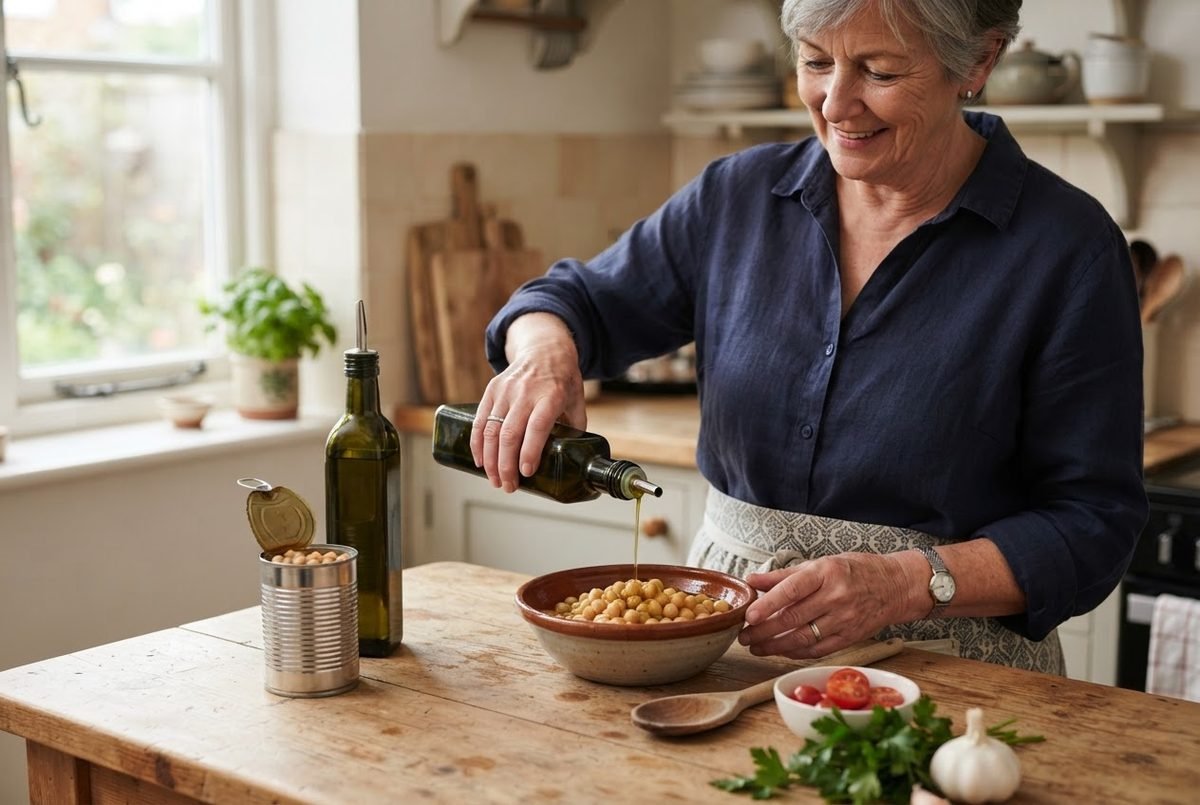
- Use a meal shortcut once a day. A bowl of tinned chickpeas with chopped cucumber, a drizzle of olive oil and a squeeze of lemon makes a solid lunch in two minutes.
- Swap to a wholegrain version half the time. Many supermarkets sell microwave pouches of brown rice or quinoa; no measuring, no mess. The Cleveland Clinic suggests 3 to 6 servings of whole grains and starchy vegetables a day, but starting with a few swaps is fine [2].
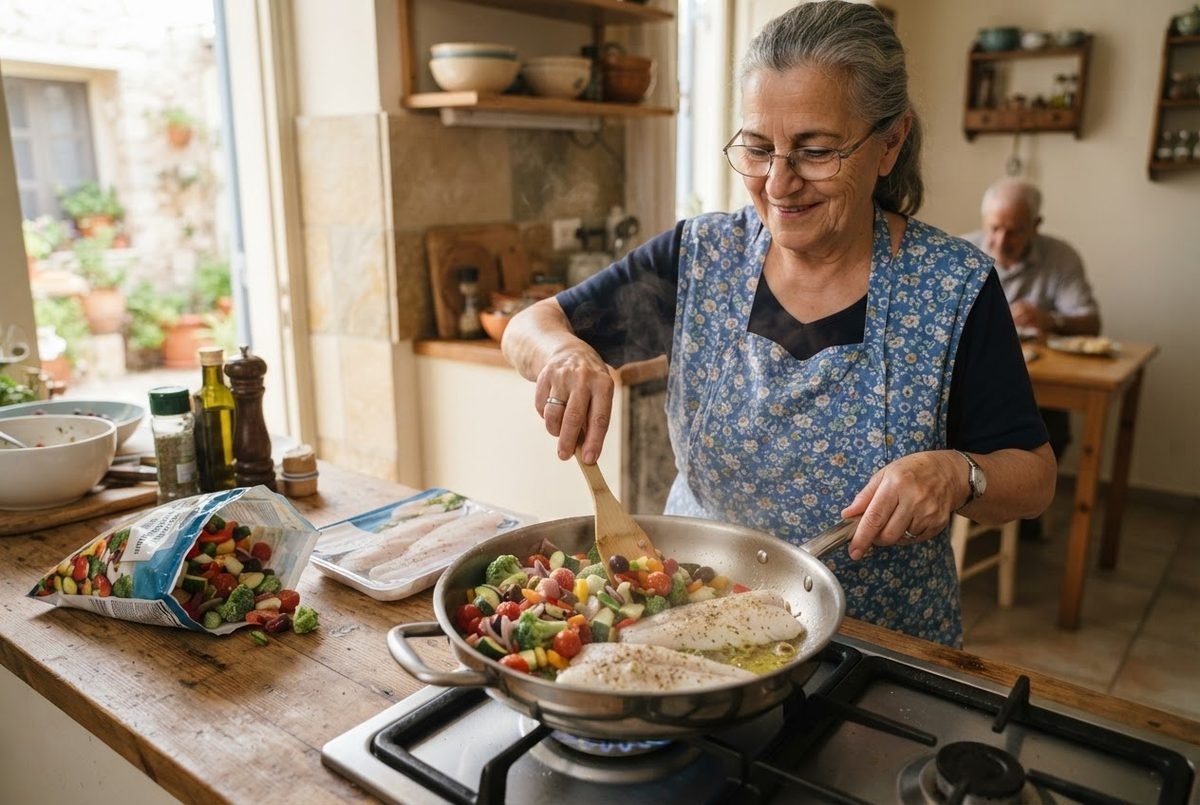
- Rely on frozen veg. Toss a handful of frozen Mediterranean-style vegetables into a pan with a little olive oil and garlic. It feels homemade with almost no prep.
- Have tinned fish twice a week. Sardines on toast, tuna stirred through pasta, or salmon on a slice of rye bread. It covers a fish serving and costs far less than fresh fillets.
- Treat fruit as dessert. A bowl of frozen berries warmed in the microwave with a spoonful of yoghurt satisfies a sweet craving without baking.
If you find yourself hungry an hour after meals, that is usually a fixable habit rather than a failing. I listed the usual culprits in common mistakes that can leave you hungry.

How much should you eat?
One of the reasons a lazy approach works is that you do not have to measure every gram. The lazy Mediterranean diet for senior beginners is a way of eating, not a calorie-counting plan. If you are curious about rough serving sizes, the Cleveland Clinic guide suggests 3 servings of fruit, at least 3 servings of vegetables, 3 to 6 servings of whole grains and starchy vegetables daily, and 3 fish servings a week, with fish rich in omega-3s such as salmon, sardines, herring, tuna and mackerel [2]. But a simpler rule for a beginner, in my view, is to fill half your plate with vegetables or fruit at lunch and dinner, add a palm-sized portion of fish, chicken or legumes, and use olive oil as your main fat. If you get hung up on numbers, take a look at my article with a clear serving-size chart.
Can you still enjoy pasta and wine?
Yes, with a few lazy adjustments. Choose wholemeal bread and wholewheat pasta most of the time; white pasta is fine occasionally, just pile on the vegetables and a simple tomato sauce. As for wine, the Cleveland Clinic guide lists one glass, 3 ½ ounces, a day for women and up to two servings a day for men, and notes the American Heart Association cautions that if you do not drink, you should not start [2]. A glass of sparkling water with lemon feels festive and costs nothing. Commercially prepared baked goods and desserts are best avoided, so keep sweet things to an occasional homemade treat [2].
Related reading
- Mediterranean Diet for Seniors: Simple Changes That Support Healthy Aging: Simple changes that support healthy aging
- Your Mediterranean Anti Inflammatory Diet Food List: Food list for an anti-inflammatory pantry
- Mediterranean Diet Mistakes That Keep You Hungry, Tired or Stuck: Common mistakes that can leave you hungry
- How Many Mediterranean Diet Servings Per Day? A Clear Chart: A clear serving-size chart to keep things easy
Frequently asked questions
Do I have to give up red meat?
The Cleveland Clinic guide suggests limiting red meat to no more than one serving a week, or avoiding it [2]. I would never tell a senior beginner to ban it outright. A small piece of lean beef once a fortnight will not undo your other good choices.
Is it affordable on a pension?
It can be, especially if you lean on tinned legumes, frozen vegetables, oats and seasonal fruit. Buy olive oil in larger bottles, use tinned fish instead of fresh, and plan a shopping list to reduce waste. The National Institute on Aging suggests planning in advance and creating a shopping list to help stick to a budget [6].
What if I do not like fish?
Fish is a cornerstone of the pattern, but if it is not your taste, do not force it. The Cleveland Clinic notes that walnuts, almonds and hazelnuts are good choices too, eaten raw, unsalted or dry roasted [2]. Focus on plant foods, legumes and olive oil, and talk with your doctor about what suits you.
Do I need to count calories?
No, there is no counting in this way of eating. If portion control is a worry, eating off a slightly smaller plate and slowing down are two free tricks I use. They cost nothing and need no tracking.
Is tinned and frozen produce okay?
Yes. Frozen fruit and vegetables are frozen soon after harvest, and tinned beans and tomatoes save serious time. Look for low-sodium versions or rinse the beans well. They make the lazy Mediterranean diet for senior beginners practical enough to keep going.
Honest take
I have watched plenty of people over 50 talk themselves out of trying the Mediterranean pattern because they think it means hours of chopping and a bookshelf of cookbooks. The truth is that a lazy Mediterranean diet for senior beginners is much closer to a few better habits stitched onto your existing meals. You do not need to be perfect, just consistent enough to notice a difference. And you deserve an eating style that adds enjoyment, not stress.
References
- Harvard T.H. Chan School of Public Health, The Nutrition Source. Diet Review: Mediterranean Diet. https://nutritionsource.hsph.harvard.edu/healthy-weight/diet-reviews/mediterranean-diet/
- Cleveland Clinic. Mediterranean Diet: Food List & Meal Plan. https://my.clevelandclinic.org/health/articles/16037-mediterranean-diet
- Mazza E, Ferro Y, Pujia R, et al. Mediterranean Diet in Healthy Aging. J Nutr Health Aging. 2021;25(9):1076-1083. https://pmc.ncbi.nlm.nih.gov/articles/PMC8442641/
- Giuffrè D, Giuffrè AM. Mediterranean diet and health in the elderly. AIMS Public Health. 2023;10(3):568-576. https://pmc.ncbi.nlm.nih.gov/articles/PMC10567982/
- National Institute on Aging. What Do We Know About Diet and Prevention of Alzheimer's Disease?. https://www.nia.nih.gov/health/alzheimers-and-dementia/what-do-we-know-about-diet-and-prevention-alzheimers-disease
- National Institute on Aging. Healthy Meal Planning: Tips for Older Adults. https://www.nia.nih.gov/health/healthy-eating-nutrition-and-diet/healthy-meal-planning-tips-older-adults
Get well and stay well,
Ray Baker
