
By Ray Baker
A daily serving of nuts is linked with about a 20% lower risk of cardiovascular disease and premature deaths, according to the Nordic Nutrition Recommendations 2023 scoping review [1]. If you are over 50 and trying to protect your heart without turning every snack into a maths exercise, pistachio benefits are worth a closer look. I see a lot of people avoid nuts because they worry about fat, but these little green kernels bring fibre, protein and potassium in a small serve.
What Are Pistachio Benefits for Over-50s?
Pistachio benefits for over-50s come down to a useful mix of protein, fibre, potassium, vitamin B6, lutein, zeaxanthin and heart-friendly fats. A modest daily handful fits a Mediterranean-style eating pattern, but it is not a treatment. The best results come from swapping in pistachios instead of less helpful snacks.
Key takeaways
- Pistachios offer protein, fibre, potassium, vitamin B6 and eye-friendly carotenoids [2][3].
- A daily serve of about 20-30 g, roughly a handful, is the amount most recommendations point to [1].
- Regular nut intake is linked with lower cardiovascular and cancer death risk, not a cure [4].
- Pistachios are lower in fat than many nuts and higher in fibre by weight [2].
- Choose unsalted or lightly salted serves and watch portions because calories still count [1][3].
What Makes Pistachios Different from Other Nuts?
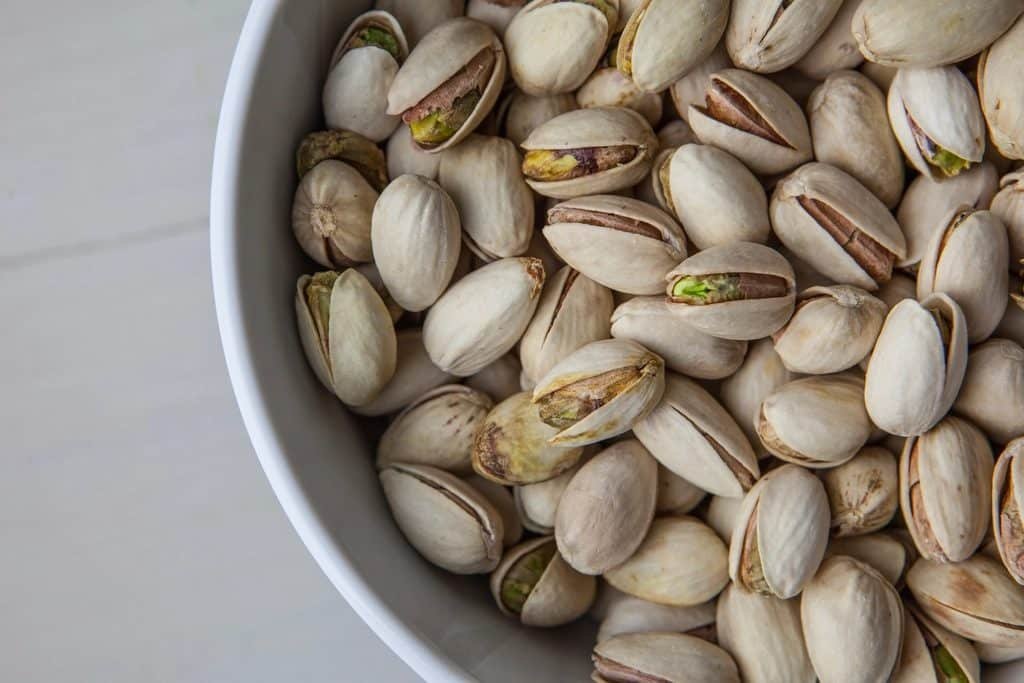
Compared with other nuts, dry roasted pistachios have a lower fat content at 43.4 g per 100 g, and more than half of that fat is oleic and linoleic acids [2]. They also provide about 21% protein by weight, with an essential amino acid ratio higher than almonds, walnuts, pecans and hazelnuts [2]. They have a high percentage of branched chain amino acids too [2]. The fibre story matters: pistachios are richer in fibre than other nuts, with about 10% by weight as insoluble fibre [2].
They contain meaningful amounts of potassium, phosphorus, magnesium, calcium, vitamin A, vitamin E, vitamin C, B vitamins except B12, vitamin K and folate [2]. Pistachios are the nuts with the highest content of phytosterols, including stigmasterol, campesterol and beta-sitosterol [2]. These pistachio benefits are not magic, but they are practical. If you want more snack ideas that do not feel like diet food, see this guide to high-protein Mediterranean snacks.
How Much Is a Sensible Daily Serve?
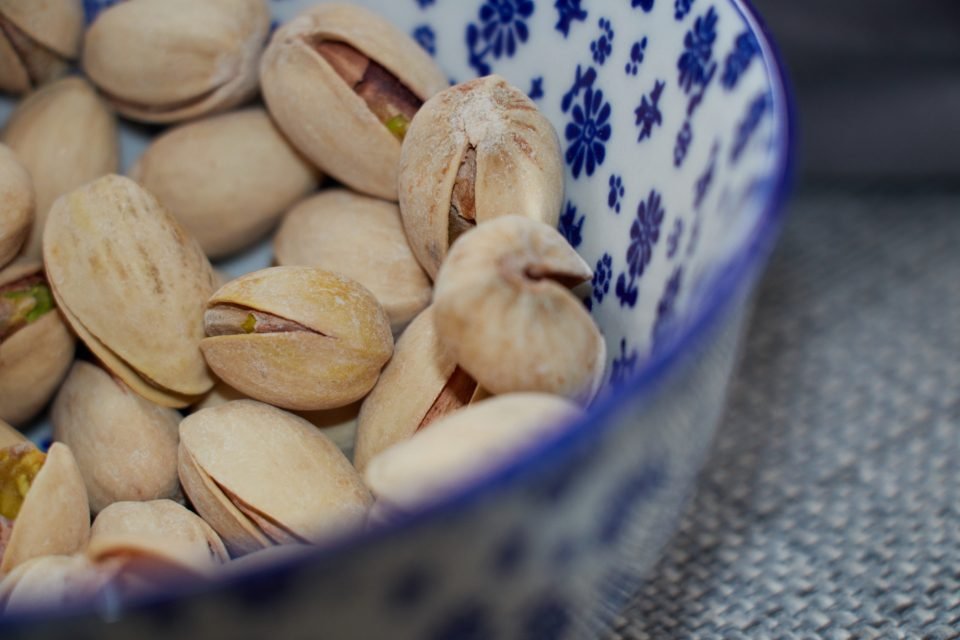
The Nordic Nutrition Recommendations 2023 scoping review points to 20-30 g of nuts and seeds a day, about a small handful, for people without allergies [1]. US-based Cleveland Clinic dietitian Julia Zumpano, writing in February 2025, describes a serving of pistachios as about one ounce, or 49 kernels, with 159 calories [3]. A single serving of pistachios has more potassium than half a banana [3]. Pistachios are technically seeds from a pistachio tree, but we treat them as nuts in the kitchen [3].
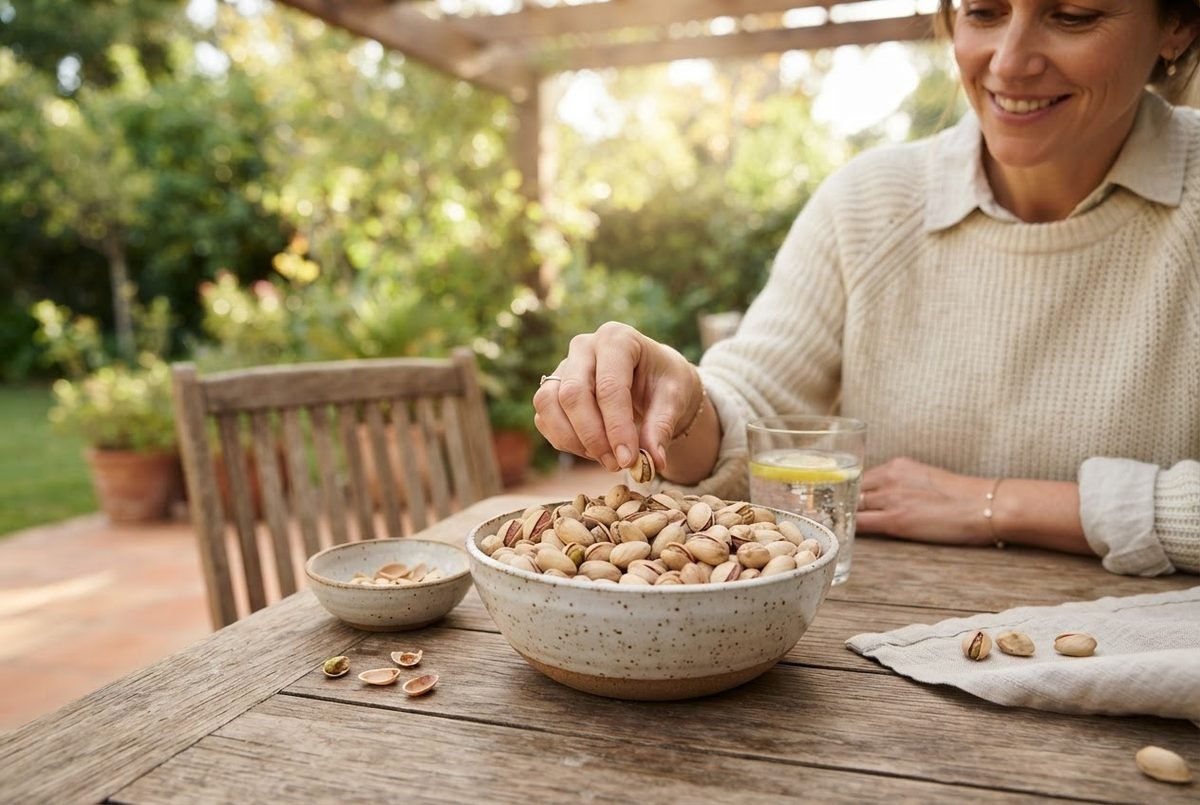
I would not fuss over exact kernel counts every day. A small handful in a ramekin is easier and stops the “just one more” drift. I call it the 2-ounce trial: measure one ounce for a snack, and if you want a second ounce, make it replace something else rather than adding to your day. For more on healthy fats that keep you full without blowing your eating plan, see this guide.
Do Pistachios Help Heart Health?
Several trials have seen improvements in total cholesterol, the total-to-HDL cholesterol ratio and LDL-to-HDL ratio in pistachio-supplemented groups compared with control groups [2]. One randomised trial in 30 adults with well-controlled type 2 diabetes found total cholesterol and triglycerides were significantly lower after four weeks on a pistachio diet than on a control diet [5]. Fructosamine was also significantly lower, while fasting glucose and insulin did not change [5]. Inflammatory markers and endothelial function were unchanged [5].
An umbrella review of nut and seed studies reported a 21% lower risk of cardiovascular disease for 28 g of nuts a day compared with not eating nuts [4]. Some pistachio trials have also reported lower systolic blood pressure, though results are mixed [2]. The heart-related pistachio benefits are worth understanding, but they work best as part of a wider eating pattern. If blood pressure is on your mind, this simple food choices guide may help.
What About Eyes and Ageing?
Pistachios are a rich source of lutein and zeaxanthin, the carotenoids that many people associate with eye health [2]. They also contain vitamin E, mainly gamma-tocopherol, and phenolic compounds with considerable antioxidant capacity [2]. Cleveland Clinic notes pistachios have antioxidants including vitamin E, polyphenols and the carotenoids lutein and zeaxanthin [3]. The antioxidant capacity is considerable, according to a Nutrients review [2].
I am not going to tell you pistachios will fix your eyesight. What the research shows is that they supply nutrients that are part of a varied, colourful diet. Eye-related pistachio benefits are about supporting the overall pattern, not chasing a single outcome.
What Are 5 Easy Tips for Pistachio Snacking?
- Buy them in the shell. Shelling slows you down and gives your hands something to do, which helps with portion awareness.
- Pre-portion a small handful. Put about 20-30 g in a small bowl instead of eating from the bag [1].
- Use them as a swap. Replace a less helpful crunchy snack with pistachios, rather than adding them on top of your usual food.
- Choose unsalted or lightly salted. Nuts are rarely the main salt source at a handful a day, but salt can add up [1].
- Add them to meals. Crush a few over yoghurt, porridge or a salad so they feel like part of a meal, not a diet food.
To make pistachio benefits stick, keep them where you can see them and pre-portion them when you get home from the shops. That small step makes the healthy choice the easy choice.
Are Roasted and Salted Pistachios Okay?
Roasted and salted pistachios are fine for most people in a small daily handful, but the salt can creep up if you eat several handfuls [1]. The Nordic Nutrition Recommendations 2023 note that nuts and seeds are rarely among the main salt contributors at a handful or less [1]. They also note that substituting red and processed meats with nuts is associated with substantial cardiovascular gains [1]. The scoping review also says different nuts have slightly different nutrient profiles, so varying between them might be beneficial [1].
I favour unsalted or lightly salted packs, then add my own lemon zest, black pepper or dried oregano if I want more flavour. In-shell bags are usually better value and slow me down. If you are also watching cholesterol, fibre foods for cholesterol can be a useful next step.
Related reading
- High-Protein Mediterranean Snacks That Do Not Feel Like Diet Food: More snack ideas that do not feel like diet food
- Healthy Fats That Keep You Full Without Blowing Your Diet: Explains healthy fats that keep you full
- Mediterranean Diet for Blood Pressure: Simple Food Choices to Start With: Simple food choices for blood pressure
- Fiber Foods for Cholesterol: Mediterranean Choices That Help LDL: Mediterranean choices that help LDL
Frequently asked questions
Are pistachios safe if I have a nut allergy?
No. People with allergies to nuts need to avoid them. Allergies are seen in 1-2% of adults, so check with your doctor if you are unsure [1][4].
Do pistachios help with weight loss?
They are not a weight-loss food, but their protein, fibre and fat can make a small serve satisfying. Portion still matters because calories add up, so measure a handful rather than eating from the bag [3].
Are raw or roasted pistachios better?
Both can fit. Roasted pistachios have a lower fat content than many nuts and retain useful nutrients, but unsalted or lightly salted versions help keep sodium in check [2][1].
How many pistachios should I eat daily?
About 20-30 g, or a small handful, is the amount linked with benefits in recommendations for most adults. That is roughly 49 kernels for a one-ounce serve [1][3].
Can pistachios lower cholesterol?
Some trials show improvements in total cholesterol and ratios, but results vary. They are a helpful swap, not a treatment, and work best within a varied diet [2][5].
Honest take
I think pistachios earn their place in a Mediterranean-style kitchen because they are practical, portion-friendly and genuinely enjoyable. The honest pistachio benefits are about small, repeated swaps rather than a single heroic food. I would rather see you enjoy a small handful than avoid nuts entirely out of fear of fat. This is general information, not medical advice. If you have a nut allergy, kidney concerns or a medical condition, speak with your doctor or dietitian before changing your diet.
References
- Nuts and seeds, a scoping review for Nordic Nutrition Recommendations 2023. PMC. https://pmc.ncbi.nlm.nih.gov/articles/PMC10870978/
- Pistachios for Health: What Do We Know About This Multifaceted Nut? PMC. https://pmc.ncbi.nlm.nih.gov/articles/PMC4890834/
- Cleveland Clinic. Are Pistachios Good for You? 9 Benefits. 2025. https://health.clevelandclinic.org/pistachios-benefits
- Consumption of Nuts and Seeds and Health Outcomes Including Cardiovascular Disease, Diabetes and Metabolic Disease, Cancer, and Mortality: An Umbrella Review. PMC. https://pmc.ncbi.nlm.nih.gov/articles/PMC9776667/
- Effects of pistachios on the lipid/lipoprotein profile, glycemic control, inflammation, and endothelial function in type 2 diabetes: a randomized trial. PMC. https://pmc.ncbi.nlm.nih.gov/articles/PMC4872503/
Get well and stay well,
Ray Baker
