

By Ray Baker
If you are over 50 and stuck choosing between a mediterranean diet vs intermittent fasting plan, you are not alone. One approach tells you what to put on the plate. The other tells you when to stop eating. Used poorly, either can leave you hungry, confused or quitting by week three. Used carefully, both can support healthy ageing, and they are not always rivals.
What is the practical difference between a mediterranean diet vs intermittent fasting?
A Mediterranean-style pattern emphasises plant foods, olive oil, fish and modest portions of animal foods, while intermittent fasting mainly sets an eating window. For many people over 50, starting with Mediterranean food quality and adding a gentle daytime eating window is more sustainable than fasting alone, especially if medications, sleep or social meals matter.
Key takeaways
- Mediterranean eating is a food pattern; intermittent fasting is a timing pattern. You can combine them.
- In adults over 60 in Spain, adding a 12-hour overnight fast to a Mediterranean diet trimmed waist measures more than diet alone in a small trial, but few wanted to keep fasting.[1][2]
- Large Spanish PREDIMED evidence still supports Mediterranean eating for heart-risk adults aged 55 to 80 when olive oil or nuts are emphasised.[6]
- Meal timing research (chrononutrition) suggests late-night eating can work against glucose control; daytime eating windows may help some people.[4]
- Short fasts can change inflammatory signalling in small lab studies, but that is not a licence for extreme restriction after 50.[5]

What does a Mediterranean pattern actually look like day to day?
WHO/Europe describes the traditional Mediterranean pattern as high in plant foods (fruit, vegetables, nuts and cereals) and olive oil, with moderate fish and poultry, and low intakes of red meat, processed meats and sweets.[3] Shared meals and a slower eating culture are part of the story too, not only nutrients.
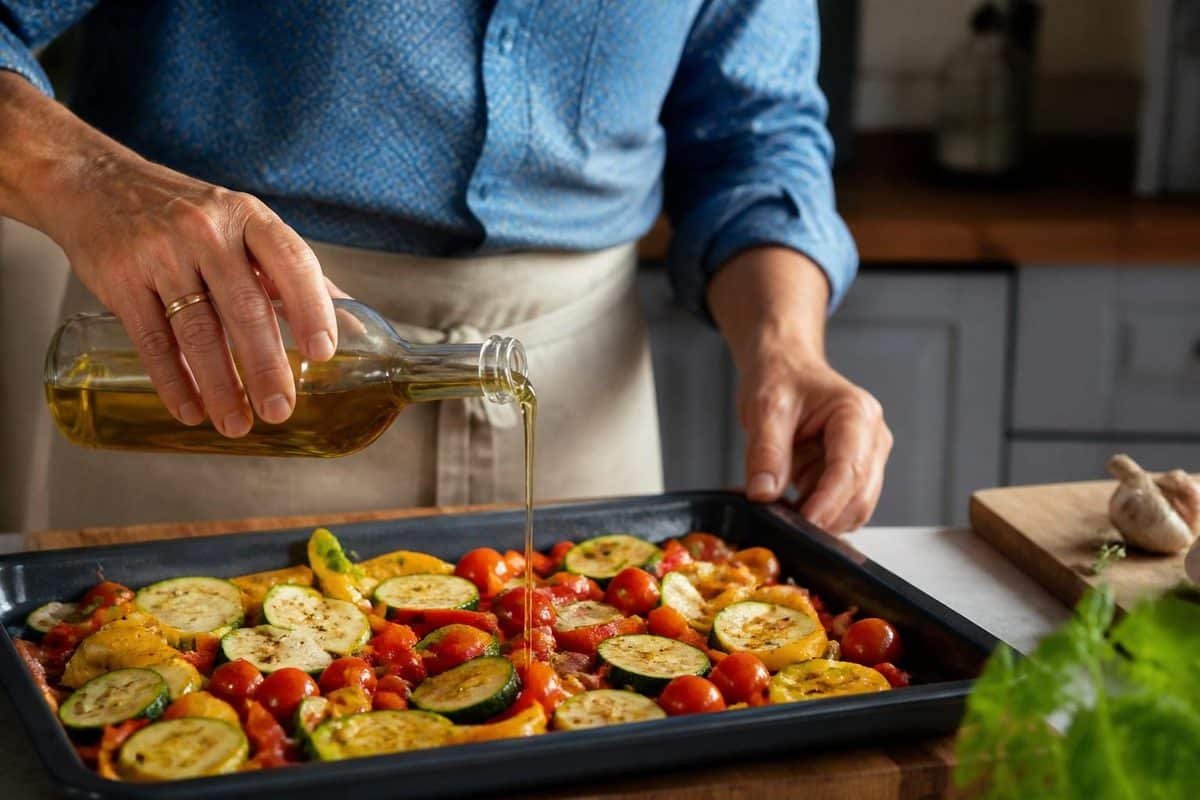
In practice for over-50s that usually means: vegetables at lunch and dinner, legumes a few times a week, fish twice a week if you eat it, olive oil as the default fat, and fruit instead of packaged dessert. Potatoes can still fit when the rest of the plate stays Mediterranean; see this site guide on whether potatoes belong on a Mediterranean plate if starch portions are your sticking point.
How does intermittent fasting work, and which styles show up in studies?
Intermittent fasting is an umbrella term. Common versions include time-restricted eating (for example 12:12 or 16:8), and weekly patterns such as 5:2. The clock, not a special food list, is the main rule.
The United States National Heart, Lung, and Blood Institute has highlighted chrononutrition: when you eat may affect cardiometabolic risk alongside what you eat.[4] In a related NHLBI-supported line of work, daytime meal timing protected glucose levels during simulated night work better than nighttime eating in a small controlled study summarised by NHLBI.[4] That is not the same as proving a 16:8 diet for every retiree, but it explains why overnight gaps get attention.
A separate NHLBI news summary of a Cell Reports study (21 volunteers) reported that a 24-hour fast raised circulating arachidonic acid and quieter NLRP3 inflammasome activity in lab tests.[5] Useful as a mechanism clue; not a prescription for day-long fasts if you take glucose-lowering drugs, have a history of disordered eating, or feel dizzy when meals slip.
What happens when researchers compare mediterranean diet vs intermittent fasting after 60?
Head-to-head trials in older adults are still scarce. One registered Spanish randomised trial (FASTMED, NCT06480669) enrolled 17 adults over 60 and compared a Mediterranean diet alone with the same diet plus a 12-hour overnight fast (about 20:30 to 08:30) for three months.[2]
Published results (Couto and colleagues, 2025) reported that the combined group saw larger drops in waist circumference and waist-to-hip ratio than diet alone, with both groups lowering systolic blood pressure.[1] Mediterranean diet adherence and quality-of-life scores improved in both arms. The catch for real life: only about 20 percent of the fasting group wanted to continue fasting, versus 100 percent willing to keep the Mediterranean diet pattern.[1]
So if your goal is a plan you will still follow in six months, food quality may win even when a short overnight fast adds extra waist change in a tiny trial. Treat n=17 as a signal, not a final ranking.
Does Mediterranean eating still have strong heart evidence without fasting?
Yes, for high-risk adults in midlife and older age. The republished PREDIMED analysis in the New England Journal of Medicine (2018) followed 7,447 Spanish adults aged 55 to 80 at high cardiovascular risk. Mediterranean diets supplemented with extra-virgin olive oil or mixed nuts reduced major cardiovascular events compared with a reduced-fat advice control (hazard ratios about 0.69 and 0.72 in the intention-to-treat analyses reported there).[6] That trial is about food pattern and key fats, not an eating window.
If blood pressure, cholesterol or diabetes are already on your problem list, Mediterranean structure remains the evidence-heavy foundation. Fasting, if used, is an optional layer you test with your clinician.
Can you combine both without burning out?
Often yes. A practical stack for over-50s looks like this:
- Lock Mediterranean food quality first for two weeks (olive oil, plants, fish, fewer ultra-processed snacks).
- Keep dinner earlier if evenings run late; NHLBI chrononutrition summaries caution that late eating patterns track with poorer cardiometabolic profiles in emerging research.[4]
- Try a gentle 12:12 window (finish eating by about 8 pm, breakfast around 8 am) before any 16:8 experiment.
- Protect protein and resistance activity so weight change is not mostly muscle.
- Stop and get medical advice if you use insulin or sulfonylureas, have kidney disease, are underweight, or have faint spells.
Portion awareness still matters once the window opens. This site’s guide to Mediterranean recipes for portion control helps when a shorter window tempts larger plates.

Five easy tips if you are choosing a side (or blending both)
- Write tomorrow’s dinner before you negotiate the fasting clock.
- Use olive oil and vegetables at the meals you do eat; an empty window cannot fix a ultra-processed feast.
- Front-load protein at breakfast or lunch if evenings are your social meal.
- Keep one flexible night a week for family dinners so the plan survives real life (the Spanish fasting arm struggled with willingness to continue).[1]
- Track waist and energy for four weeks, not scale obsession alone.
For simple evening plates that still feel satisfying, browse easy weight loss dinners for over 50. If weight has already moved and you need maintenance meals, see Mediterranean recipes for weight maintenance.
Related reading
- Easy weight loss dinners for over 50 — weeknight plates that keep Mediterranean structure without a complicated fast.
- Mediterranean recipes for portion control — useful when an eating window makes portions creep up.
- Mediterranean recipes for weight maintenance — for after the first loss, when fasting alone is not the point.
- Can you eat potatoes on the Mediterranean diet? — clarifies starch so carb fear does not wreck the plan.
Frequently asked questions
Is intermittent fasting safe after 50?
Many healthy adults tolerate a gentle overnight fast, but safety depends on medications, diabetes control, body weight and medical history. Get personal advice before 16:8 or longer fasts.
Is the Mediterranean diet better than intermittent fasting for heart health?
Large PREDIMED evidence supports Mediterranean eating for high-risk adults 55 to 80.[6] Fasting trials in older adults remain small, so food pattern still has the stronger heart evidence base.
Can I do both at once?
Yes. Mediterranean food inside a modest daytime window is a common blend. The Spanish over-60 trial tested diet plus a 12-hour overnight fast.[1][2]
Will fasting help if my dinners are ultra-processed?
Unlikely to be enough. WHO/Europe still centres plant foods, olive oil and limited processed meats in the Mediterranean description.[3] Fix food quality first.
Why did so few people want to keep fasting in the Spanish study?
Only about one in five in the fasting arm wanted to continue, versus everyone willing to keep the Mediterranean diet.[1] Schedules and social meals matter after 60.
Honest take
If I am coaching a reader over 50, I start with Mediterranean food quality, earlier dinners and a sleep-friendly overnight gap. I only tighten the window after energy, labs and willingness look solid. A tiny Spanish trial suggests adding TRE can improve waist measures, but adherence told the truer story.[1] Your clinician still owns edge cases: diabetes drugs, kidney disease, underweight, or a history of disordered eating.
References
- Couto S, Cenit MC, Montero J, Iguacel I. The impact of intermittent fasting and Mediterranean diet on older adults’ physical health and quality of life: A randomized clinical trial. Nutr Metab Cardiovasc Dis. 2025;35(10):104132. doi:10.1016/j.numecd.2025.104132. Available summary: Universidad de Zaragoza repository.
- ClinicalTrials.gov. Impact of Intermittent Fasting and Mediterranean Diet on the Physical Health of the Elderly (FASTMED). NCT06480669. https://clinicaltrials.gov/study/NCT06480669.
- World Health Organization Regional Office for Europe. Fostering healthier and more sustainable diets – learning from the Mediterranean and New Nordic experience. Newsroom item describing the Mediterranean pattern. WHO/Europe.
- National Heart, Lung, and Blood Institute. Chrononutrition: Timing of meals matters for your health. 6 September 2023. NHLBI.
- National Heart, Lung, and Blood Institute. Researchers identify new mechanism that links fasting to reduced inflammation, lower disease risk. 23 January 2024. NHLBI.
- Estruch R, et al. Primary Prevention of Cardiovascular Disease with a Mediterranean Diet Supplemented with Extra-Virgin Olive Oil or Nuts. N Engl J Med. 2018;378:e34. doi:10.1056/NEJMoa1800389.
Get well and stay well,
Ray Baker
