
By Ray Baker
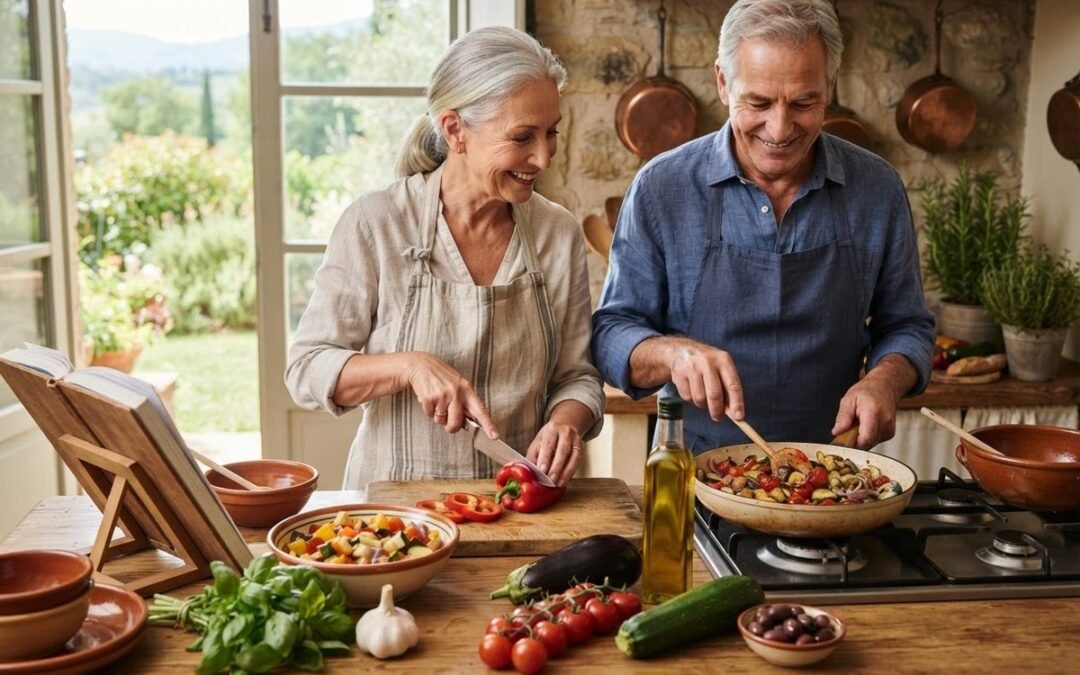
A 2024 systematic review and meta-analysis of 28 studies and 679,259 participants from different continents found that older adults with high adherence to the Mediterranean diet had a 23% lower risk of all-cause mortality [1]. That is a strong reason to take the eating pattern seriously, but it is general information, not medical advice. Still, a Mediterranean diet cookbook for over 60 can sit on the bench unless it solves the real problem: what to cook tonight without waste, confusion or a long shopping list. I see the same mistake with readers over 60: they buy a big cookbook, feel inspired for a week, then drift back to toast and tea because the plan is not built around smaller portions, lower energy and a fixed budget.
Is a Mediterranean diet cookbook for over 60 wise?
A cookbook is wise when it matches your energy, kitchen and portion needs. For many over-60 readers, a simple plan with a short shopping list and flexible swaps beats a large book. Look for serving sizes, one-pot meals and clear nutrition data, not just pretty photos.
Key takeaways
- A Mediterranean diet cookbook for over 60 helps most when it includes a plan, not just recipes.
- Older adults often need smaller portions, softer textures and fewer leftovers.
- Serving sizes from Cleveland Clinic give a clear starting point [2].
- A slow cooker or one-pot book can cut prep to ten minutes [3].
- Check for swap tips and nutrition data before you buy.
What do older adults need most?
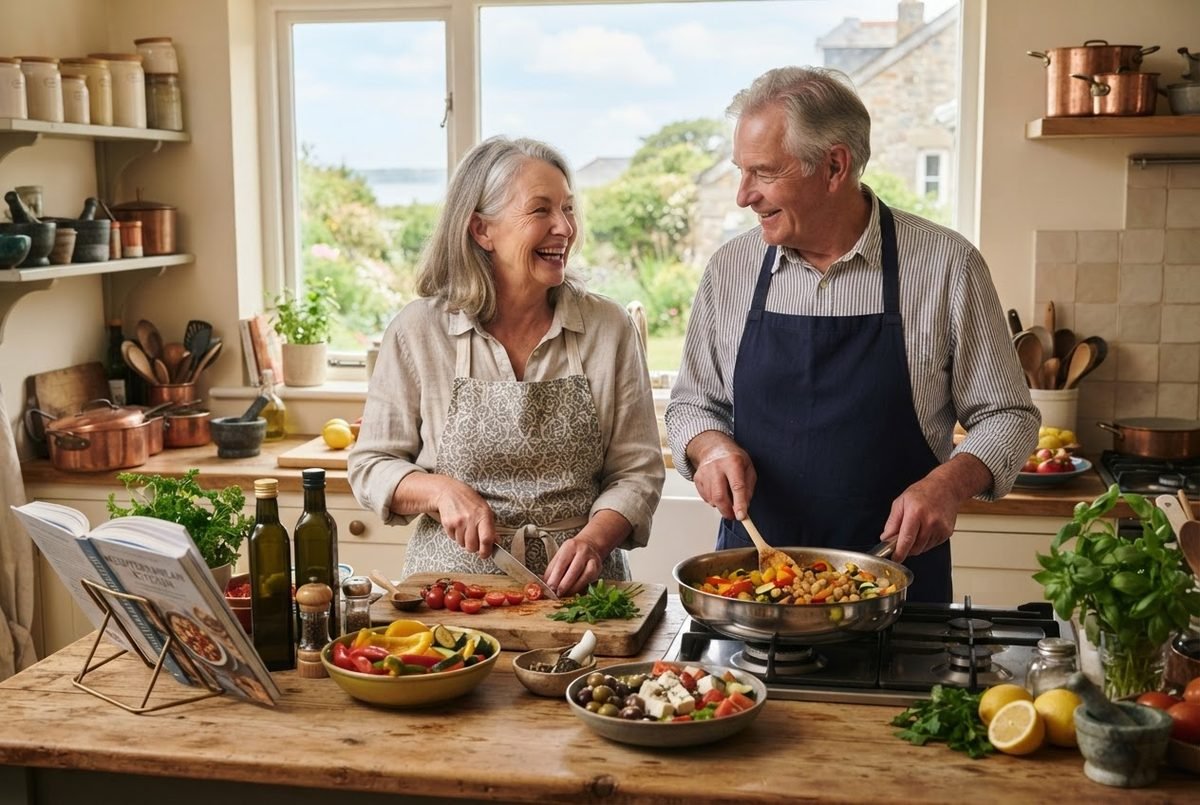
Appetite and energy needs decline with age, so nutrient density matters more than volume, according to a 2025 Dietary Guidelines Advisory Committee review [4]. That means a Mediterranean diet cookbook for over 60 should favour vegetables, legumes, nuts, whole grains and fish rather than large serves of refined grains and sugary foods [4]. StatPearls guidance also frames the Mediterranean diet as a flexible eating pattern, not a strict prescription [5].
I look for books that treat legumes, frozen vegetables and canned fish as normal staples. They are cheaper than fresh salmon, keep longer and still fit the pattern. A book that assumes you will shop for fresh basil and line-caught fish every second day is not practical for most people on a fixed income.
Protein can be a quiet gap. Legumes, fish, eggs and poultry all fit, but the serve sizes are smaller than many restaurant meals. A practical book will show a 3-ounce piece of fish next to a half-cup of lentils, not a platter that feeds four [2].
Which serving sizes actually matter?
Cleveland Clinic’s food list suggests fruit 3 servings per day and vegetables at least 3 servings per day, with whole grains 3 to 6 servings daily [2]. StatPearls suggests at least 4 tablespoons of olive oil per day as the main fat, and fish at least 2 to 3 servings per week [5]. A clear serving chart can help you check portions without weighing every meal.
What often surprises people is that the pattern is not a tiny plate. It includes 1 to 4 tablespoons of extra virgin olive oil daily and 3 to 6 servings of whole grains, depending on your needs [2]. The key is that the servings are modest and the foods are mostly whole, not packaged snacks with a Mediterranean label [5].
Dairy, nuts and red meat are where I see portion creep. Cleveland Clinic suggests no more than one dairy serve daily, nuts at least 3 servings per week, and red meat none or no more than one serve per week [2]. StatPearls allows up to 2 to 3 servings of red meat weekly but says avoid processed meats [5]. A good book will show these limits clearly.
What makes a cookbook practical after 60?
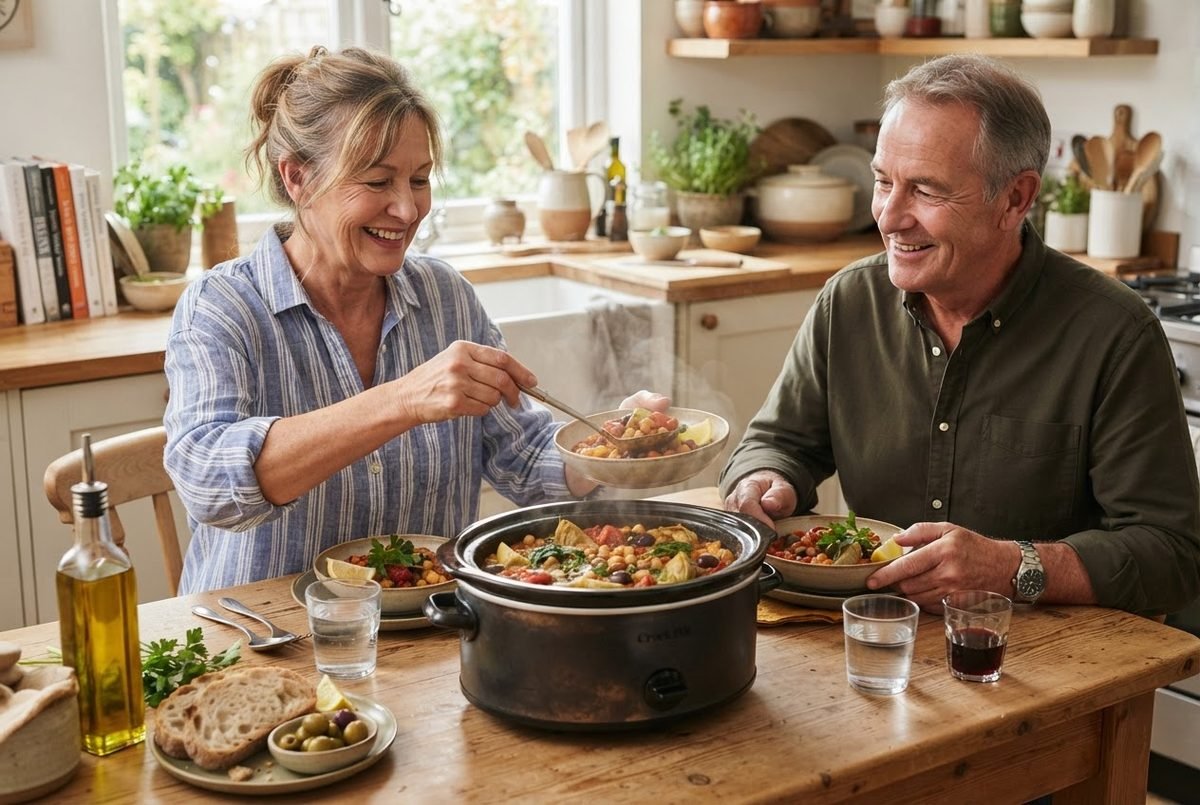
Look for recipes that match your real kitchen. One example, Easiest Slow Cooker Mediterranean Diet for Seniors by Ayomide Adesina, lists 151 recipes, a 60-day meal plan, slow cooker sizing guide, swap tips and full nutrition data [3]. That is helpful because it removes the guesswork around scaling for one or two people. If you hate complicated plans, simple meal prep can lower the midweek effort.
I would also check the troubleshooting section. A good book for over 60 should answer what to do when the sauce is too watery or the fish falls apart. The slow cooker example includes a 12-problem troubleshooting chapter, which is the kind of detail that stops a small failure from ending your week [3].
Full nutrition data per serving is another filter. If you watch sodium or fibre, a recipe that lists calories, protein, net carbs, fat, fibre and sodium per serving saves you from guessing [3]. Many books hide that in an appendix or skip it. I would rather see it on the page.
How do you compare a book and a plan?
A recipe book gives you options. A plan gives you a sequence. For many readers over 60, the plan is the part that prevents the 5 p.m. stare into the fridge. A Mediterranean diet cookbook for over 60 with a 60-day meal plan and weekly shopping lists, like the slow cooker example above, behaves more like a plan than a traditional cookbook [3]. I would rather buy a smaller book with a real plan than a large book with no structure. Healthspan habits after 50 matter more than a single recipe.
The cost question is not just the cover price. A plan that uses the same ingredients across several meals reduces waste. A book that sends you out for one special spice per recipe can cost more in the long run. I would rather pay for a plan I use than a book I flip through once.
One more test: read the first seven days. If the plan asks you to cook a different grain every night or use half a bunch of fresh herbs in each meal, it will create waste. A good plan repeats ingredients in sensible ways and leaves room for a frozen backup.
What about budget and food waste?
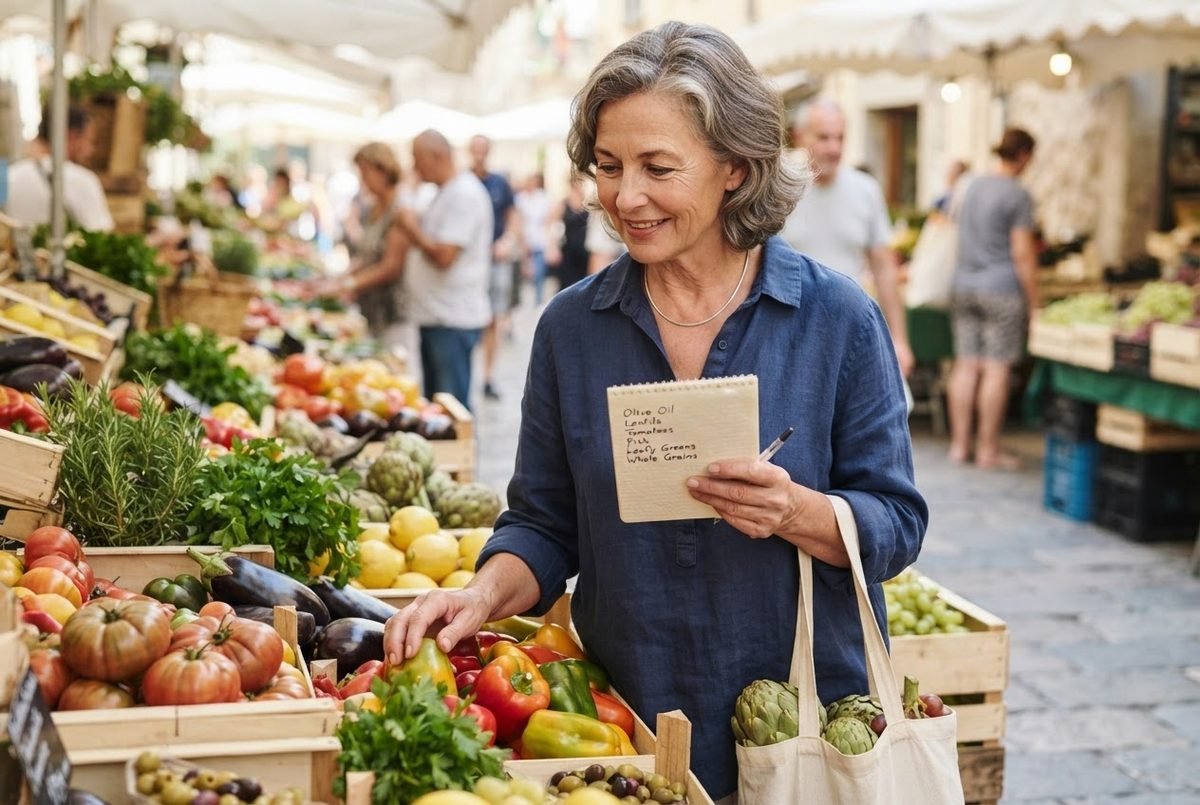
A Mediterranean diet cookbook for over 60 should also respect your budget. StatPearls notes that patients can choose locally available substitutes, such as chickpeas instead of lentils or canola oil when olive oil is unavailable, and buy seasonal produce [5]. A cookbook that ignores this is not realistic. I would rather see swap tips on every recipe than a long list of expensive specialty items.
Frozen vegetables, canned fish and dried legumes are usually cheaper than fresh and keep longer. The key is to avoid packaged items high in sodium, sugar or additives, even if the label says Mediterranean [5].
What are 5 easy tips for choosing?
- Check the serving sizes against a trusted chart before you buy.
- Choose books with one-pot or slow cooker recipes to reduce cleanup.
- Look for swap tips so you can use what is already in the cupboard.
- Prefer books with a meal plan and shopping list, not just recipes.
- Read the nutrition data per serving if you watch sodium or fibre.
Related reading
- How Many Mediterranean Diet Servings Per Day? A Clear Chart: Clear serving chart for portions
- Mediterranean Meal Prep for Beginners Who Hate Complicated Plans: Simple meal prep guide
- Healthspan Habits After 50: How to Stay Useful, Mobile and Harder to Knock Over: Healthspan habits after 50
- Mediterranean Diet Cookbook: Mediterranean diet cookbook guide
Frequently asked questions
Do I need a cookbook for over 60 specifically?
Not always. A general Mediterranean cookbook can work if you adjust portions. A Mediterranean diet cookbook for over 60 often includes softer textures, smaller yields and slow cooker options, which can save time and waste. You can also browse our Mediterranean diet cookbook guide to compare options.
Is a meal plan better than a cookbook?
For many people, yes. A plan removes daily decisions and reduces food waste. A cookbook is better if you enjoy variety and already know your portion sizes. Look for a book that includes both.
How many servings of vegetables do I need?
Cleveland Clinic suggests at least 3 servings of vegetables per day, with fruit 3 servings daily [2]. StatPearls suggests at least 2 servings of vegetables daily, up to 3 to 9 servings [5]. This is general information, not medical advice.
What if I cook for one?
Choose recipes with small yields or freeze half. A slow cooker sizing guide helps you scale a 6-quart recipe down to a 3.5-quart pot. Swap tips also help you avoid buying large amounts of one ingredient.
Are frozen vegetables okay?
Yes. StatPearls suggests choosing fresh or frozen produce over packaged items high in sodium, sugar or additives [5]. Frozen vegetables can be cheaper, keep longer and reduce waste.
Do I need to drink wine?
No. Wine is optional and only for people who already drink alcohol, up to one glass per day with meals [5]. If you do not drink, there is no need to start.
Honest take
I would not buy a Mediterranean diet cookbook for over 60 just because the cover says “seniors”. I would check whether it includes a plan, sensible portion sizes and swap tips. A smaller, well-organised book with a 60-day plan will often serve you better than a large collection of recipes. This is general information, not medical advice.
References
- Mediterranean Diet in Older Adults: Cardiovascular Outcomes and Mortality from Observational and Interventional Studies: A Systematic Review and Meta-Analysis. PMC. 2024. https://pmc.ncbi.nlm.nih.gov/articles/PMC11597443/
- Cleveland Clinic. Mediterranean Diet: Food List & Meal Plan. https://my.clevelandclinic.org/health/articles/16037-mediterranean-diet
- Adesina, A. Easiest Slow Cooker Mediterranean Diet for Seniors. Booktopia. https://www.booktopia.com.au/easiest-slow-cooker-mediterranean-diet-for-seniors-ayomide-adesina/ebook/9781067271510.html
- Nutrition for Older Adults: Perspectives on Dietary Guidance for Healthy Aging. PMC. 2025. https://pmc.ncbi.nlm.nih.gov/articles/PMC12990339/
- StatPearls. Mediterranean Diet. NCBI Bookshelf. https://www.ncbi.nlm.nih.gov/sites/books/NBK557733/
Get well and stay well,
Ray Baker
