

By Ray Baker
If you have spent half an hour scrolling through Mediterranean diet books australia, you already know the real problem: too many books promise big results but give you a 500-recipe doorstop, a pile of ingredients you cannot find at the local shops, and no idea what a realistic portion looks like on your plate. I have looked at many of these books over the years, and the ones worth keeping tend to do three jobs well. They teach you a simple eating pattern, they respect your budget, and they show you portions that suit a smaller household or a slower pace. A quick search on Booktopia shows 120 books under ‘Mediterranean diet’ [1], so with so many Mediterranean diet books australia options, we need a clear way to sort them.
Which Mediterranean Diet Books Australia Suit You?
A good book for over-50 readers teaches the pattern, not a strict plan. It should use everyday Australian ingredients, show clear serving sizes, include recipes you can cook in under about 40 minutes, and suit one or two people. Pick a reference you will open, not a two-week diet you put away.
Key takeaways
- A useful book teaches the Mediterranean pattern, not a rigid set of rules.
- Look for Australian ingredient names, clear portions and smaller-batch recipes.
- Check the book against the Australian dietary guidelines’ five food groups.
- Sensible books lean on beans, lentils, tinned fish and seasonal vegetables for budget sense.
- This is general information, not medical advice.
What should a good book include?
When I review Mediterranean diet books australia, the first thing I check is whether the book follows the same basic shape that health and nutrition groups have used for decades. The Mediterranean Diet Pyramid introduced in 1993 by the Harvard School of Public Health, Oldways Preservation and Exchange Trust, and the European Office of the World Health Organization emphasized certain foods based on the dietary traditions of Crete, Greece, and southern Italy, with the preferred animal protein being fish and seafood [2]. It did not specify portion sizes, so a book should help you with that gap.
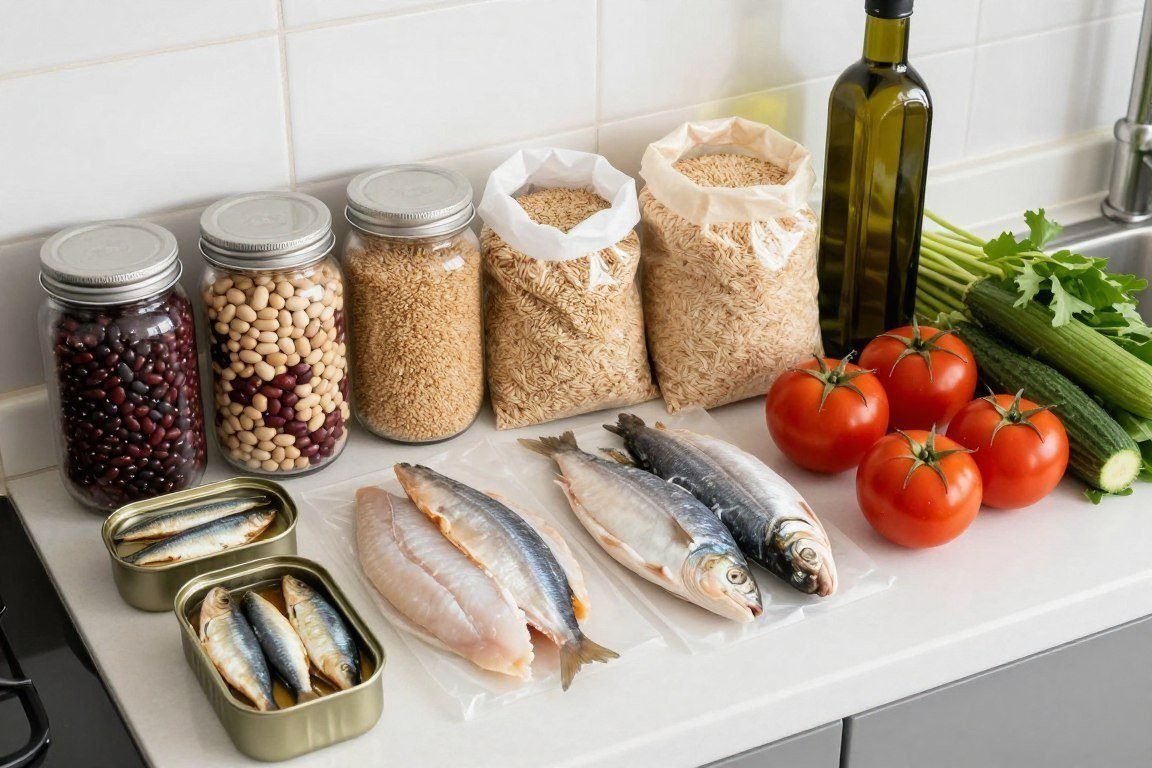
healthdirect says the Mediterranean diet includes eating a variety of fruits, vegetables, wholegrains, legumes, fish and seafood, and minimal processed foods and red meat [3]. A book should make those ingredients attractive, not turn them into a chore. I prefer books that organise chapters by everyday ingredients rather than by exotic holiday dishes.
The Australian dietary guidelines list five food groups: plenty of vegetables, including different types and colours, and legumes/beans; fruit; grain (cereal) foods, mostly wholegrain and/or high cereal fibre varieties; lean meats and poultry, fish, eggs, tofu, nuts and seeds, and legumes/beans; and milk, yoghurt, cheese and/or their alternatives, mostly reduced fat [4], which is useful context when comparing Mediterranean diet books australia. If a book ignores one of these groups or tells you to cut out a whole food group, I would put it back on the shelf.
Mayo Clinic describes the Mediterranean diet as a heart-healthy eating plan [5]. That is useful, but a book still has to show practical meals, not just repeat the pattern. The Australian healthdirect service adds that this way of eating values eating with friends and family and having longer meal times, not only the food on the plate [3]. A book that treats food as a nutrient count only misses that part.
If you are over 60, my guide to choosing a cookbook for over 60 may help you narrow the choices before you spend.
How do I spot a budget-friendly book?
This is where I check the ingredient list before the cover. Books that assume you have a delicatessen on every corner are not helpful. I also like a book that gives a weekly shopping list instead of making you guess. My five quick checks are:
- Does it build most meals around beans, lentils, chickpeas, tinned fish and frozen vegetables? These are cheap and keep well.
- Does it use olive oil as the primary added fat, as the Mediterranean pattern recommends [2], without pushing three expensive oils?
- Are the recipes written for two or four serves, or can they be halved without wasting food?
- Does it keep one or two pantry staples working across several nights instead of a new list every day?
- Does it show a modest weekly shopping list you could actually carry home from the shops?
If a book passes those checks, I stop worrying about the price. One Australian bookseller’s search shows titles priced $20 - $30 (27) and $30 - $50 (56) [1]. A $25 paperback you use for two years is cheaper than a $50 hardback that sits on the shelf.
I also skip books that ask you to buy a new spice blend every week. A good budget book uses the same small rack of herbs and spices across several meals, which keeps both the pantry and the weekly total under control.
How many portions should a book show?
The 1993 pyramid does not specify portion sizes or specific amounts; it is up to the individual to decide exactly how much food to eat at each meal, as this will vary by physical activity and body size [2]. A book aimed at over-50 readers should not be that vague. I look for pages that show a palm-size serve of fish, half a cup of cooked legumes, a cupped hand of nuts and a thumb-size measure of olive oil. If you need a quick reference, my serving chart is handy when a recipe just says ‘a serve of vegetables’.
The Australian dietary guidelines also say older people should eat nutritious foods and keep physically active to help maintain muscle strength and a healthy weight [4]. That means a useful book will show enough protein from fish, seafood, eggs, tofu or legumes without piling on giant night-time serves.
My favourite books give you a visual portion guide, not just a serve count. That matters because a cup of cooked rice may look different depending on the bowl you use. If the photos and charts are clear enough to follow without weighing food, the book is likely to stick.
What if I cook for one or two?
Many Mediterranean cookbooks assume four or more at the table. Over 50, you might be cooking for one or two, and a book that leaves you with four nights of the same soup is not a bargain. I look for smaller-batch recipes, freezer notes, and a shopping list that lets you buy half a cabbage without waste. My portion guide for cooking for one is a plain-language companion if the book still leaves you multiplying.
I also look for recipes that freeze well, because cooking in small batches means you can still enjoy variety without wasting half a pack of spinach. A few ‘cook once, eat twice’ notes are often the gentlest start for a single pan.
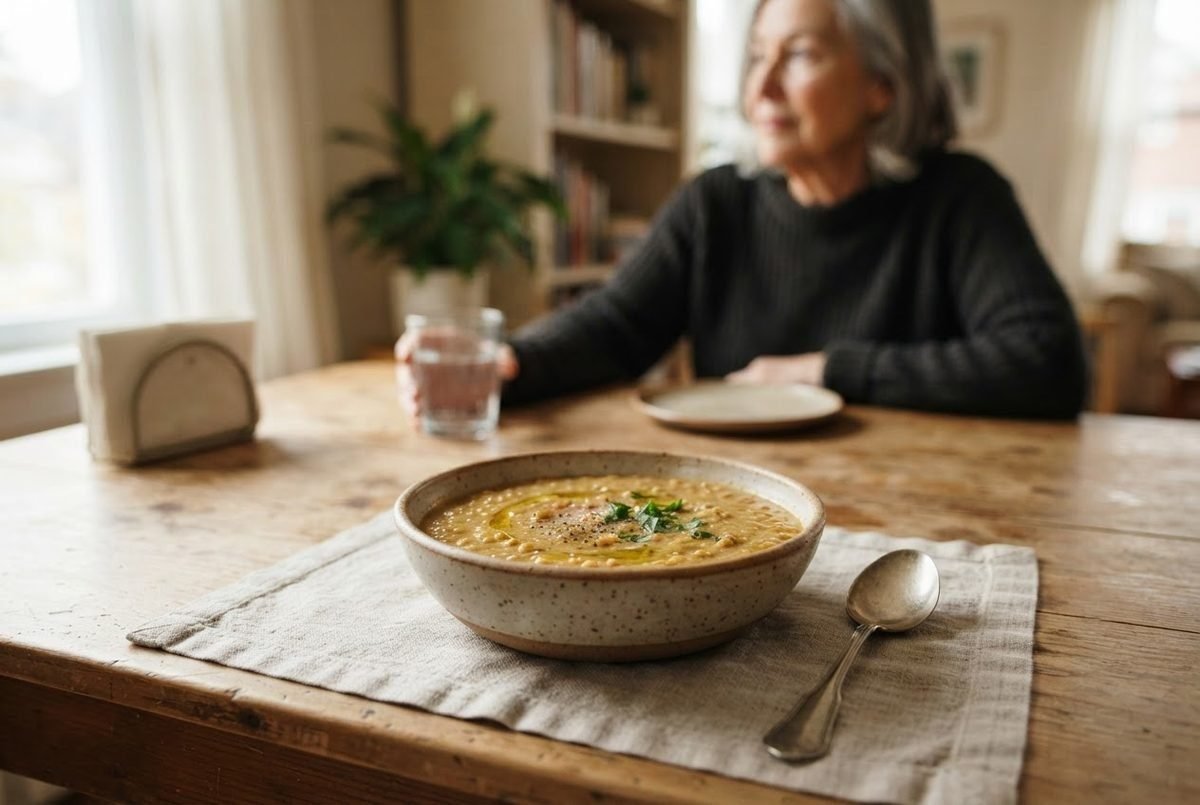
Some of the simplest Mediterranean meals are naturally single-serve: a tin of sardines on wholegrain toast, a bowl of lentil soup, or an egg scrambled with spinach and a little feta. A useful book should include these, not just party sizes.
Can I follow this with diabetes or heart concerns?
Many people first hear about this eating pattern because a doctor or dietitian mentions it. The Australian healthdirect service says the diet may help lower the risk of bowel cancer, heart disease, type 2 diabetes and dementia [3]. I would not swap that for a book that promises to reverse anything. Look for a book that stays close to the traditional pattern and does not add rules you cannot sustain.
This is general information, not medical advice. If you have diabetes, heart disease or other health concerns, talk to your doctor or dietitian before changing your eating pattern. If your main worry is heart recovery, I have a plain explainer on a Mediterranean diet after a heart attack.
I also look for a book that encourages you to review the plan with your own health professional. A good book invites that conversation instead of hiding it.
Related reading
- Choosing a Mediterranean Diet Cookbook for Over 60: Narrowing cookbook choices when you are over 60.
- How Many Mediterranean Diet Servings Per Day? A Clear Chart: Clear serving reference for when a book is vague about portions.
- How to Make the Mediterranean Diet for One Person Work: Practical portion and batch-cooking help for smaller households.
- New evidence on Mediterranean diet after a heart attack: Related reading for readers with heart concerns.
Frequently asked questions
Do Mediterranean diet books suit Australian supermarkets?
Most good ones now use everyday Australian ingredients. Check for beans, tinned fish, frozen vegetables and olive oil. If you see hard-to-find imports on every page, keep looking. A usable book works with your local shops, not against them.
Which book is best for a beginner over 60?
A smaller book or a cookbook for seniors is often the gentlest start. Look for clear steps, a simple weekly plan and low-sodium recipes. One Australian search result includes ‘Mediterranean Diet Cookbook for Seniors: Mouth-Watering Low-Sodium, Anti-Inflammatory Recipes for Healthy Living After 60’ [1].
Do I need a book with pictures?
Not always, but a few photographs help you see portion size and colour. I prefer books where the photo matches the recipe and shows a normal plate, not a restaurant platter. That helps you judge the serve before cooking.
Can I use a cookbook from another country?
Yes, if you can translate ingredient names and cup measures. Australian recipes may use metric cups and Celsius ovens, so a UK or US book might need small conversions. Check for a measurement guide or stick with Australian editions.
How many recipes should a good book have?
Fewer than you think. I would rather see 40 recipes you will repeat than 500 you will never cook. Look for a seven-day meal plan and a shopping list, not a volume that sits untouched on the shelf.
Honest take
My honest view is that most Mediterranean diet books australia are not bad; they are just not matched to your kitchen. Choose the shortest book that shows portions, uses your supermarket ingredients and suits the number of people you feed. A used copy you open twice a week beats a beautiful hardback you never open.
References
- Booktopia. Search results for 'mediterranean diet'. https://www.booktopia.com.au/search?keywords=mediterranean+diet
- Harvard School of Public Health. Diet Review: Mediterranean Diet. https://nutritionsource.hsph.harvard.edu/healthy-weight/diet-reviews/mediterranean-diet/
- healthdirect Australia. Mediterranean diet. https://www.healthdirect.gov.au/healthy-living/food-and-nutrition/mediterranean-diet
- Eat For Health. Australian dietary guidelines 1-5. https://www.eatforhealth.gov.au/guidelines/australian-dietary-guidelines-1-5
- Mayo Clinic. Mediterranean diet: A heart-healthy eating plan. https://www.mayoclinic.org/healthy-lifestyle/nutrition-and-healthy-eating/in-depth/mediterranean-diet/art-20047801
Get well and stay well,
Ray Baker
