
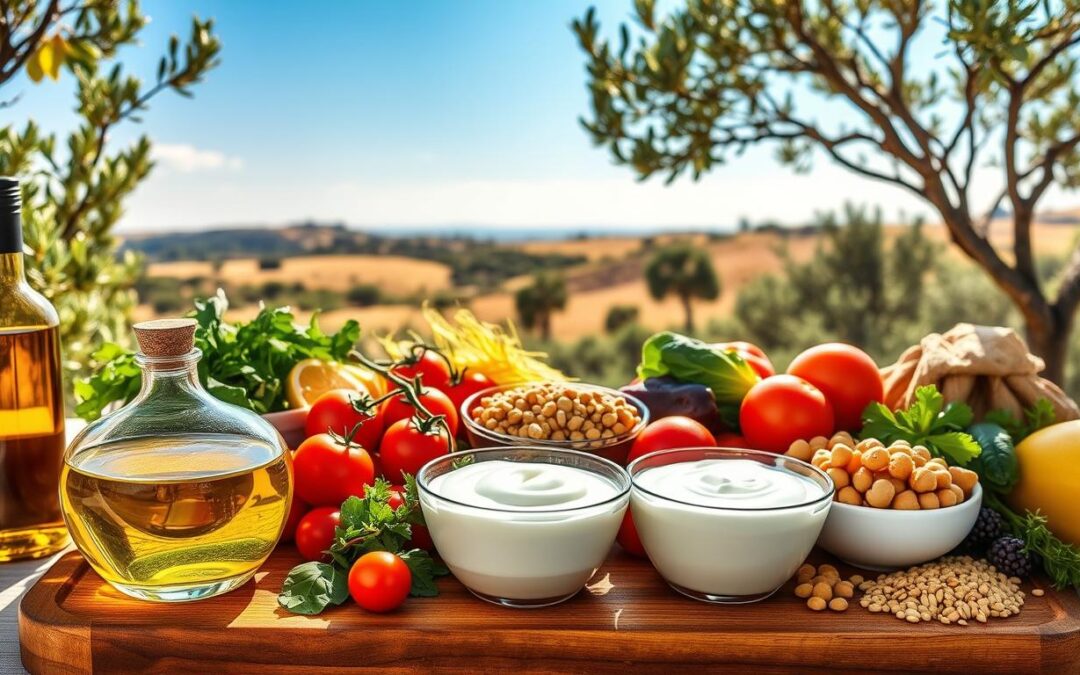
Do you ever feel like your stomach is upset after eating? You’re not alone. Many people deal with bloating and feeling tired. It’s hard when your body doesn’t match your busy life.
But, there’s good news. You don’t need a big medical plan to feel better. By eating gut health Mediterranean foods, you can help your body relax. These foods are easy to eat and help your body work well.
This way is like a soft reset for your body. It’s time to stop guessing what to eat. Start enjoying meals that make you feel good and full of energy. Are you ready to start? Click the button below to get your free guide.
Download Your Starter Guide Now
Key Takeaways
- Digestive discomfort is a common issue that often stems from modern dietary habits.
- The Mediterranean lifestyle offers a science-backed, gentle path to improved wellness.
- Focusing on whole, plant-based ingredients helps reduce bloating and fatigue.
- Small, consistent changes to your plate lead to significant long-term improvements.
- You can easily integrate these nourishing options into your daily routine starting today.
Why Your Tummy Needs a Mediterranean Makeover
Think of your gut as a busy city. It’s home to trillions of tiny workers. These are the bacteria in your gut that help you stay healthy.
By eating a Mediterranean diet gut microbiome, you give these workers the best food. This helps them do their job well.
Switching to whole foods is good for your gut. It makes you feel better and helps your mood. Eating fiber and healthy fats is key to feeling great.
The Connection Between Your Gut and Your Mood
Your gut and brain talk to each other. A healthy Mediterranean diet gut microbiome helps you feel happy. It makes you sleep better too.
When your gut is healthy, you feel good. Eating a variety of foods helps your brain and belly stay happy.
Why Traditional Diets Often Fall Short
Western diets are often bad for your gut. They have too much sugar and not enough fiber. This makes you tired and sluggish.
Without the right food, your gut can’t fight off sickness. It gets weaker and can’t handle stress well.
| Dietary Factor | Western Diet Impact | Mediterranean Diet Impact |
|---|---|---|
| Fiber Content | Very Low | High |
| Microbial Diversity | Decreased | Increased |
| Inflammation Levels | High | Low |
| Energy Stability | Fluctuating | Consistent |
Essential Gut Health Mediterranean Foods for Daily Vitality
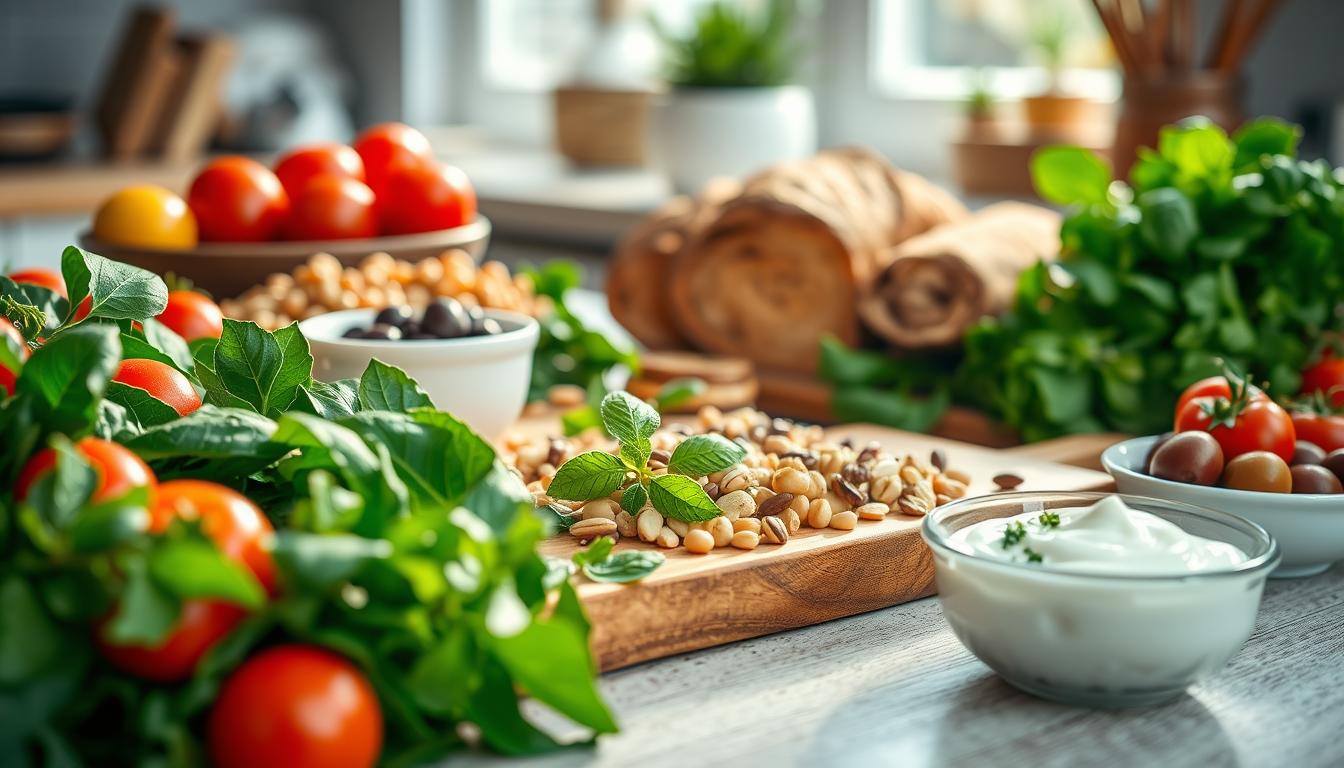
Your journey to better gut health starts with knowing how fats, fibers, and ferments help your body. By picking gut health Mediterranean foods, you give your body what it needs for a healthy microbiome. These foods are full of nutrients and help reduce inflammation and strengthen your digestive system.
The Role of Healthy Fats and Olive Oil
Extra virgin olive oil is key in this diet. It has polyphenols that help your Mediterranean diet gut microbiome by growing good bacteria and fighting bad ones. Healthy fats are important for absorbing nutrients and keeping your gut lining strong.
Fiber-Rich Legumes and Whole Grains
Legumes like lentils, chickpeas, and beans are packed with protein and fiber. They feed your good gut microbes, helping them grow and make short-chain fatty acids. Whole grains like farro or barley give you fiber to keep your digestion running well.
Fermented Favorites for Natural Probiotics
Fermented foods add live, good bacteria to your gut. Eating Greek yogurt or kefir daily helps your gut microbiome. This boosts your immune system and makes your digestion stronger.
| Food Category | Primary Benefit | Key Nutrient |
|---|---|---|
| Extra Virgin Olive Oil | Reduces Inflammation | Polyphenols |
| Legumes | Feeds Microbiome | Prebiotic Fiber |
| Fermented Dairy | Adds Probiotics | Live Cultures |
| Oily Fish | Supports Gut Barrier | Omega-3 Fatty Acids |
Prebiotic Powerhouses to Feed Your Microbiome
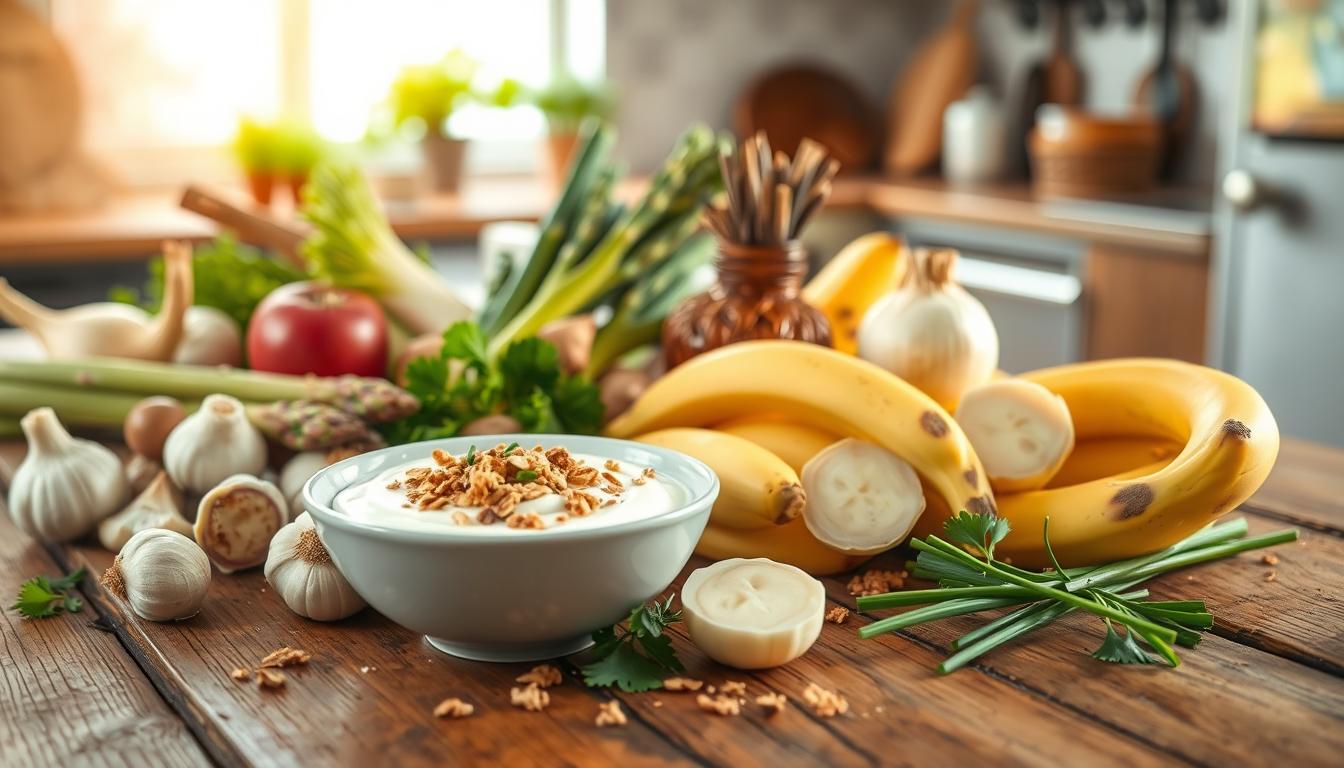
Your microbiome is like a garden that needs special food to grow well. Eating the right foods for better digestion gives your good bacteria the fuel they need. These special fibers, called prebiotics, go through your body without being digested. They then feed your gut’s ecosystem.
Garlic, Onions, and Leeks: The Flavor Foundation
These tasty foods are more than just flavor boosters. They are full of inulin and fructooligosaccharides. Eating them daily helps your Bifidobacteria and Lactobacillus grow. This makes your gut stronger and improves your health.
Asparagus and Artichokes for Digestive Support
Asparagus and artichokes are great prebiotic foods with special fibers. They help your bowel movements and keep your gut healthy. A study shows that eating many plant fibers is important for a healthy gut-brain connection. You can read more about it here: dietary patterns and gut.
Why Variety Matters for Microbial Diversity
Eating the same veggies every day limits your gut’s bacteria. A varied diet brings more types of bacteria, which is key to a strong immune system. By trying different prebiotic foods, your gut stays healthy and supports your body’s needs. Eating a variety of foods for better digestion keeps you healthy for a long time.
Simple Mediterranean Recipes for Better Digestion
It’s easy to make tasty meals that help your digestion every day. Use fresh, whole foods to make your kitchen a wellness spot. These recipes show the best gut health Mediterranean foods for feeling great.
Quick Breakfast Bowls with Greek Yogurt and Berries
Begin your day with a protein-rich bowl that boosts your metabolism. One cup of Greek yogurt has probiotics for a healthy gut.
Add blueberries or raspberries on top for antioxidants. This mix is a top food for better digestion in the morning.
Hearty Lentil Salads for Sustained Energy
Lentils are full of protein and fiber, great for energy. Mix them with cucumbers, tomatoes, and olive oil for a lasting energy boost.
This dish is easy to make ahead for busy days. Add parsley or mint for more flavor and gut health benefits.
Roasted Vegetable Medleys with Fresh Herbs
Roasting veggies makes them sweeter and easier to digest. Use bell peppers, zucchini, and onions for lots of nutrients.
Season with garlic and rosemary before roasting. This makes a tasty, fiber-rich side dish. These foods for better digestion keep your gut happy.
| Ingredient Category | Primary Benefit | Preparation Tip |
|---|---|---|
| Fermented Dairy | Probiotic support | Choose plain, unsweetened |
| Legumes | High fiber content | Rinse canned beans well |
| Fresh Herbs | Anti-inflammatory | Add at the very end |
Here’s a simple shopping list for your next trip:
- Plain Greek yogurt (full-fat or low-fat)
- Dried or canned lentils
- Fresh seasonal berries
- Extra virgin olive oil
- Garlic, onions, and fresh herbs
Boosting Energy and Mood Through Your Second Brain
Your digestive system is more than just for food. It’s a complex center for your mood and energy. It’s called the “second brain” because it has many neurons that talk to your mind. By taking care of it, you can feel clearer and more stable.
How Nutrient Density Impacts Your Daily Focus
Eating high-quality, nutrient-rich meals helps your brain work best. Foods with lots of sugar can make you feel tired. But, eating whole foods gives your brain steady energy.
This steady energy helps you stay focused and keep your mind sharp. You’ll do better at work.
Adding foods from the Mediterranean diet for IBS can help too. These foods are good for your gut and brain. You’ll feel happier when your gut is happy.
The Science of the Gut-Brain Axis
The vagus nerve connects your brain and gut. It’s key for them to talk to each other. When your gut is healthy, you feel calm and centered.
Research shows your gut lining affects how you handle stress. Eating prebiotic foods helps keep this nerve line open. A healthy gut is important for balance.
Managing Stress Through Mindful Eating
Mindful eating helps your vagus nerve and lowers stress. Eating slowly tells your body it’s safe to digest. This helps you relax.
Eating more prebiotic foods is great for this. These foods feed good bacteria in your gut. They help you feel better and less anxious. Make these habits a part of your daily life.
| Habit | Primary Benefit | Mental Impact |
|---|---|---|
| Mindful Chewing | Improved Digestion | Reduced Stress |
| Eating Prebiotic Foods | Microbiome Diversity | Better Mood |
| Hydration | Nutrient Absorption | Increased Focus |
| Regular Meal Times | Stable Blood Sugar | Consistent Energy |
Your 28-Day Mediterranean Gut-Healing Plan
Changing your gut health is easy with a simple plan. Studies say food, medicine, and body shape affect your gut. A Mediterranean diet gut microbiome plan helps your body be its best.
Week One: Clearing the Path with Whole Foods
Start by getting rid of processed sugars and white grains. Eat lots of colorful veggies, lean meats, and healthy fats like olive oil. This step lowers inflammation and gets you ready for more changes.
Week Two: Introducing Fermented Staples
After getting used to whole foods, add probiotics to your diet. Eat a little Greek yogurt, kefir, or sauerkraut each day. These foods help your gut work better.
Week Three: Maximizing Prebiotic Intake
Now, feed the good bacteria in your gut. Eat foods like garlic, onions, leeks, and asparagus. These foods help your gut stay healthy and strong.
Week Four: Sustaining Your New Digestive Rhythm
The last week is about keeping up good habits. Eat slowly and listen to when you’re hungry. By now, eating well should feel normal.
Key Takeaways for Long-Term Success:
- Eat whole, unprocessed foods to keep your gut diverse.
- It’s more important to keep eating fermented and prebiotic foods regularly than to be perfect.
- Pay attention to your body to adjust what and how much you eat.
| Week | Primary Focus | Goal |
|---|---|---|
| One | Whole Foods | Reduce Inflammation |
| Two | Fermented Items | Introduce Probiotics |
| Three | Prebiotic Foods | Feed Microbiome |
| Four | Consistency | Build Habits |
Frequently Asked Questions
Can I see results in less than a month? Yes, many people feel better in just two weeks after changing their diet.
What if I have a sensitive stomach? Start with small amounts of new foods to let your stomach adjust.
Are supplements necessary? Supplements can help, but eating whole foods is usually better for your health in the long run.
Can I eat out while on this plan? Yes, just choose grilled meats, olive oil-based dressings, and roasted veggies.
Disclaimer: This content is for informational purposes only and does not constitute medical advice. Always consult with a healthcare professional before making significant changes to your diet. References: Dr. Emeran Mayer, Dr. Justin Sonnenburg, and Dr. Erica Sonnenburg.
Start Your 28-Day Journey Today
Conclusion
Your journey to better digestion begins in your kitchen. Adopting the Mediterranean lifestyle is a great way to care for your body and mind. Making small changes in your daily life can lead to big improvements in your health.
Food is a powerful medicine for your mood and energy. Using extra virgin olive oil and fresh veggies gives your body what it needs to be healthy. You have the power to change your body’s health with every meal.
Start your journey by trying a new recipe tonight. Choose ingredients that are good for you and enjoy eating slowly. Your body will thank you with more energy and a healthy digestive system. Begin your journey to a healthier you today.
