
By Ray Baker
Stepping on the scales and seeing a kilo or two less can feel like good news after 60. The World Health Organization points out that after the age of 60 there is a progressive decrease in body weight, and it comes mainly from fat-free mass and lean mass rather than fat [1]. That quiet shift is why elderly loss of muscle mass nutrition deserves far more attention than it usually gets. Muscle is what keeps you climbing stairs and getting up off the floor. What lands on your plate, and when, is one of the few things you can control.
What is elderly loss of muscle mass nutrition?
It is the study of how food choices affect the muscle you lose with age, and what to do about it. In practice it means enough protein each day, spread across meals rather than saved for dinner, plus enough total food and micronutrients so your body is not running on empty.
Key takeaways
- Protein needs rise with age rather than fall. The European Society for Clinical Nutrition and Metabolism advises at least 1.0 to 1.2 g of protein per kilogram of body weight each day for healthy older adults [2].
- The familiar 0.8 g per kilogram figure is a minimum to keep nitrogen balance, not a target for protecting muscle [3].
- Aim for roughly 30 g of protein at a meal instead of loading it all into dinner [4].
- A systematic review and meta-analysis of 33 trials, covering 3,579 older adults, found protein supplementation had the strongest effect on muscle mass [5].
- Higher adherence to a Mediterranean-style way of eating is linked with better muscle function in observational studies [6].

Why does muscle fade after 60?
The reasons behind elderly loss of muscle mass nutrition come down to two things happening at once. The first is simple shrinkage. The World Health Organization notes that after 60, body weight tends to fall, and that loss comes mainly from fat-free mass and lean mass while fat mass actually rises [1]. The second is subtler: the muscle you have becomes less responsive to the protein you eat. One review describes this as anabolic resistance, and reports that healthy young men had roughly three times the muscle-building response to a standard meal compared with older adults around 75 [3]. That is why elderly loss of muscle mass nutrition puts as much emphasis on protein timing as on total intake.
Sarcopenia, the age-related loss of muscle mass and strength, is tied to disability, frailty and a shorter life in the research literature [6]. If that is on your mind, the sarcopenia prevention diet sets out what to eat and why.
Poor oral health, a dulled sense of taste and smell, living alone, loneliness and low mood all raise the risk of undernutrition in later life, according to the World Health Organization [1]. None of that is a character flaw.
How much protein is enough?
The single biggest lever in elderly loss of muscle mass nutrition is total protein. The European Society for Clinical Nutrition and Metabolism recommends at least 1.0 to 1.2 g of protein per kilogram of body weight per day for healthy older people, and 1.2 to 1.5 g for those who are malnourished or at risk because of acute or chronic illness [2]. Another review puts the range at 1.0 to 1.2 g for older adults generally and 1.2 to 1.5 g for those with chronic conditions, noting that the old 0.8 g figure was set to maintain nitrogen balance and ignores age and activity level [3]. That is the starting point for elderly loss of muscle mass nutrition, but how you spread it matters just as much.
If you weigh 80 kg and aim for 1.2 g per kilogram, that is about 96 g of protein a day, a useful anchor for elderly loss of muscle mass nutrition. Split over three meals, that is roughly 30 g each time, which matches the meal-based approach suggested in a 2014 review in Current Opinion in Clinical Nutrition and Metabolic Care [4].
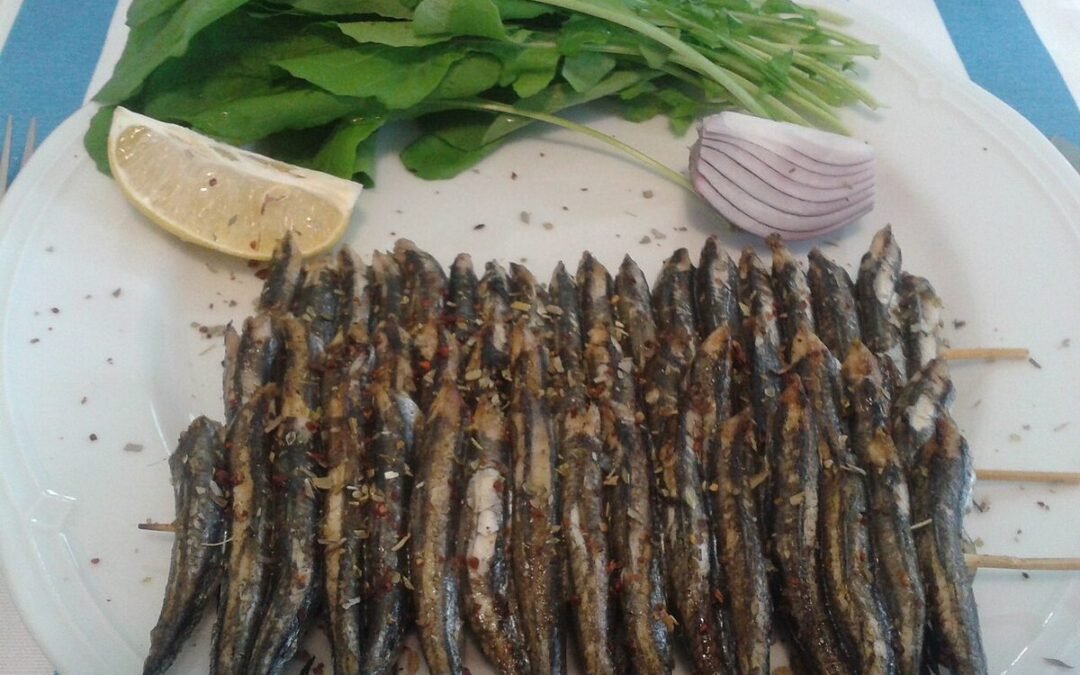
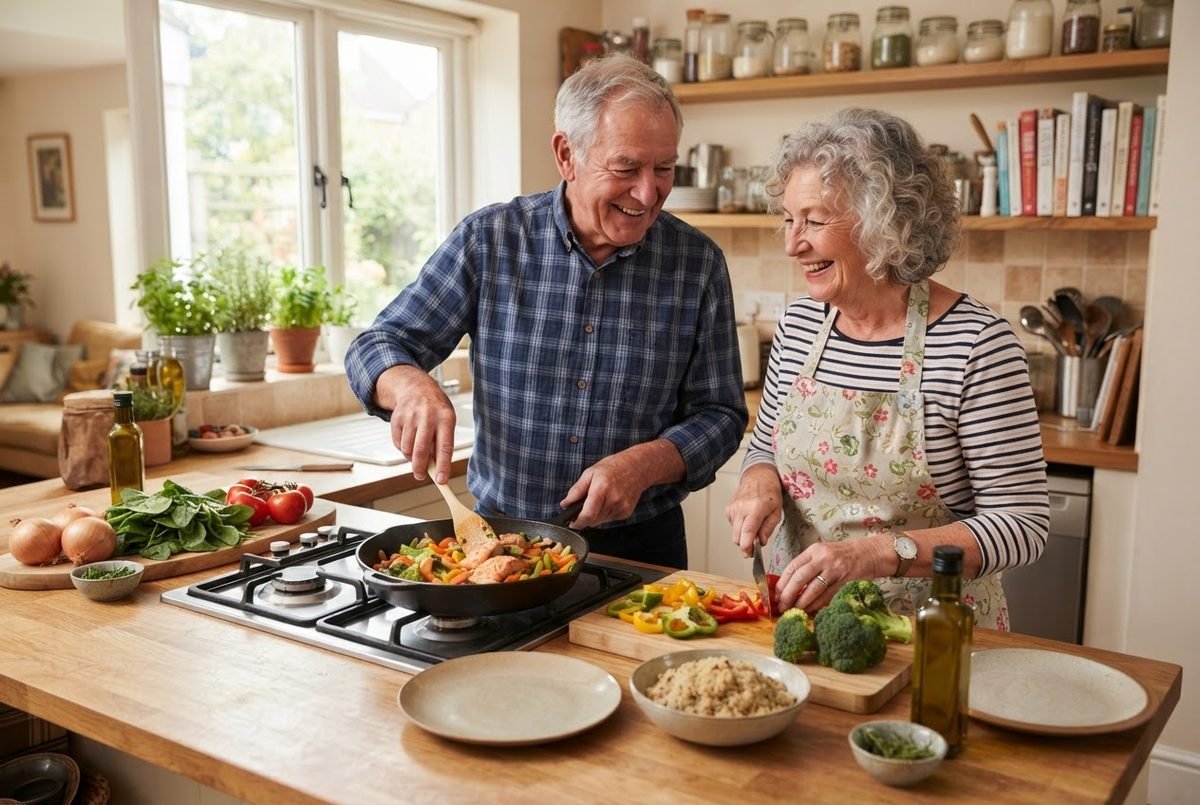
What does 30 g look like? A small tin of tuna, two eggs plus a pot of Greek yoghurt, or a palm-sized piece of fish with a side of lentils. It is more than most people manage at breakfast, which is usually the meal worth fixing first. These Mediterranean fish recipes are light but still protein-rich.
5 easy tips to add protein
- Move protein to breakfast. Two eggs, a bowl of Greek yoghurt with nuts, or leftover fish from last night. This one change often does more than any supplement.
- Keep tinned fish, eggs and long-life milk in the cupboard. They are cheap, they keep, and they rescue a low-effort day.
- Pair beans or lentils with a smaller piece of meat or fish. You get a decent protein total without the cost of a large portion of animal protein.
- Stir a spoon of milk powder into soup, mashed potato or porridge. It adds protein without changing the taste much.
- Check your lunch honestly. A sandwich with a single slice of ham is nowhere near 30 g, and lunch is where most people quietly fall short.
Does Mediterranean eating help?
The honest answer is that for elderly loss of muscle mass nutrition the evidence is stronger for some pieces than others. A review of nutrition and muscle ageing found reasonably consistent evidence that people who eat more fruit and vegetables tend to have better physical performance, and that higher adherence to a Mediterranean diet is associated with better muscle function in observational studies [6]. The same review notes that intervention studies in this area are still lacking, so nobody can promise you a stronger grip from olive oil alone [6].
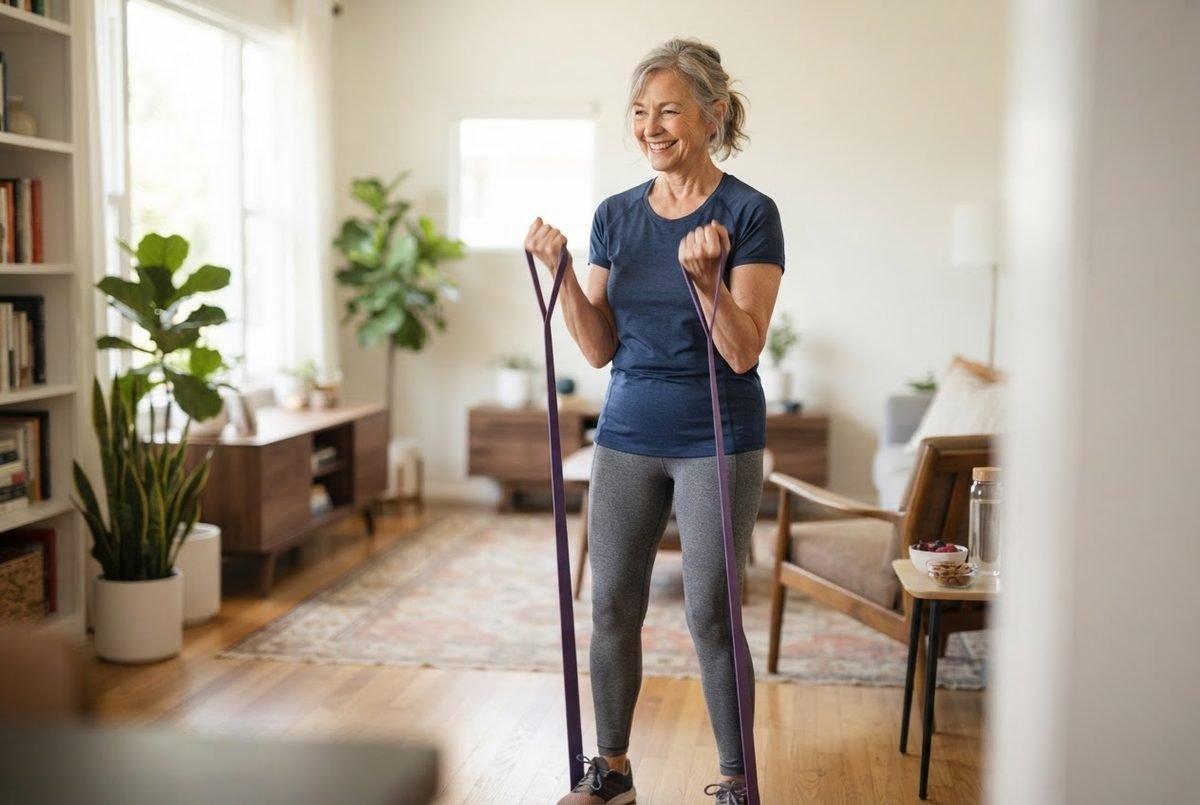
Where food does look useful is alongside movement. That review found some evidence that protein supplementation at or above 0.8 g per kilogram per day helps muscle mass when it is combined with exercise training, while effects on strength and physical performance remain inconclusive [6]. The expert group is blunt about the other half: daily physical activity, including resistance training when possible, is recommended for all older adults [2].
The meta-analysis of 33 trials found nutritional interventions had their most significant effect on handgrip strength and timed up-and-go in people aged 65 to 75, which the authors describe as the golden period for acting [5]. If you are in that window, this is not a tomorrow problem. The food, strength and protein habits after 50 guide is a sensible place to build the routine.
What gets in the way?
For elderly loss of muscle mass nutrition, appetite is the big obstacle. If you feel full after half a plate, hitting 96 g of protein is hard. The World Health Organization notes that older people affected by undernutrition and vitamin and mineral deficiencies are more vulnerable to infections and at higher risk of sarcopenia and osteoporosis, and recommends oral supplemental nutrition alongside dietary advice for those already affected [1]. That is a clinical decision, not a do-it-yourself project.
Practical barriers matter too: cooking for one, a fixed budget, dentures that make meat a chore. Soft options such as fish, eggs, yoghurt, lentil soup and slow-cooked stews solve several of those at once. If frailty is part of the picture, the frailty prevention diet covers meals built around strength and independence.
One more thing: undereating is a bigger risk than overeating for many people over 70. If you are losing weight without trying, that is worth a conversation with your doctor rather than a new diet.
Related reading
- Sarcopenia Prevention Diet: How to Protect Muscle After 50: What to eat, and why, when muscle loss is already a concern.
- Prevent Age Related Muscle Loss: Food, Strength and Protein Habits After 50: Food, strength and protein habits you can build week by week.
- Frailty Prevention Diet: Mediterranean Meals for Strength and Independence: Meals built around strength and independence, not restriction.
- Mediterranean Fish Recipes for Weight Loss: Light Meals With Big Flavour: Light fish meals that still deliver a decent protein hit.
Frequently asked questions
How much protein should a 70 year old eat daily?
The European Society for Clinical Nutrition and Metabolism suggests at least 1.0 to 1.2 g per kilogram of body weight daily for healthy older adults, rising to 1.2 to 1.5 g for those who are unwell [2]. If you have kidney disease, ask your doctor first.
Can I get enough protein from plants?
Yes, with larger portions and more variety. Beans, lentils, tofu, nuts and wholegrains all contribute, and higher fruit and vegetable intake is linked with better physical performance in older adults [6].
Does the Mediterranean diet build muscle?
For elderly loss of muscle mass nutrition, a Mediterranean diet may be supportive, but the strongest evidence is for protein and exercise. Observational studies link higher adherence to a Mediterranean-style diet with better muscle function, but intervention studies are still lacking [6].
Do I need a protein shake?
Most people do not. The World Health Organization recommends oral supplemental nutrition with dietary advice for older people already affected by undernutrition, which is a clinical decision rather than an everyday habit [1].
Does exercise matter as much as food?
Yes. The expert group recommends daily physical activity for all older adults, with resistance training when possible [2]. Protein supplementation has shown clearer effects on muscle mass when combined with exercise training, while effects on strength alone remain inconclusive [6].
When is the best time to start?
The meta-analysis of 33 trials found the strongest effects on handgrip strength and timed up-and-go in people aged 65 to 75, described as the golden period for nutritional intervention [5].
Honest take
I do not think there is a magic food here, and anyone selling you one is guessing. What I do think is that elderly loss of muscle mass nutrition is one of the few areas where small, boring changes add up: a bit more protein at breakfast, a tin of sardines in the cupboard, a resistance band by the chair. Start with the meal you are worst at, which is usually breakfast. This is general information, not medical advice, so check anything new with your own doctor.
References
- World Health Organization. Supplemental nutrition with dietary advice for older people affected by undernutrition (ELENA). https://www.who.int/tools/elena/interventions/nutrition-older-people
- European Society for Clinical Nutrition and Metabolism Expert Group. Protein intake and exercise for optimal muscle function with aging. 2013. https://pmc.ncbi.nlm.nih.gov/articles/PMC4208946/
- Nutritional strategies for improving sarcopenia outcomes in older adults: A narrative review. PMC. https://pmc.ncbi.nlm.nih.gov/articles/PMC11472304/
- Paddon-Jones D, Leidy H. Dietary protein and muscle in older persons. Current Opinion in Clinical Nutrition and Metabolic Care, 2014. https://pmc.ncbi.nlm.nih.gov/articles/PMC4162481/
- Nutritional Intervention Improves Muscle Mass and Physical Performance in the Elderly in the Community: A Systematic Review and Meta-Analysis. PMC. https://pmc.ncbi.nlm.nih.gov/articles/PMC10817341/
- Nutrition in the prevention and treatment of skeletal muscle ageing and sarcopenia: a single nutrient, a whole food and a whole diet approach. PMC. https://pmc.ncbi.nlm.nih.gov/articles/PMC7616828/
Get well and stay well,
Ray Baker
