
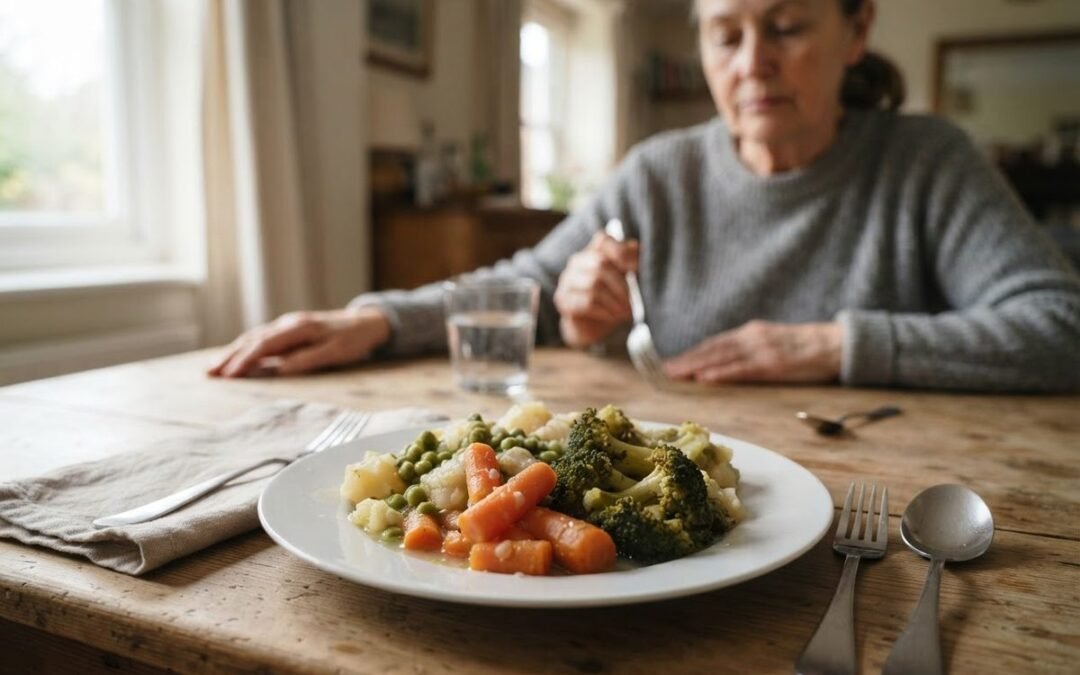
By Ray Baker
If you’ve ever watched someone you love struggle with a chest infection after a meal, you know how quickly things can turn serious. Many people over 50 don’t realise that certain foods can make the difference between a safe swallow and a bout of pneumonia. The right pneumonia food to avoid isn’t always obvious, but it can be life-changing. As always, this is general information, not medical advice. Please speak with your doctor or a speech therapist for personalised guidance.
What pneumonia food to avoid tops the list?
Hard, dry, sticky and mucus-forming foods are the biggest culprits. Items like raw vegetables, tough meats, bread, dairy-heavy dishes and salty snacks can increase aspiration risk or make breathing harder during recovery. Swapping these for soft, moist, nutrient-rich options helps protect your lungs and supports healing.
Key takeaways
- Hard, dry, or crumbly foods (raw carrots, dry bread, crackers) can be choking hazards and raise aspiration pneumonia risk [1][2].
- Dairy products may thicken mucus, making it harder to clear phlegm during a chest infection [3][4].
- Salty foods cause fluid retention, which can worsen shortness of breath in respiratory illness [3][4].
- Carbonated drinks and alcohol can increase lung inflammation and breathing difficulty [3][5].
- For those with swallowing difficulties, stick to soft, bite-sized, moist foods and avoid mixed textures [1][2].
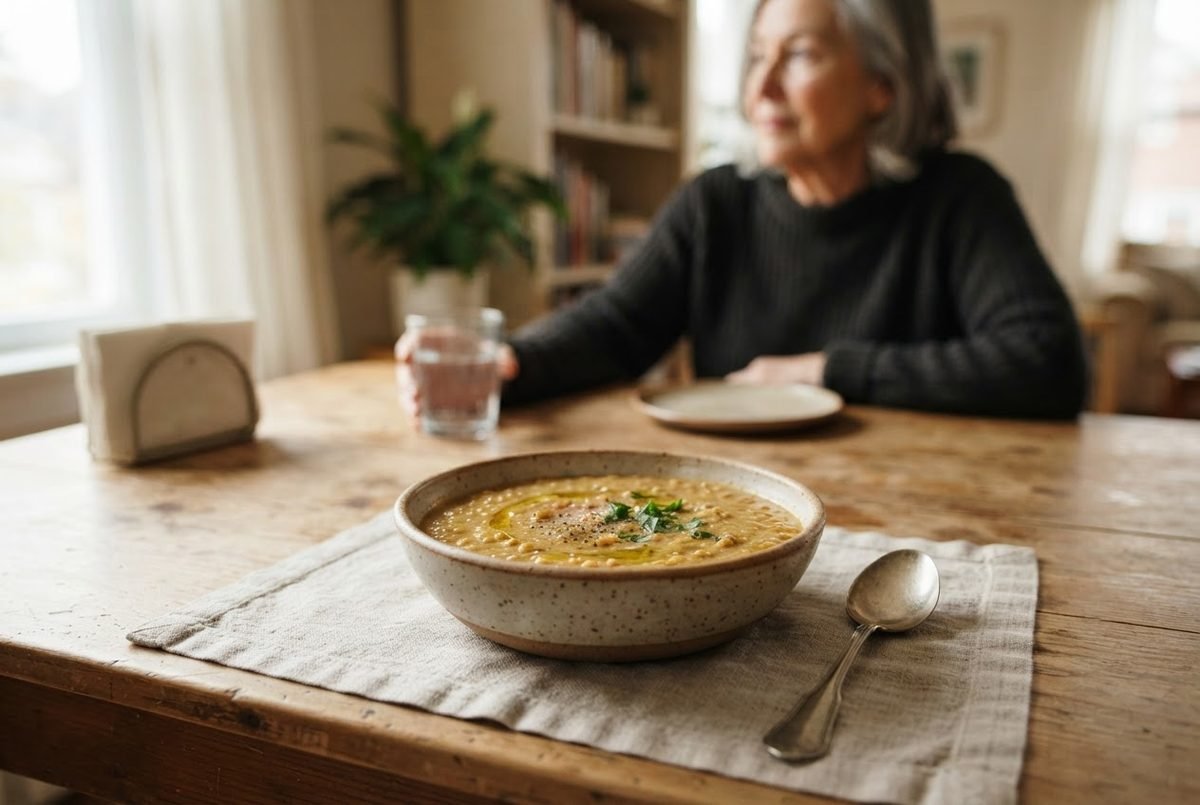
Why swallowing problems raise your pneumonia risk
When food or drink goes down the wrong way, it can enter the airway instead of the food pipe. This is called aspiration, and it can lead to chest infections including pneumonia [1]. Many older adults have subtle swallowing difficulties (dysphagia) without realising it. You might not even cough when something goes down the wrong way, which means food can sit in your lungs without you knowing [1].
Signs to watch for include a wet, gurgly voice after eating, frequent chest infections, or food sticking in your mouth [1]. If any of these sound familiar, it’s worth speaking to your doctor or a speech therapist. For more on how diet can help prevent pneumonia, see our guide on preventing pneumonia with the Mediterranean diet.
High-risk foods that can lead to aspiration
Guidance on dysphagia diets highlights several categories of food that are especially dangerous for anyone with a weak swallow [1][2]. These are the pneumonia food to avoid if you or a loved one has trouble swallowing:
- Hard or dry foods: raw vegetables, nuts, dry cakes, bread, crackers, and crunchy snacks. These require strong chewing and can easily get stuck.
- Tough or fibrous items: steak, pineapple, oranges, and apple with skin. They’re hard to break down and can lodge in the throat.
- Chewy or sticky textures: dried fruits, cheese chunks, sticky rice, and marshmallows. They can cling to the mouth and throat.
- Mixed textures: soup with pieces of food, cereal with milk, or any dish that combines thin liquid with solids. The brain can struggle to coordinate swallowing both at once.
- Foods with skins, seeds, or husks: grapes, peas, chicken skin, corn, and berries. These small bits can slip into the airway.
Even if you don’t have a diagnosed swallowing disorder, age-related muscle weakness can make these foods riskier. A simple test: press a fork into your food until your thumbnail goes white; if the food squashes completely and doesn’t spring back, it’s soft enough [1].
Foods that weaken your respiratory system
If you’re recovering from pneumonia, certain foods can make breathing harder or slow healing. St. Louis College of Health Careers notes that dairy products increase mucus production, which can lead to coughing and lung discomfort [3]. Salty foods cause fluid retention, making shortness of breath worse [3]. NHS advice also warns that too much dairy makes phlegm thick and sticky, and excess salt can cause swelling that restricts breathing [4].
Carbonated soft drinks introduce carbon dioxide that may exacerbate lung disease, and alcohol increases inflammation in the lungs [3]. Simple carbs like white bread and pastries force your lungs to work harder during metabolism [3]. Even some healthy vegetables like onions, cauliflower, and cabbage can cause bloating, which puts pressure on the diaphragm and makes breathing more difficult [4].
Cutting back on salt doesn’t mean bland food. Mediterranean herbs, garlic, and lemon juice add plenty of flavour. For practical swaps, read our low-sodium Mediterranean flavour tricks.
5 easy tips for safer eating
- Choose soft, moist foods. Opt for well-cooked vegetables, mashed potatoes, pureed fruits, and tender meats cut into small bites no larger than 1.5 cm. These pass the fork pressure test and are easier to control in the mouth [1][2].
- Thicken liquids if needed. If you cough when drinking water or tea, ask your doctor or speech therapist about thickened fluids. Thicker liquids move more slowly, giving you time to swallow safely [2][6].
- Avoid mixed textures. Skip soups with chunks, cereal with milk, and any dish that combines thin liquid with solid pieces. Stick to smooth soups, porridge, or well-mashed combinations [1].
- Cut back on dairy and salt. Replace cow’s milk with unsweetened almond or oat milk in cooking, and season with herbs instead of salt. This helps keep mucus thin and fluid levels balanced [3][4].
- Sit upright and take small bites. Good posture helps direct food down the oesophagus. Eat slowly, stay upright for at least 30 minutes after meals, and take a few deep breaths before starting [6][5].
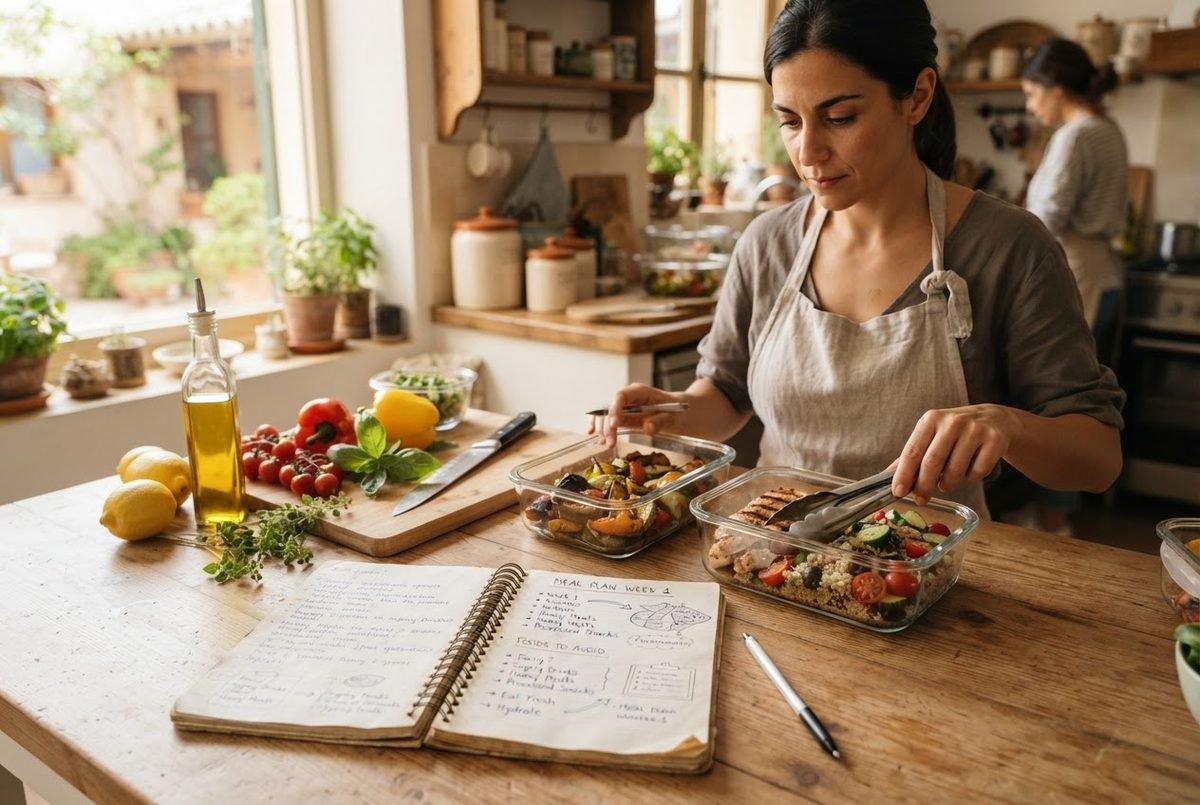
Where the eBook fits into your recovery plan
I put together my Mediterranean diet eBook because I know how overwhelming it can be to figure out what to eat when you’re worried about choking or a repeat chest infection. The meal plans, shopping lists, and recipes are built around soft, anti-inflammatory foods that are naturally kind to ageing throats and lungs. You won’t find any of the pneumonia food to avoid in these pages.
Many of the dishes are already soft or easy to modify: think creamy lentil soup, slow-cooked ratatouille, soft polenta with mushrooms, and poached pears. The eBook (US$27) gives you a clear framework so you don’t have to second-guess every meal. If you’re ready to simplify eating while keeping it delicious, batch-cooking with a Mediterranean meal prep routine can also save time and stress.

Related reading
- How to Prevent Pneumonia with the Mediterranean Diet: Directly related article on using the Mediterranean diet to help prevent pneumonia.
- Low-Sodium Mediterranean Flavor Tricks That Make Food Taste Better: Practical swaps for reducing salt, which is important for respiratory health.
- Mediterranean Meal Prep for Weight Loss: Batch-Cook Once and Avoid Panic Meals: Batch-cooking advice that complements the eBook's meal plans.
- Healthspan Habits After 50: How to Stay Useful, Mobile and Harder to Knock Over: Broader healthspan guide for readers wanting to stay robust after 50.
Frequently asked questions
Can dairy really cause pneumonia?
No, dairy doesn’t directly cause pneumonia, but it can thicken mucus and make it harder to clear phlegm, which may increase the risk of chest infections in vulnerable people [3][4].
What is the safest food texture for someone with swallowing problems?
Soft, moist, bite-sized pieces no larger than 1.5 cm that pass the fork pressure test are safest. Foods should be easily squashed with a fork and not regain their shape [1].
How soon after pneumonia can I return to a normal diet?
Follow your healthcare provider’s advice. Once swallowing is safe and breathing improves, you can gradually reintroduce firmer foods. Most people take a few weeks to fully recover [5].
Are there any Mediterranean foods that are naturally soft and safe?
Yes, dishes like hummus, baba ganoush, soft-cooked lentils, stewed fruits, and pureed vegetable soups fit well within a dysphagia-friendly Mediterranean eating pattern [2]. For more on building lasting health after 50, see our healthspan habits guide.
Can I still enjoy wine with meals if I’ve had pneumonia?
Alcohol can increase lung inflammation and weaken the immune system, so it’s best avoided during recovery. Even small amounts may slow healing [3][5].
Is it safe to eat bread if I don’t have swallowing issues?
For most people, bread is fine, but if you have any cough or choking sensation, avoid dry bread. Moistening it with sauce or choosing soft, untoasted bread can reduce risk [1].
Honest take
I’ve seen too many people dismiss a little cough after meals as nothing, only to end up with a serious chest infection. Paying attention to pneumonia food to avoid isn’t about being fussy, it’s about protecting your lungs. If you or a loved one has any trouble swallowing, start with soft, moist meals and talk to a speech therapist. It’s a small change that can make a big difference.
References
- Buckinghamshire Healthcare NHS Trust. Soft and bite size diet. https://www.buckshealthcare.nhs.uk/pifs/soft-diet/
- University of Mississippi Medical Center. Dysphagia Pureed Diet. https://umc.edu/Healthcare/ENT/Patient-Handouts/Adult/Speech-Language-Pathology/Swallowing/Dysphagia-Pureed-Diet.html
- St. Louis College of Health Careers. Foods that Can Weaken the Respiratory System. https://stepfulcollege.edu/respiratory-therapist/become-a-respiratory-therapist/foods-that-can-weaken-the-respiratory-system/
- West Suffolk NHS Foundation Trust. 6355-1 Nutrition Eating to Keep Healthy. https://www.wsh.nhs.uk/CMS-Documents/Patient-leaflets/Physiotherapy/6355-1-Nutrition-Eating-to-Keep-Healthy.pdf
- National Heart, Lung, and. Pneumonia, Recovery. https://www.nhlbi.nih.gov/health/pneumonia/recovery
- National Institutes of Health. Pneumonia. https://health.nih.gov/health-topics-a-z/pneumonia
Get well and stay well,
Ray Baker
