

By Ray Baker
Here is the number that made me sit up. In a large United States study of 4,174 adults who already had coronary heart disease, those who kept three habits had about 62 per cent lower rates of a repeat heart event than those who kept none [1]. Not smoking. Moving four or more times a week. Eating in the top quarter for Mediterranean-style food.
So when readers ask me what a Mediterranean diet after a heart attack really looks like, I understand the worry behind the question. You come home with a folder, a pill organiser and a long list of things you are told to stop doing. Nobody hands you a Tuesday night plan. That is what I want to give you here: what the research shows, what a normal plate looks like, and what I would change first.
One thing before we start. This is general information, not medical advice. Your own team knows your heart, your kidneys, your medicines and your history, and they should have the final word.
Is a Mediterranean diet after a heart attack safe?
For most people it is a sensible pattern, and it is what major heart guidelines recommend. The European Society of Cardiology tells patients after an acute coronary event to eat a balanced Mediterranean-type diet with plenty of fruit and vegetables, as early as possible [2]. Ask your own team about your case.
Key takeaways
- Heart guidelines recommend a Mediterranean-style pattern after a heart event, started early [2].
- In the Regards study, non-smoking, regular activity and top-quarter Mediterranean eating together were linked to much lower rates of repeat events and death [1].
- Mediterranean eating on its own showed a weaker, less certain signal in that same study [1].
- A Cochrane review still rates the secondary-prevention evidence for a Mediterranean diet after a heart attack as low quality [3].
- Food is one lever. Smoking and movement are the others [1].
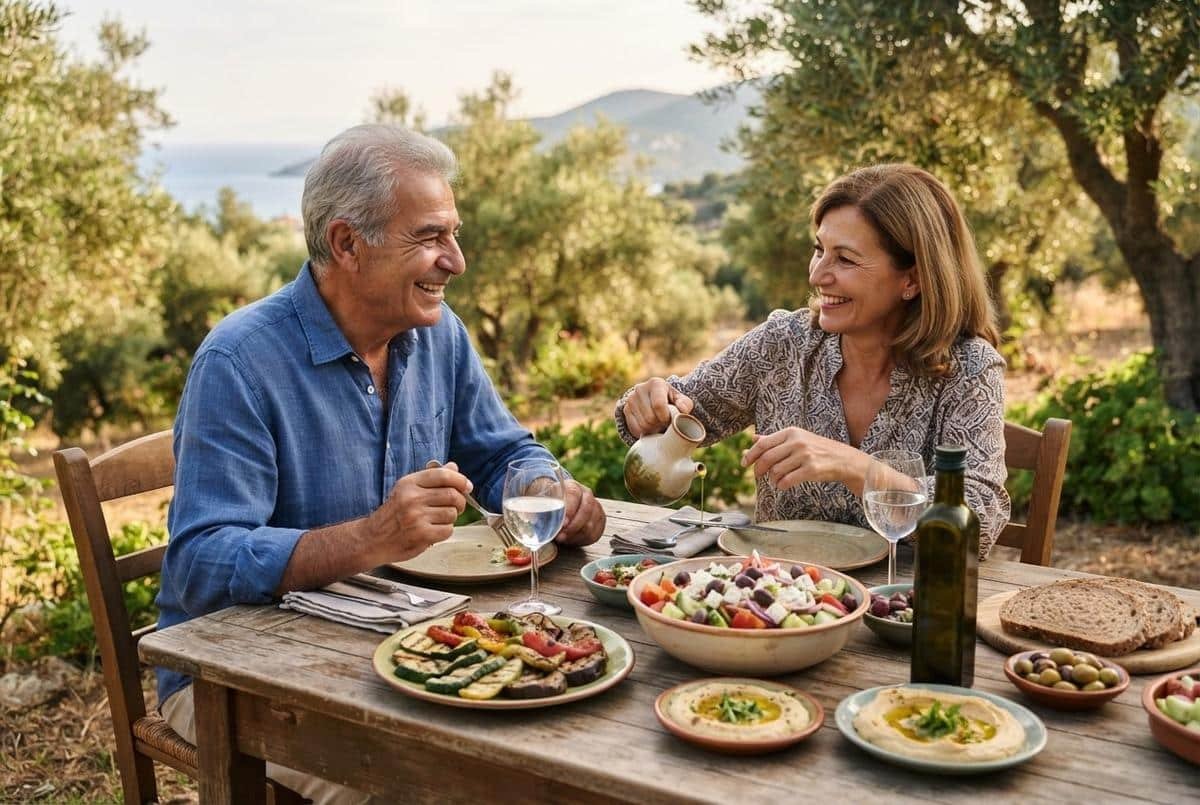
What the Regards study found
The Reasons for Geographic and Racial Differences in Stroke study, shortened to Regards, followed 4,174 United States adults who already had coronary heart disease. Over a median of about four and a half years, there were 447 repeat heart events and 745 deaths [1].
Two habits stood out. People who were physically active four or more times a week had lower rates of repeat events and death than people who were not active at all. Non-smokers did much better than current smokers [1].
For someone starting a Mediterranean diet after a heart attack, the Regards study hints that the way you eat sits alongside two other big levers. The top quarter of diet scores was compared with the bottom quarter. The result pointed the right way, but the confidence range crossed 1.0, which means the finding could be chance [1]. I would rather tell you that plainly than dress it up.
The combination was the interesting part. Compared with people who had none of the three ideal factors, those with one, two or three had progressively lower rates of repeat events and death [1]. Eating well was part of a package, not a solo act. For the everyday version of that package, see my notes on protecting your arteries after 50.
A smaller study, a sharper signal
The Eva study followed 503 adults in Italy with ischaemic heart disease. Researchers scored how closely they stuck to the Mediterranean diet after a heart attack, then tracked them for a median of 22 months. Forty-eight people had a major cardiovascular event [4].
The split was striking. Among people with low adherence, 17.5 per cent had an event. With medium adherence, 8.1 per cent. With high adherence, 3.9 per cent. After adjusting for other factors, higher adherence was still linked to a meaningfully lower risk, with a hazard ratio of 0.49 and a confidence interval of 0.29 to 0.82 [4]. That sits well below the 1.0 mark.
Two details caught my eye. Living with a smoker and being physically inactive were both linked to poorer adherence [4]. The kitchen is not the only room that matters.
Why the evidence is not settled
A Cochrane review gathered 30 randomised trials, eight of them in people who already had heart disease. In that secondary prevention group, the evidence for fewer deaths was rated low quality, and the evidence on risk factors suggested little or no effect [3]. The hard-trial proof for a Mediterranean diet after a heart attack is still thinner than many of us would like.
An updated systematic review of 24 studies found higher adherence linked to lower overall mortality, in the general population and in people with existing cardiovascular disease [5]. Encouraging, and not the same as proof.
Then there is the This-Diet trial from the Heart Institute of Spokane. It took 101 people who had had a heart attack within six weeks and split them between a low-fat American Heart Association diet and a Mediterranean-style diet. Both groups kept cholesterol under 200 mg a day and saturated fat under seven per cent of calories, with the Mediterranean group allowed more fat from monounsaturated sources and more omega-3 [6].
After nearly four years, there was no difference between the two diets in the combined rates of death, repeat heart attack, unstable chest pain, stroke or heart failure hospital admission. But compared with matched usual-care patients, the risk of cardiovascular complications fell by two-thirds across both diet groups [6]. The counselling itself seemed to matter more than which good diet people chose. For more on everyday choices that protect your arteries, see reduce heart attack risk after 50. If you have drifted before, see Mediterranean diet mistakes that keep you hungry or stuck.
What it costs per week
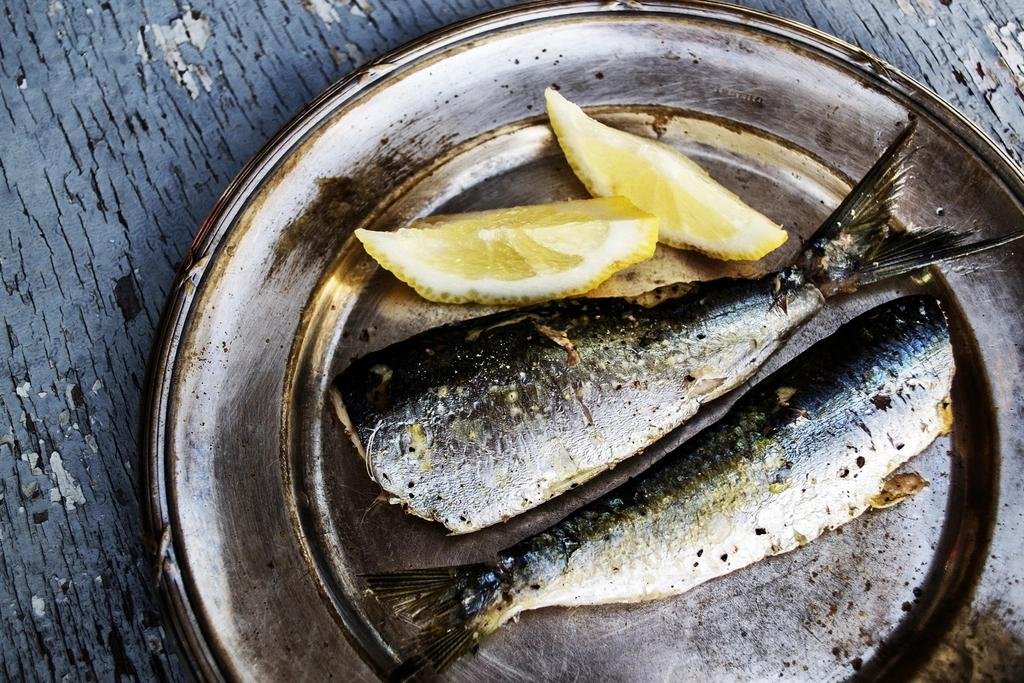
People worry this way of eating will strain a fixed income. Tinned beans, dried lentils, frozen spinach, tinned tomatoes, oats, brown rice and tinned fish cover a lot of ground for very little money. Buy olive oil in the largest tin you will use before it goes stale. The spendiest item, fresh fish, can be twice a week, and tinned sardines or salmon on toast counts. For cooking once and eating twice, see Mediterranean batch cooking for busy weeks.
5 easy tips to start this week
None of these needs a special shop or a new appliance.
- Add before you take away. Put a vegetable or bean dish on the table first, and let it fill the gap that bread used to fill.
- Fish twice a week. Tinned sardines or salmon on toast counts, and it is cheaper than fresh fillets.
- Change the fat, keep the flavour. Olive oil for cooking and dressing, and nuts instead of biscuits in the cupboard you raid at four in the afternoon.
- Keep the good stuff visible. A bowl of fruit on the bench beats a packet at the back of a drawer.
- Move four times a week. In the Regards study, physical activity four or more times a week was one of the strongest single factors linked to fewer repeat events [1]. A 20-minute walk counts.
Portions, budget and real life
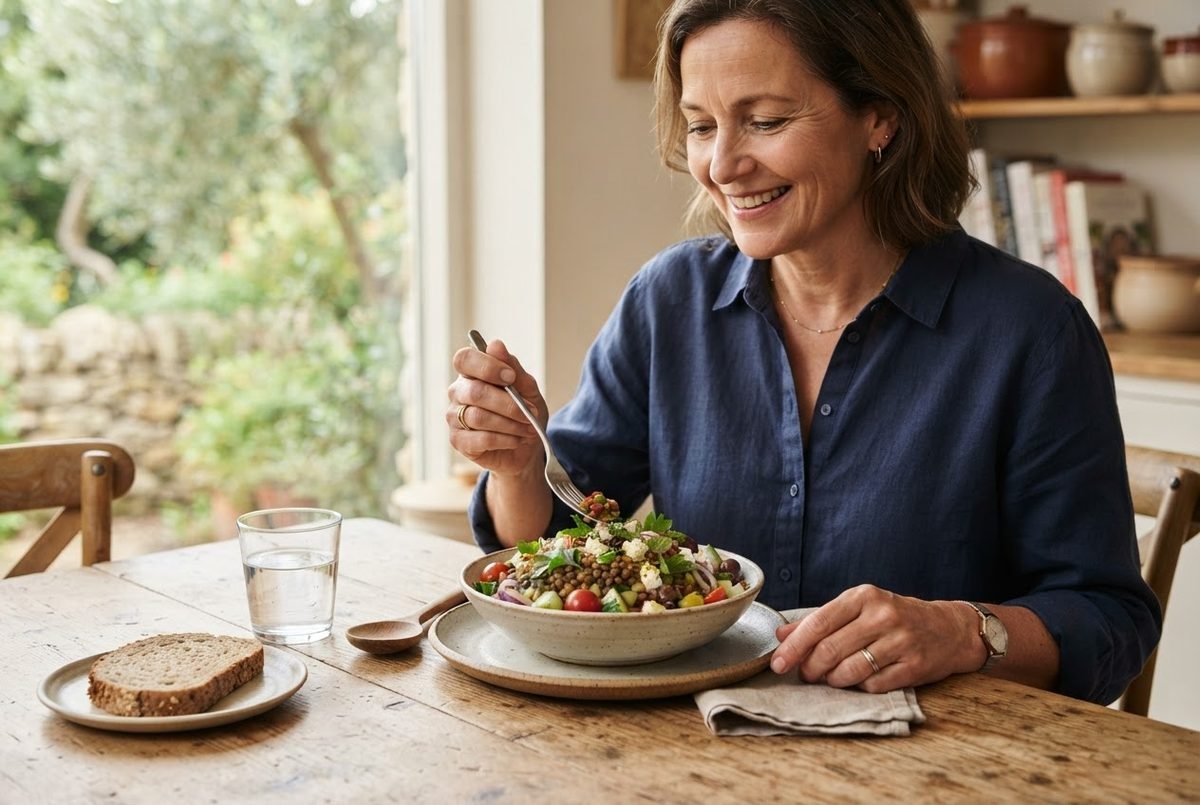
This next part is my own rough guide, not a finding from a study. Half the plate vegetables or salad. A palm-sized piece of fish, chicken or beans. A fist of whole grains or potatoes. A thumb of olive oil. Easy to remember when you are tired.
Putting a Mediterranean diet after a heart attack on the table every night is not about a perfect score. It is about a quiet pattern that you can live with in a sleepy week.
Related reading
- Protect Arteries After 50: The Daily Pattern That Helps Keep Blood Flow on Your Side: The daily pattern that helps keep blood flow on your side
- Mediterranean Diet Mistakes That Keep You Hungry, Tired or Stuck: Common slips that leave you hungry, tired or stuck
- Reduce Heart Attack Risk After 50: Everyday Choices That Help Protect Your Arteries: Everyday choices that help protect your arteries
- Mediterranean Batch Cooking for People Who Do Not Want to Cook Every Night: Cook once, eat twice on busy weeks
Frequently asked questions
Will a Mediterranean diet after a heart attack stop another heart attack?
No single diet can promise that. The strongest studies show that combining good food with not smoking and regular movement is linked to fewer repeat events [1]. Treat it as one part of your whole plan, not a guarantee.
How soon after a heart attack can I start?
Guidelines say secondary prevention should be offered to every patient as early as possible after the event, and that includes dietary advice [2]. In practice, ask your team at your first follow-up. Nobody expects a kitchen overhaul in week one.
Do I have to give up red meat?
The guidance is to limit red meat and processed meat, not to ban them [2]. Most people do better with a smaller portion, less often, than with a rule they break by Friday and then feel guilty about.
Is olive oil the key to all this?
No single food is. Vegetable oil is one item on a longer list that includes vegetables, fruit, nuts, legumes, fish, low-fat dairy and whole grains [2]. Olive oil is a good default fat, not a magic switch.
What about wine?
The European Society of Cardiology suggests limiting alcohol to no more than 100 mL a week, regardless of sex [2]. That is a small glass, not a nightly bottle. If you take medicine that interacts with alcohol, ask your doctor first.
How long before anything changes?
The studies measured events over years, not weeks. The Regards study followed people for a median of about four and a half years [1], and the Eva study for a median of 22 months [4]. Think in seasons, not days.
Honest take
I do not think a Mediterranean diet after a heart attack is a miracle, and I would be uneasy if anyone sold it to you that way. The strongest message in these studies is unglamorous: stop smoking, keep moving, and eat mostly plants, fish, beans, nuts and olive oil. Do that for years, not weeks, and let your medical team handle the rest. It is a quiet plan. Quiet plans are the ones that last.
References
- REGARDS Study. Effect of Sustaining Lifestyle Modifications (Non-smoking, Weight Reduction, Physical Activity and Mediterranean Diet) After Healing of Myocardial Infarction, Percutaneous Intervention or Coronary Bypass. https://pmc.ncbi.nlm.nih.gov/articles/PMC4348576/
- Diet After Acute Coronary Artery Syndrome, summarising European Society of Cardiology secondary prevention guidance. https://pmc.ncbi.nlm.nih.gov/articles/PMC12787665/
- Cochrane Review. Mediterranean-Style Diet for the Primary and Secondary Prevention of Cardiovascular Disease. https://pmc.ncbi.nlm.nih.gov/articles/PMC7427685/
- EVA Study. Adherence to the Mediterranean Diet in Preventing Major Cardiovascular Events in Patients with Ischemic Heart Disease. https://pmc.ncbi.nlm.nih.gov/articles/PMC10386039/
- Mediterranean Diet for Primary and Secondary Prevention of Cardiovascular Disease and Mortality: An Updated Systematic Review. https://pmc.ncbi.nlm.nih.gov/articles/PMC10421390/
- ScienceDaily. Fresh Approach To Diet And Medication Improves Recovery After Heart Attack (THIS-Diet, Heart Institute of Spokane), 2007. https://www.sciencedaily.com/releases/2007/03/070326095537.htm
Get well and stay well,
Ray Baker
