
By Ray Baker
Chances are you have seen the numbers: the American Heart Association noted a 29% drop in cardiovascular events over nearly five years among high‑risk groups following a Mediterranean‑style eating pattern [1]. Yet many of us over 50 still scratch our heads and ask, how many Mediterranean diet servings per day do we actually need to see real change? I get it, the pyramids and tall charts can feel vague when you are standing in your kitchen at 5 pm.
What Are Mediterranean Diet Servings Per Day?
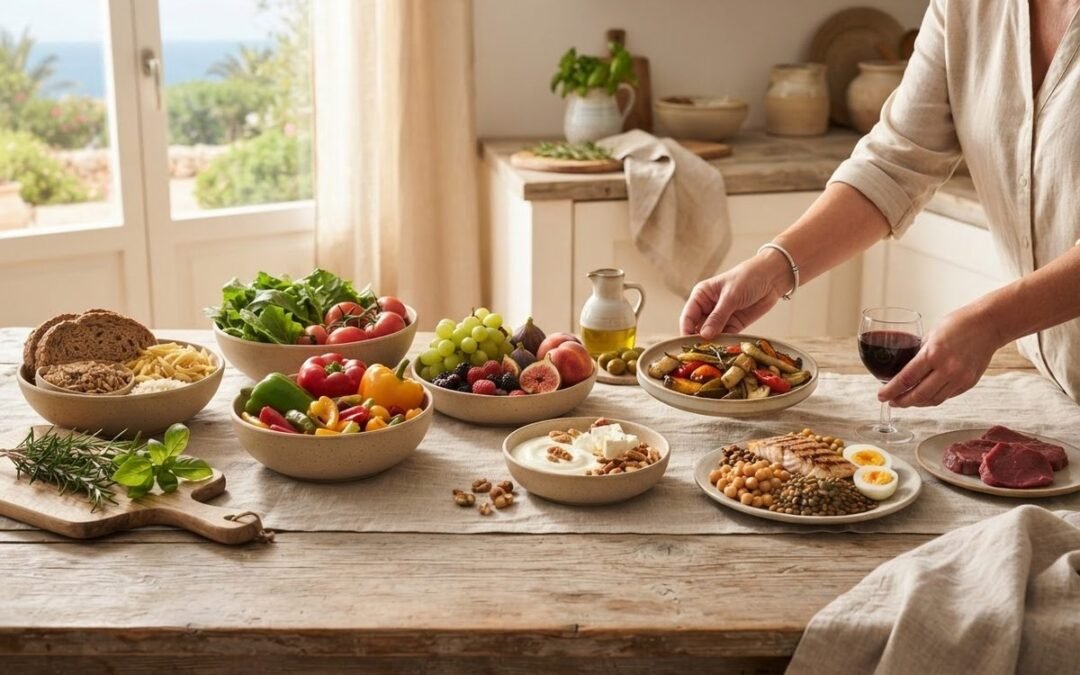
To put it simply, a day on the Mediterranean diet typically includes about 5 serves of vegetables, 2 to 3 serves of fruit, 4 to 6 serves of whole grains, 2 to 4 tablespoons of extra virgin olive oil, and 1 to 2 serves of dairy. Fish, legumes, nuts and eggs are spread across the week, not every day, and red meat and sweets stay occasional.
Key takeaways
- Aim for 5 or more serves of vegetables each day, mixing leafy greens, tomatoes and whatever is in season.
- Target 2 to 3 serves of fresh fruit daily; they replace sugar‑sweetened desserts and pastries nicely.
- Whole grain breads, cereals, pasta or rice should show up at most meals, around 4 to 6 serves a day.
- Extra virgin olive oil is the main fat, somewhere between 2 and 4 tablespoons, spread across your cooking and dressings.
- Weekly foods matter just as much: at least 2 fish meals, 3 or more serves of legumes and nuts, and only a little red meat.
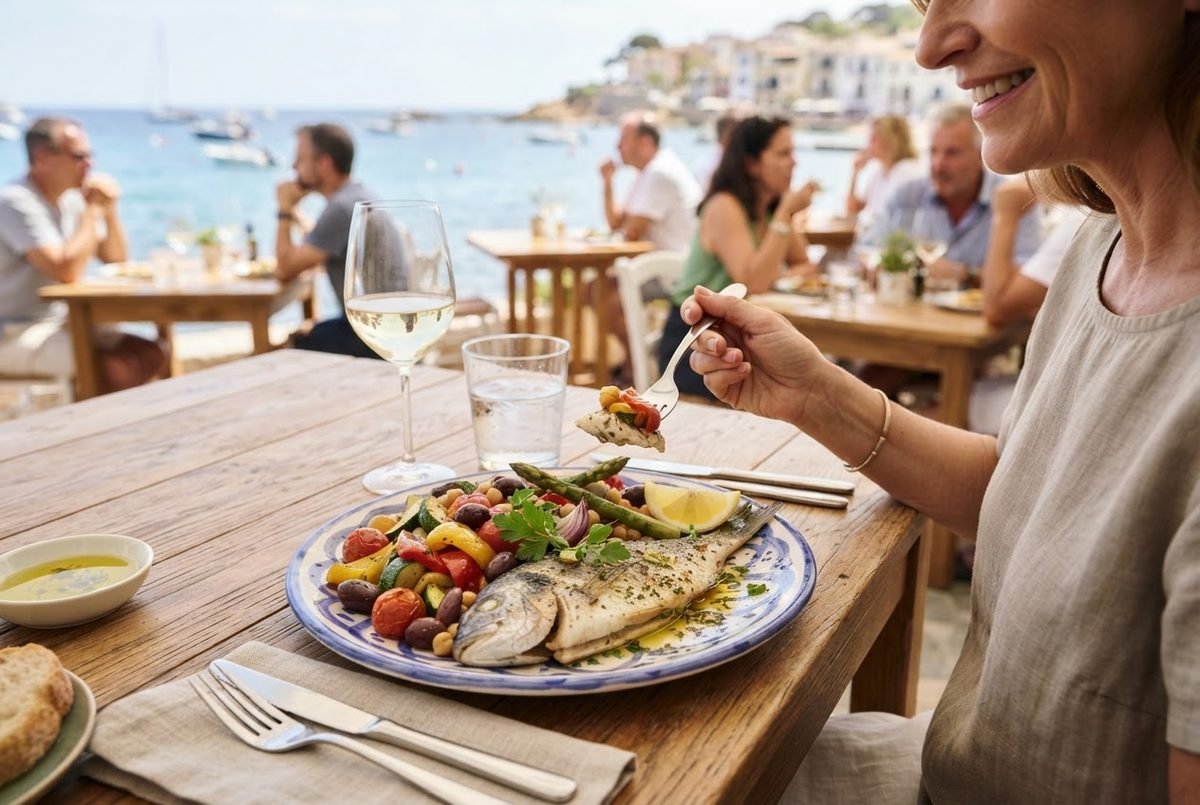
What a daily Mediterranean plate looks like
Queensland Health’s 2021 Mediterranean diet guide gives a thorough daily framework that I keep coming back to [2]. It recommends 5 serves of vegetables (a serve is one cup of salad or half a cup of cooked veg), 2 to 3 serves of fruit, and 4 to 6 serves of wholegrain breads and cereals. On top of that you get 2 to 4 tablespoons of extra virgin olive oil and 6 to 8 glasses of water. Dairy sits around half to one serve of milk plus a few weekly serves of yoghurt and cheese.
The U.S.‑based StatPearls summary aligns closely, pointing to at least 3 daily serves of fruit and vegetables, but also emphasises that a target of 3 to 9 serves of vegetables is common across Mediterranean eating patterns [1]. I tend to think 5 is a realistic, safe goal, enough volume to fill you up without turning every meal into a maths problem.
Let me ground that with a real‑world day. A bowl of porridge made with rolled oats and topped with a chopped pear and a handful of blueberries gives you two fruit serves and a wholegrain serve before you have even left the house. Lunch is a large salad with a tin of sardines, cooked chickpeas, rocket, tomato and cucumber, dressed with a tablespoon of olive oil, that is at least three vegetable serves, a fish serve and a legume serve ticked off. Dinner might be a piece of baked salmon, a cup of roasted Mediterranean vegetables and half a cup of quinoa; snack on an apple and a small handful of walnuts. Count it up and you land very close to the right Mediterranean diet servings per day, 5 veg, 2 fruit, 4 to 5 grains, 3 tablespoons of oil and a decent start on the weekly targets. I find that mix‑and‑match bowl recipes make portion control straightforward while you are still learning the daily serve numbers.
If you want starchy vegetables like potatoes to fit your daily tally, they absolutely can, potatoes count toward your vegetable and grain goals when prepared simply without lashings of butter.
Weekly servings: fish, eggs, legumes and more
The daily numbers only tell half the story. Several food groups are best planned across a week, and that is where many people over 50 slip up without realising it. Cleveland Clinic’s 2023 recommendations suggest three serves of fish a week, at least three serves of legumes and three serves of nuts [3]. StatPearls agrees, adding that fatty fish like salmon, trout and herring should appear two to three times a week, legumes at least three times, nuts and seeds at least three times, and eggs around four per week [1].
Queensland Health’s guide gives sensible Australian serve sizes: a fish serve is 100, 150 grams (roughly the size of a deck of cards), legumes are one cup, and a nut serve is a 30‑gram handful [2]. Once you lock in your Mediterranean diet servings per day from the plant foods, these weekly targets slot around them without much extra effort. You can dry‑roast a tray of chickpeas on Sunday and toss them through salads all week. Hard‑boiled eggs keep in the fridge for a quick breakfast or a salad topper. Red meat stays at one serve or fewer per week, and processed meats are best skipped.
I like to lock in a fish night and one egg‑based dinner every week. That simple rhythm quietly hits the evidence‑backed numbers without turning your kitchen into a nutrition lab.
5 Tips for Mediterranean Diet Servings Per Day
- Start every meal with a vegetable base. Toss a handful of spinach into your omelette, put a generous salad next to your sandwich, and always fill half your dinner plate with vegetables first.
- Use a simple visual guide. A serve of cooked vegetables is about half a cup, a piece of fruit the size of your fist, and a grain serve is half a cup of cooked rice or pasta, or one slice of good wholegrain bread [2]. No scales required.
- Batch‑cook legumes and freeze in portions. I cook a big pot of lentils or chickpeas on the weekend. On a Wednesday evening when energy is low, a scoop from the freezer turns a bowl of greens into a proper meal and knocks off a weekly legume serve.
- Measure your olive oil with a spoon, not a free pour. I keep a tablespoon measure right next to the bottle. It takes two seconds and stops you using a quarter of a cup without noticing, which matters if you are watching your overall energy intake.
- Plan a fish night and an egg night each week. That locks in at least two weekly fish serves and a couple of egg serves. Write it on the fridge calendar; the routine makes the weekly targets almost automatic.

How I keep portions practical on a budget
Fresh produce prices can jump without warning, and I know tight budgets are a reality for plenty of readers over 50. My approach is to treat the serving guidelines as a map, not a military order. Frozen vegetables, tinned fish and dried legumes cost a fraction of fancy fresh ingredients and count exactly the same toward your Mediterranean diet servings per day and weekly totals. A bag of frozen spinach, a tin of sardines and a jar of home‑cooked chickpeas will give you a Mediterranean‑style lunch for well under a few dollars.
Grains bought in bulk, like rolled oats, brown rice and wholemeal pasta, stretch further than any packaged “health” product. A tablespoon of olive oil over roasted frozen vegetables tastes just as good as over delicate farmers‑market finds. Budget‑friendly ingredient swaps keep the whole eating pattern affordable while still meeting those five‑a‑day marks and weekly fish targets.
I also find that cooking for one can feel wasteful, but it does not have to be. Single‑serve meals built around Mediterranean staples mean you do not end up with a fridge full of limp leftovers. A single salmon fillet with a roasted tray of Mediterranean veg is easier to portion than you might think, and the Mediterranean diet servings per day fall into place without stress.

Related reading
- Can You Eat Potatoes on the Mediterranean Diet? Yes, Here’s How: Answers the common question about starchy vegetables and daily counts.
- Mediterranean Bowl Recipes for Weight Loss: Mix-and-Match Meals That Make Portions Easier: Bowl recipes make measuring daily servings much easier.
- Budget Mediterranean Recipes for Weight Loss: Healthy Meals Without Fancy Ingredients: Shows how to hit all the food groups without fancy ingredients.
- Healthy Meals for One After 50 Using Mediterranean Staples: Practical help for cooking single serves that still meet the daily targets.
Frequently asked questions
How many vegetables should I eat each day?
Queensland Health recommends 5 serves a day, where a serve is one cup of salad or half a cup of cooked vegetables [2]. Including leafy greens and tomatoes daily keeps your Mediterranean diet servings per day colourful and fibre‑rich.
Is 4 tablespoons of olive oil really necessary?
The StatPearls review suggests at least 4 tablespoons a day as the main fat [1], while Queensland Health gives 2 to 4 tablespoons [2]. Start with 2 and adjust to your own appetite and energy needs over the weeks.
Can I eat wholegrain bread every day?
Yes, bread counts toward your daily grain serves. One slice of dense, wholegrain bread equals one serve, and having it at most meals fits comfortably within the 4 to 6 daily serves [2].
What is a serve of fish?
A serve of fish is about 100 to 150 grams, roughly the size of a deck of cards [2]. Oily fish such as salmon, tuna or sardines are recommended at least once a week to support heart health.
How many eggs can I eat per week?
Guidance settles around 4 eggs a week [1][2]. That works well for a couple of egg‑based dinners and a boiled egg on a salad now and then, sitting neatly alongside your Mediterranean diet servings per day.
Do I need to weigh everything to get my servings right?
No. After a month of using simple visual measures, your eyes get trained. The goal is a relaxed, sustainable pattern, not a scale in your pocket at every meal.
Honest take
I will not pretend that remembering exactly how many Mediterranean diet servings per day you need is effortless in the first week. It feels like a lot of numbers. But after a few weeks of seeing a plate loaded with vegetables, a drizzle of good oil and a modest piece of fish, the pattern becomes second nature. The real win of this way of eating is that it bends to your life, not the other way around. If you overshoot on nuts one week or skip fish another, you just nudge back the next. No guilt, no rigidity, just a generous, everyday rhythm that feels as good as it tastes.
References
- StatPearls. Mediterranean Diet. NCBI Bookshelf. 2023. https://www.ncbi.nlm.nih.gov/books/NBK557733/
- Queensland Health. Mediterranean diet: What and how much should I be eating? 2021. https://www.health.qld.gov.au/__data/assets/pdf_file/0032/946049/cardiac-meddiet.pdf
- Cleveland Clinic. How To Follow the Mediterranean Diet. 2023. https://health.clevelandclinic.org/how-to-get-started-on-the-mediterranean-diet-aka-the-healthiest-diet-for-your-heart
Get well and stay well,
Ray Baker
