
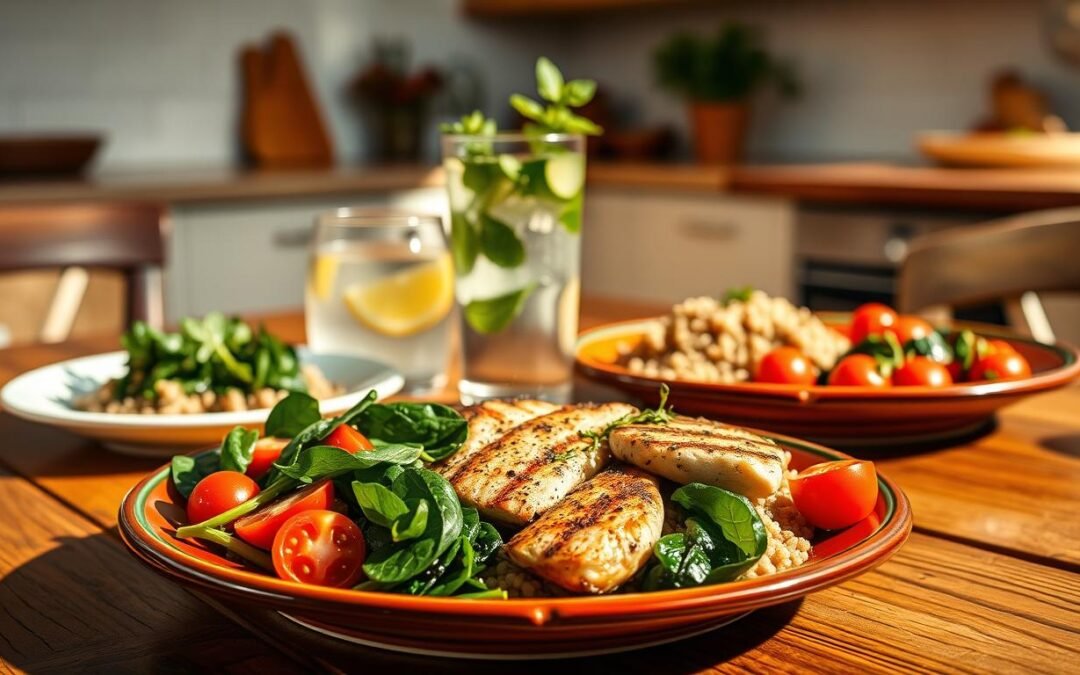
https://www.youtube.com/watch?v=mM6e2Qnmtr0:3<b>UNDER 500 CALORIES</b> GREEK CHICKEN SKEWERS …B�
We’ve all been there, staring into the fridge at 6:00 PM. We hope a sad, wilted handful of lettuce will turn into dinner. If you’re trying to lose weight, it feels like you’re turning into plain steamed broccoli.
But, you don’t have to eat like a rabbit to lose weight. By choosing healthy weight loss meals, you can enjoy tasty, filling dishes. These filling low calorie recipes show you can eat well and feel good about it.
This guide shows how to mix protein, fiber, and healthy fats into big portions. We give you ten tasty options, a grocery list, and a 7-day plan. Remember, these mediterranean recipes under 500 calories are just estimates. Every body is different.
Key Takeaways
- Focus on nutrient-dense whole foods to keep your energy up all day.
- Choose lean proteins and fiber for meals that feel good, not restrictive.
- Add healthy fats for brain health and a better mood.
- Try our 7-day starter plan to make meal prep easier and cut down on decisions.
- Adjust your portion sizes based on your activity level and health goals.
Quick Answer: Why 500-Calorie Meals Can Work
Planning mediterranean meals under 500 calories is a smart way to watch your diet. It’s not a rule for everyone. These meals are great when you use top-quality ingredients that give you energy for a long time.
For example, shrimp has about 27 grams of protein for just 233 calories. Adding cauliflower rice to it makes your meal bigger and more filling. This way, 500 calorie dinners feel good and satisfying.
Adding these habits to your daily life helps with healthy weight loss meals without feeling too limited. Remember these tips when you make your next meal:
- Build around protein: Start with lean proteins like fish, beans, or poultry to stay full.
- Fill half your plate with plants: Use lots of veggies to add fiber and bulk without extra calories.
- Measure calorie-dense extras: Watch how much you add of healthy fats like olive oil, nuts, or feta cheese.
Build A Plate That Feels Complete
You can make your meals full of color and nutrients by using a simple formula. Start with a palm-sized portion of protein, like chicken or beans. Then, add two handfuls of colorful veggies.
Next, include a small serving of fiber-rich foods like beans or whole grains. Top it off with a bit of healthy fat, like olive oil or nuts. This way, you enjoy low calorie meals that are satisfying.
Texture is key to feeling full after eating. For instance, a chickpea salad is great because of its mix of crunchy and soft textures. This makes your high protein meals more fun to eat.
Looking for ideas? Here are some tasty, healthy combos:
- Tempeh or Greek Yogurt: These are high in protein, with about 22 grams per serving.
- Quinoa Wraps: They’re a great base for fresh herbs and roasted veggies.
- Flavor Boosters: Try lemon, garlic, parsley, dill, cumin, and paprika for extra taste without extra calories.
For those over 50, it’s about eating the right foods, not just a lot of them. Swap heavy dressings for fresh lemon juice. Choose ancient grains like farro or barley instead of white rice. These changes help keep your brain sharp and your energy up. By focusing on high protein meals, you can reach your health goals while enjoying your food.
10 Mediterranean Recipes Under 500 Calories
These ten Mediterranean dishes show you can eat well and keep your weight in check. They use whole foods and smart portions. This way, you can make mediterranean recipes under 500 calories that fill you up and give you energy.
Protein Plates
Need high protein meals to stay full? These dishes are perfect. They use lean foods like seafood and poultry for protein.
- Lemon-Herb Shrimp: Sautéed with garlic and parsley, served over wilted spinach. (320 kcal, 35g protein). Sub: Use scallops instead of shrimp.
- Salmon with Swiss Chard: Baked with olive oil and lemon zest. (410 kcal, 32g protein). Sub: Use trout for a lighter flavor.
- Chicken and Bulgur Bowl: Grilled chicken with bulgur wheat. (450 kcal, 38g protein). Sub: Use farro for a nuttier texture.
- Tofu Grain Bowl: Pan-seared tofu with steamed broccoli and tahini. (380 kcal, 22g protein). Sub: Use tempeh for extra fiber.
Grain Bowls
These 500 calorie dinners mix carbs and fats well. They help keep your blood sugar steady at night.
- Roasted Vegetable Quinoa: Bell peppers, zucchini, and red onion over quinoa. (420 kcal, 14g protein). Sub: Use millet if you prefer a milder grain.
- Falafel with Chopped Salad: Three falafel patties with cucumber, tomato, and parsley salad. (480 kcal, 16g protein). Sub: Use roasted chickpeas for a crunchier bite.
Soup And Salad Meals
Looking for filling low calorie recipes? These soups and salads are full of volume and vitamins. They support your mood and health.
| Recipe | Prep Time | Key Nutrient |
|---|---|---|
| Tuna & White Bean Salad | 10 min | Omega-3s |
| Lentil Vegetable Soup | 30 min | Iron |
| Tomato-White Bean Soup | 25 min | Vitamin C |
| Greek Chickpea Salad | 15 min | Fiber |
The tuna and white bean salad needs no cooking. For soups, swap kale for spinach to boost Vitamin K. These meals show healthy eating is easy and tasty.
Grocery List For 500-Calorie Meals
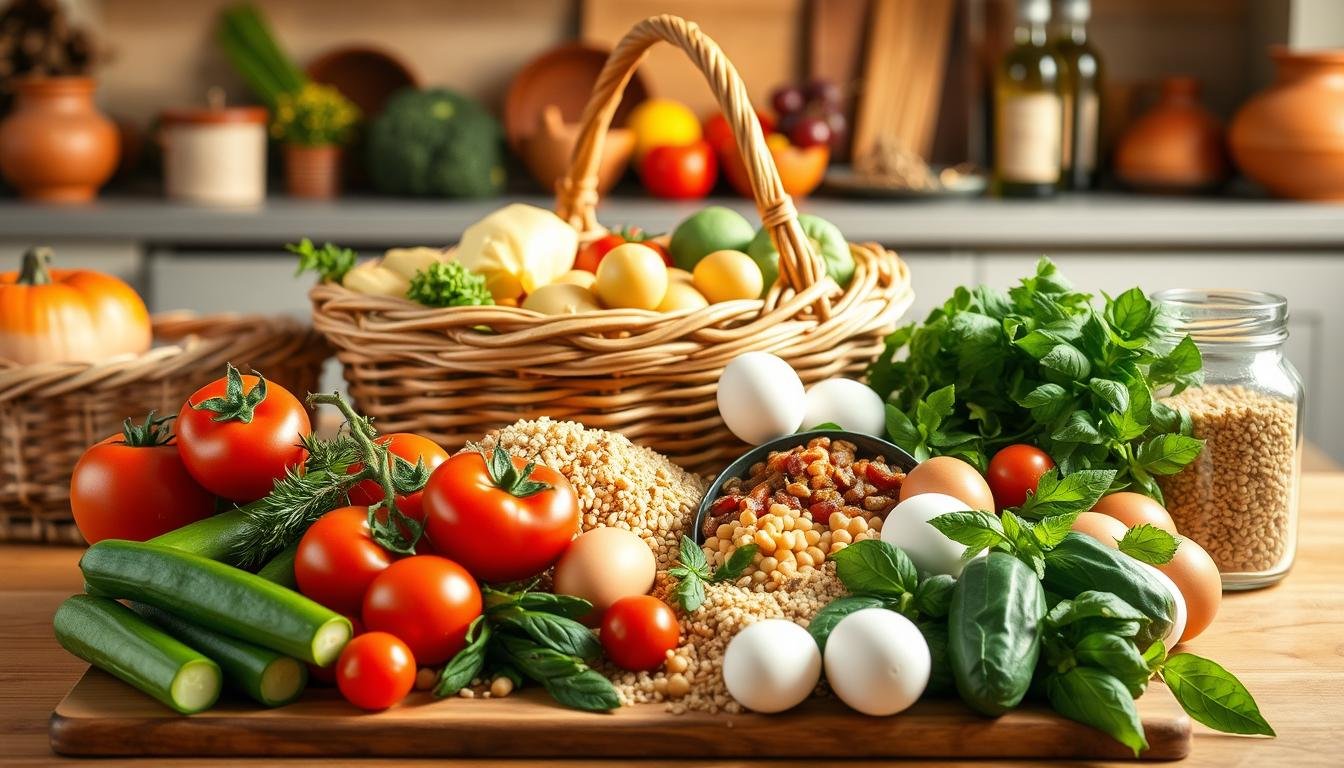
Make your weekly cooking easier with a simple filling low calorie recipes grocery list. Stock your kitchen with versatile ingredients. This way, you avoid last-minute shopping and keep your mediterranean meal plan on track all week.
Choose items that can be used in many dishes. This helps prevent food waste and keeps your fridge tidy.
- Produce: Spinach, cherry tomatoes, cucumbers, bell peppers, red onions, and fresh lemons.
- Proteins: Salmon fillets, shrimp, chicken breast, and canned tuna in water.
- Grains & Legumes: Quinoa, bulgur, whole-grain pasta, and canned cannellini beans.
- Dairy & Pantry: Greek yogurt, feta cheese, hummus, olives, roasted peppers, and artichoke hearts.
- Flavor Builders: Extra virgin olive oil, fresh herbs like parsley or dill, and garlic.
Keep canned beans fresh by rinsing and refrigerating them right after opening. Also, wash your greens as soon as you get home. This makes it easier to make filling low calorie recipes even when you’re busy.
Preparing a big batch of lemon-herb dressing at the start of the week is a great time-saver. It adds flavor to salads, grains, and proteins without extra work.
| Category | Key Ingredient | Storage Tip |
|---|---|---|
| Pantry | Artichokes & Olives | Keep in a cool, dry cupboard |
| Produce | Fresh Herbs | Wrap in damp paper towels |
| Protein | Canned Tuna | Store in a dark pantry |
By following this mediterranean meal plan, you can mix and match these staples to create endless dishes. Keeping your pantry full of these reliable items means every meal stays tasty and healthy.
7-Day Starter Plan
A 7-day plan makes it easy to learn mediterranean recipes under 500 calories. It helps you cook less but eat well. You can make this plan last 28 days by cooking in batches.
Use ingredients like chickpeas, white beans, and grilled chicken for many meals. Make a big batch of herbed bulgur or bean salad on Sunday. This way, you have healthy meals ready when you need them.
Adjust your food based on how active you are or how hungry you feel. Add nuts or fruit if you need more energy. Here’s a flexible meal plan to keep your eating balanced.
| Day | Breakfast | Lunch | Dinner |
|---|---|---|---|
| Monday | Greek Yogurt & Berries | Chickpea Salad | 500 calorie dinners: Chicken Bowl |
| Tuesday | Oatmeal with Walnuts | Leftover Chickpea Salad | White Bean-Tuna Salad |
| Wednesday | Greek Yogurt & Berries | Herbed Bulgur Salad | Grilled Fish with Veggies |
| Thursday | Oatmeal with Walnuts | Leftover Bulgur Salad | 500 calorie dinners: Chicken Bowl |
| Friday | Greek Yogurt & Berries | White Bean-Tuna Salad | Mediterranean Veggie Plate |
| Saturday | Veggie Omelet | Leftover Veggie Plate | Baked Salmon & Asparagus |
| Sunday | Fruit & Nut Bowl | Mixed Bean Salad | Roasted Chicken & Squash |
This plan is a great start for your long-term health goals. As you get into weeks two and three, try new proteins or veggies. These mediterranean meals under 500 calories are meant to be flexible. Listen to your body and enjoy eating well.
Portion Adjustments After 50
As you get older, your body changes. You might need to eat differently. Instead of counting calories, listen to how your body reacts to food. Your metabolism, muscle, and digestion change, so your meals should too.
Eat protein all day to keep your muscles strong. If you’re not hungry or food doesn’t digest well, eat smaller meals. Soft veggies or legumes can make you feel full without being heavy.
If meals feel too heavy, cut down on oils, cheese, and heavy grains. Try cauliflower rice or jicama wraps instead. This keeps your meals light and your energy up.
Listen to your body about drinking water and dental health. If you have health issues or take new meds, talk to a doctor or dietitian. They can help based on your health and how you feel.
Here’s a simple guide for adjusting your portions:
| Food Category | Adjustment Strategy | Benefit |
|---|---|---|
| Lean Proteins | Maintain consistent portions | Supports muscle health |
| Dense Grains | Reduce by one-third | Improves digestion |
| Vegetables | Increase soft-cooked options | Adds fiber and volume |
| Healthy Fats | Measure carefully | Controls calorie density |
This info is for learning, not medical advice. Always talk to a doctor for a plan that fits you. Being flexible and informed helps you on your health journey.
FAQ
Let’s talk about some common questions about these healthy, low-calorie meals. Many people find mediterranean meals under 500 calories very satisfying. But, how much you need can change a lot based on how active you are and how fast you burn calories.
Do 500 calorie dinners work for you? For many, it’s just right for a light but filling dinner. But remember, it’s a guide, not a rule. Your body might need more or less, depending on your daily activities.
To make filling low calorie recipes, add more fiber and lean protein. Try adding beans, quinoa, or Greek yogurt to your meals. For example, tempeh has about 22 grams of protein, which is great for your meals.
Need high protein meals? Try swapping ingredients to keep things exciting. Use different white fish instead of sole, or add grilled chicken or lean steak to a bean salad. These changes help you meet your nutritional goals while keeping your meals interesting.
Are these meals good for adults aged 50 and older? Yes, they are great for staying healthy as you get older. Just remember, this info is for learning only. Always talk to a doctor or dietitian for advice that’s right for you.
References
Creating a sustainable Mediterranean meal plan is all about balance. You need fresh veggies, legumes, whole grains, and lean proteins. Taste of Home, Good Housekeeping, and Prevention are great places to find these ideas.
These sites help you pick ingredients you love. This makes cooking fun and easy.
Don’t think losing weight means giving up tasty food or spending too much time in the kitchen. A good Mediterranean meal plan has healthy fats and yummy flavors. It keeps you feeling full and happy.
Sharing your meal plan with friends makes it more fun. Try sending this message to a friend: “I found a week of Mediterranean meals under 500 calories that actually look filling—want to try a few with me?”
