
Have you ever looked in the mirror and wondered if your bones are keeping up with your spirit? It is a common feeling to realize we are officially “past our prime” when it comes to skeletal strength.
With over 200 million people globally facing osteoporosis, you are not alone in this struggle. Losing bone density is a natural part of aging. But you don’t have to accept it as an inevitable decline.
The good news is that a Mediterranean diet can be a delicious, sustainable solution. By making proactive nutritional choices after reaching menopause, you can significantly shift the trajectory of your health.
Forget restrictive medical chores; this approach is all about enjoying vibrant, whole foods that nourish your body from the inside out. Ready to take control of your skeletal future?
Start Your Bone-Strengthening Journey
Key Takeaways
- Bone density loss is a global health concern affecting millions of individuals.
- Proactive nutrition is a powerful tool for maintaining skeletal integrity.
- The Mediterranean approach offers a sustainable and enjoyable way to eat.
- Small, consistent changes to your daily meals yield significant long-term benefits.
- Empowerment comes from understanding how food impacts your bone health.
Why Your Bones Need a Fresh Approach After Fifty
Your bones are always changing, even after fifty. Many think bones are just static, but they need help to stay strong. The Western diet often misses key nutrients, raising the risk of bone breaks as you get older.
The Quick Answer: What to Eat for Bone Density
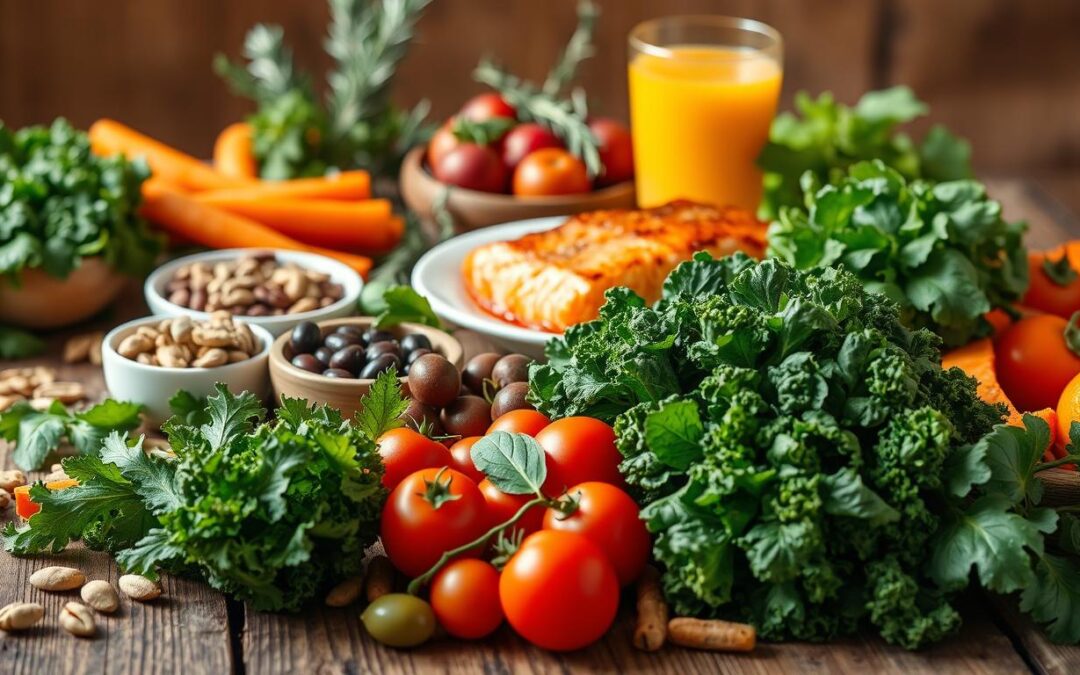
To keep your bones strong, eat nutrient-dense whole foods. Foods like kale, collards, salmon, and beans are great. Eating these every day helps your bones stay strong.
Three Key Takeaways for Your Bone Health Journey
First, remember that synergy is vital. Calcium, vitamin D, and protein work together. You can’t just rely on one nutrient for your bones.
Second, see food as metabolic support. Your bones are always being rebuilt. Eating the right foods gives them the nutrients they need.
Lastly, think about long-term structural integrity. Building a good eating habit now helps a lot later. Being consistent is key to better bone health.
Understanding the Osteoporosis Diet After Menopause
Did you know a special diet can make your bones stronger? This diet comes from a place far away. When you get older, your body changes in ways that can hurt your bones. Eating right after menopause can help keep you moving and healthy for a long time.
Why the Mediterranean Way Works for Your Skeleton
The Mediterranean diet is more than a trend. It’s backed by science to help you age well. Studies show it can lower your risk of breaking bones and improve your bone health.
This diet is full of good stuff like antioxidants and polyphenols. These help fight inflammation that can hurt your bones. Eating this way can make your bones stronger and more flexible.
Moving Beyond Calcium Supplements
Many think taking pills is the only way to keep bones strong. But, supplements alone can’t meet your body’s needs after menopause. Eating foods first gives your body the right mix of nutrients for better health.
Whole foods are better than supplements for your heart and bones. A balanced diet after menopause nourishes your whole body. The Mediterranean diet is a great way to keep your heart, energy, and bones healthy at the same time.
The Big Three: Calcium, Vitamin D, and Protein
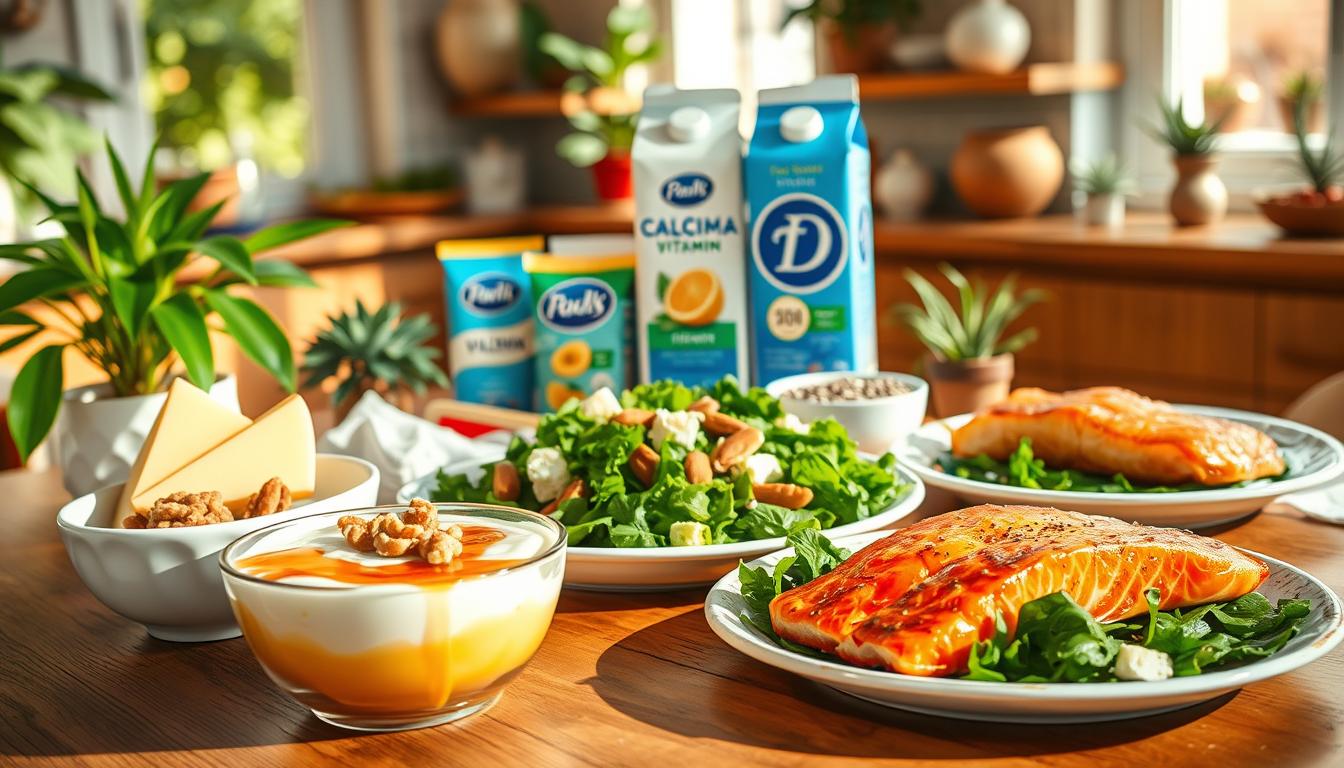
After fifty, building a strong skeleton is key. You need three main nutrients for this. These are calcium vitamin D protein after 50. They help your bones stay strong and healthy.
Sourcing Calcium Without Relying on Dairy
Many think dairy is the only way to strong bones. But, there are many other options. Plant-based foods like kale and sardines are great for getting calcium.
As you get older, you need more calcium. Aim for 1200 mg a day to keep your bones strong. Eating a variety of foods helps you meet this goal.
Sunlight and Food: Optimizing Your Vitamin D Levels
Vitamin D is needed for calcium to work right. Sunlight is a big source, but it decreases with age. So, eating foods rich in vitamin D is very important.
Eating fatty fish like salmon helps keep your vitamin D levels up. This is important for your bones. When you can’t get enough sunlight, these foods help a lot.
Why Protein is the Unsung Hero of Bone Strength
Protein is very important for your bones. It makes up half of your bone volume. Without enough, your bones can become weak.
Protein also helps keep your muscles strong. This helps protect your bones. Eating lean meats, beans, and nuts supports both your muscles and bones. This keeps you strong and mobile for a long time.
Mediterranean Staples That Build Stronger Bones
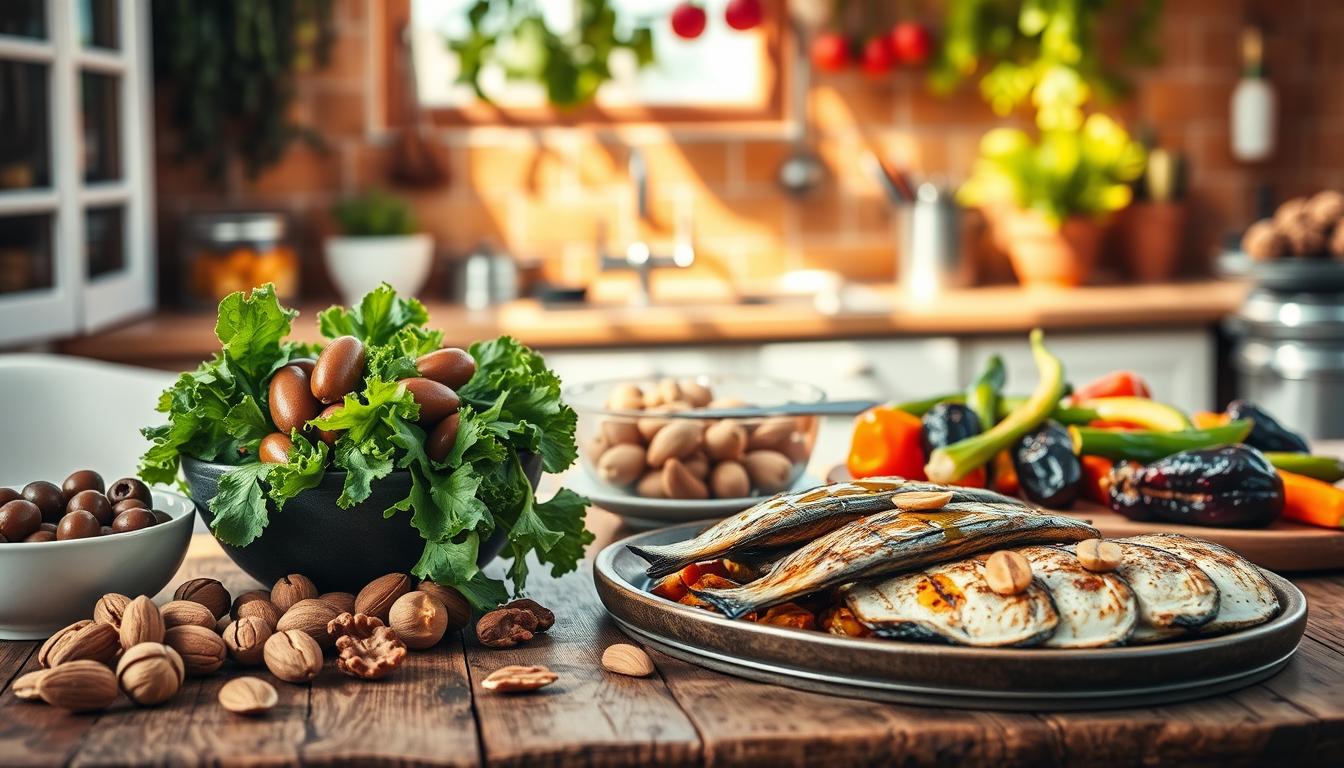
Start your journey to stronger bones in the kitchen. Choose foods rich in nutrients for a strong skeleton. The Mediterranean diet bones plan is a great way to stay healthy.
Leafy Greens and Cruciferous Vegetables
Vegetables are key for strong bones. Dark leafy greens like kale and spinach have vitamin K. Cruciferous veggies like broccoli add magnesium.
These foods help your bones stay healthy. Eat a variety of greens to get many nutrients. Try to eat half your plate with greens at lunch and dinner.
Healthy Fats: Olive Oil and Omega-3s
Extra virgin olive oil is very important. It has phenols that help build bone tissue. This oil also boosts alkaline phosphatase, which strengthens bones.
Omega-3s in fatty fish like salmon are also good. They fight inflammation, helping bones stay strong.
Legumes and Whole Grains for Sustained Support
Whole grains and legumes give you energy during menopause. They are full of fiber, which is good for your metabolism. A balanced metabolism helps your body use minerals for strong bones.
- Lentils and chickpeas: High in plant-based protein and minerals.
- Quinoa and farro: Complex carbohydrates that provide sustained energy.
- Beans: Rich in fiber and essential phytonutrients.
Adding these foods to your diet makes it tasty and healthy. These whole foods build a strong health base for years.
Boosting Brain Health, Energy, and Mood
When you eat whole foods, you help your bones and brain. A Mediterranean diet is good for your bones and brain. It gives your brain the fuel it needs to stay sharp.
Choosing foods rich in nutrients makes you feel alive all day. This way, you can handle menopause changes better and feel more confident.
Nutrient-Dense Foods That Keep You Sharp
Colorful fruits and veggies are key. Carotenoids in these foods help you stay strong as you age.
These antioxidants protect your cells. Eating berries, leafy greens, and orange veggies keeps your brain safe.
Don’t forget about nuts and seeds. They have essential fatty acids for your brain and memory.
Managing Menopausal Fatigue Through Better Nutrition
Many women feel tired and foggy during menopause. The Mediterranean diet fights inflammation. It’s a natural way to feel better.
Switching to whole foods helps your blood sugar. This stops the energy crashes you get in the afternoon.
Eating legumes and whole grains gives you energy all day. When you’re well-nourished, you feel better and more balanced.
Putting It Into Practice: Your Mediterranean Strategy
Starting a new diet can seem hard, but you don’t have to do it by yourself. Studies show a 20-minute talk about food can really help you stick to a Mediterranean diet. By making eating habits a part of your daily routine, you make sure your body gets the calcium it needs every day.
Your Weekly Grocery List for Bone Health
First, fill your kitchen with good foods. Choose foods that are full of vitamin D and minerals to keep your bones strong.
- Leafy Greens: Kale, spinach, and collard greens for mineral density.
- Healthy Fats: Extra virgin olive oil and walnuts.
- Proteins: Sardines, wild-caught salmon, and chickpeas.
- Dairy Alternatives: Fortified almond milk or Greek yogurt.
- Whole Grains: Quinoa, farro, and oats.
A Sample 7-Day Mediterranean Meal Plan
This meal plan is easy and balanced. It helps you get enough protein after 50 without spending too much time cooking. Use this table to plan your meals for the week.
| Day | Breakfast | Lunch | Dinner |
|---|---|---|---|
| Mon-Tue | Greek Yogurt & Berries | Quinoa Salad | Baked Salmon |
| Wed-Thu | Oatmeal with Walnuts | Lentil Soup | Grilled Chicken |
| Fri-Sun | Spinach Omelet | Chickpea Wrap | Sardines & Greens |
Sharing the Love: A Message for Your Friends
Health is better with friends. Send this message to a friend to invite them to eat well and stay healthy:
“Hi! I’m starting a Mediterranean diet to improve my bone health and energy. I’d love for you to join me in trying new recipes and staying motivated. Want to swap meal ideas this week?”
Starting is the hardest part. Click the button below to get your full grocery guide and start a healthier future today.
Download Your Bone Health Toolkit
Conclusion
Your journey to stronger bones is a lifelong promise. It grows with the right habits. A high-protein Mediterranean diet for women over 50 is a great start. It helps you stay strong and healthy every day.
See these food changes as caring for yourself, not just a diet. This view helps you see aging as a positive change. Making small, lasting changes is the best way to keep your bones strong.
Choose quality foods like California Olive Ranch extra virgin olive oil. It’s good for your body. Also, do strength training to keep your muscles and bones strong together. You’re building a strong, healthy life by taking care of your body.
