

By Ray Baker
I hear from readers over 50 who feel they are eating the same few things day after day. They want to follow a Mediterranean diet for breakfast lunch and dinner but worry it is too complicated or expensive. What many do not realise is that the traditional eating pattern from Crete, Greece, and southern Italy in the mid-20th century was built on simple, affordable staples. Back then, those regions had low rates of chronic disease and higher than average adult life expectancy, even with limited access to healthcare [1]. The Mediterranean Diet Pyramid, introduced in 1993 by Harvard and Oldways, put daily exercise and shared meals at the base [1]. That pattern is what we now call the Mediterranean diet, and it is easier to put into practice than you might think.
Mediterranean diet for breakfast lunch and dinner?
A Mediterranean diet for breakfast lunch and dinner means building each meal around plants, whole grains, and healthy fats, with modest amounts of fish, poultry, dairy, and eggs, and very little red meat or sweets. It is a flexible pattern, not a rigid plan, so you can adjust it to your tastes and budget.
Key takeaways
- A Mediterranean diet for breakfast lunch and dinner centres on vegetables, fruits, whole grains, legumes, nuts, and extra virgin olive oil.
- Fish and seafood are the preferred animal proteins, eaten at least twice a week, while red meat is limited to once a week or less [2][3].
- Portions are not strict, but the Cleveland Clinic offers serving goals: 3 fruit, at least 3 veggie servings, 3-6 whole grain servings per day [2].
- Meals can be simple, like Greek yogurt with nuts and fruit for breakfast, or a whole-grain wrap with hummus and salad for lunch [3][4].
- This is general information, not medical advice. Talk to your doctor before making big changes to your diet.

How to build a filling breakfast
When you are planning a Mediterranean diet for breakfast lunch and dinner, breakfast does not need to be a production. A typical Mediterranean-style breakfast might be plain Greek yogurt topped with berries and a handful of walnuts or almonds, plus a slice of whole-grain toast [5][4]. Another option is porridge made with rolled oats, milk or water, and a drizzle of honey [3]. If you prefer something savoury, try wholemeal toast with extra virgin olive oil and ricotta or cottage cheese, or a poached egg with grilled tomato [3]. The Mayo Clinic Diet suggests a quick roasted tomato and feta bruschetta on whole-grain toast, served with avocado and strawberries [6].
The Cleveland Clinic recommends having at least one serving of vegetables at each meal, so adding a handful of spinach or sliced cucumber to your breakfast plate is a smart move [2]. Eggs are fine in moderation: up to one yolk per day, or no more than four yolks per week if you have high cholesterol [2]. The Harvard pyramid from 1993 placed daily exercise and shared meals at the base, reminding us that how we eat matters as much as what we eat [1]. If you want a clear breakdown of how many servings of grains, dairy, and other foods fit into a day, our guide on Mediterranean diet servings per day spells it out.
Easy lunch ideas without a recipe
The beauty of a Mediterranean diet for breakfast lunch and dinner is that lunch can be thrown together without a recipe. A sandwich made with whole-grain bread, hummus, and salad vegetables like tomato and cucumber is a classic [4]. Canned fish such as tuna or salmon works well as a filling, drizzled with a little extra virgin olive oil [3]. Another quick option is a salad that includes a dark leafy green, tomato, and canned beans or chickpeas, all dressed with olive oil and lemon [3]. If you are out and about, a wholemeal pita stuffed with salad and canned fish travels well [3]. Diabetes Canada offers a baked lemon herb salmon lunch with dark leafy greens and brown rice, which you can prep ahead [5].
Leftovers from dinner also make an easy lunch. A vegetable soup with lentils or a small portion of chicken stir-fry can be just as good the next day. If you prefer a no-fuss approach, our lazy Mediterranean diet for senior beginners has more ideas that require minimal effort.
Simple satisfying dinners
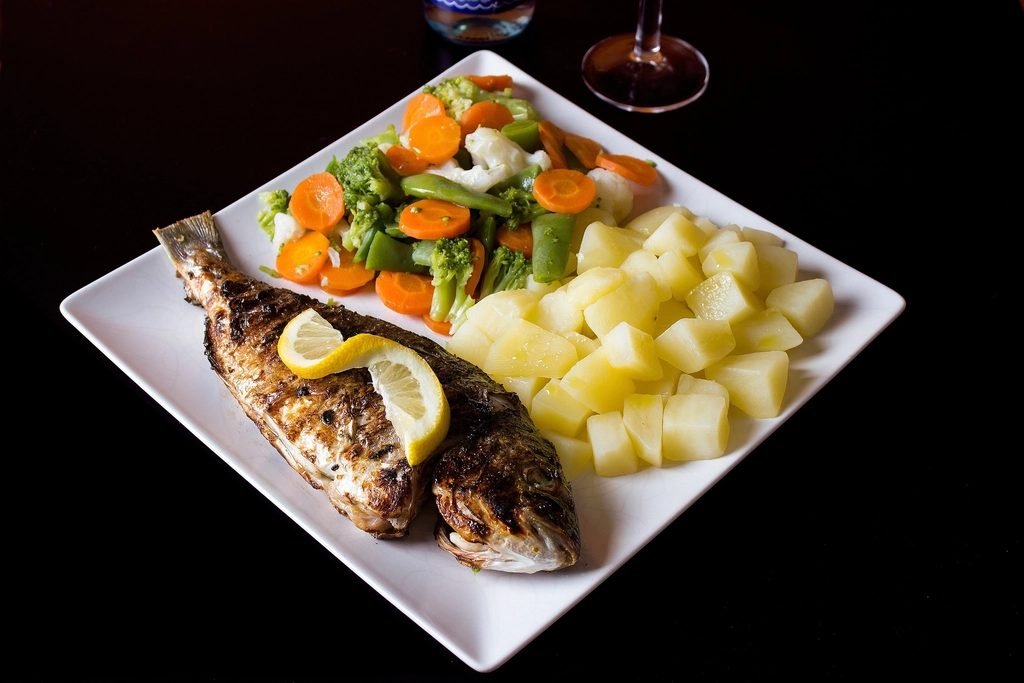
For dinner on a Mediterranean diet for breakfast lunch and dinner, aim for a plate that is half vegetables, a quarter whole grains, and a quarter protein. Fish stew with green beans and asparagus [6], a chicken breast stir-fry with mixed vegetables and brown rice [3], or a homemade pizza on a wholemeal base topped with onion, eggplant, and zucchini [3] are all solid choices. Vegetable soup with chickpeas or lentils, canned tomatoes, and onion is another filling option [3]. I find that roasting a tray of mixed vegetables with olive oil and herbs is one of the easiest ways to get that half-plate of veg.
Here are five easy tips I use to build a Mediterranean dinner plate:
- Fill half your plate with vegetables, cooked or raw. Aim for at least two different colours.
- Add a quarter plate of whole grains like brown rice, quinoa, or whole-wheat pasta.
- Choose a protein: fish or seafood at least twice a week, poultry a few times, legumes often, and red meat no more than once a week [2][3].
- Drizzle with 1 to 2 tablespoons of extra virgin olive oil instead of butter or creamy dressings [2].
- Season with herbs, garlic, and lemon rather than salt.
These tips come from the serving pattern described by the Cleveland Clinic and Queensland Health, which both stress vegetables as the foundation [2][3]. If you are new to this way of eating, a structured plan can help. Our Mediterranean diet plan week 1 gives you a gentle start with a full week of breakfast, lunch, and dinner ideas.
Snacks and drinks through the day
Snacks are part of a Mediterranean diet for breakfast lunch and dinner too. Fresh fruit, a small handful of unsalted nuts, or a tub of plain yogurt are all good choices [2][3]. The Queensland Health guide suggests water as the main drink, aiming for 6 to 8 glasses a day [3]. If you enjoy wine, the traditional pattern includes a small glass with meals, up to one per day for women and two for men, but the American Heart Association cautions against starting to drink if you do not already [2]. Even a small glass of red wine can be part of the pattern, but it is optional and not recommended for everyone [2].
Keeping snacks simple helps you avoid processed foods. A piece of fruit and a few almonds cost less than packaged snack bars. If you are watching your grocery bill, our budget Mediterranean recipes show how to eat well without fancy ingredients.

Related reading
- How Many Mediterranean Diet Servings Per Day? A Clear Chart: Clear serving chart
- Lazy Mediterranean Diet for Senior Beginners: No-fuss approach
- Your Mediterranean Diet Plan Week 1: A Gentle Start: Week 1 meal plan
- Budget Mediterranean Recipes for Weight Loss: Healthy Meals Without Fancy Ingredients: Budget-friendly ideas
Frequently asked questions
Can I eat the same meals every day?
Variety is a key part of the Mediterranean pattern. Eating a wide range of fruits, vegetables, grains, and proteins helps you avoid boredom and get different nutrients. The Cleveland Clinic encourages mixing up your go-to meals, and the more variety, the better [2].
Is a Mediterranean diet for breakfast lunch and dinner expensive?
It can be affordable if you rely on canned beans, lentils, frozen vegetables, and seasonal produce. Extra virgin olive oil and nuts are the pricier items, but you use them in small amounts [4].
Do I need to give up red meat completely?
No, but it is limited to no more than once a week, choosing lean cuts and a portion about the size of a deck of cards (80-100 grams) [3].
What if I do not like fish?
You can still follow the pattern by focusing on plant proteins like beans and lentils, and eating poultry and eggs in moderation. Omega-3s can come from walnuts and flaxseeds [2].
Can I still enjoy dessert?
Yes, but choose fruit, yogurt, or a small homemade treat made with olive oil and whole-grain flour. Limit commercially prepared baked goods to no more than three servings per week [2].
How much olive oil should I use each day?
Queensland Health suggests 2 to 4 tablespoons of extra virgin olive oil per day, used in cooking and as a dressing [3]. Choose Australian certified oil when you can.
Honest take
I see the Mediterranean diet as a sensible, flexible way of eating that fits real life. Small changes like using olive oil instead of butter, adding an extra serve of vegetables, and eating fish a couple of times a week can make a real difference over time. I have seen people over 50 thrive on this pattern without feeling deprived. Remember, this is general information, not medical advice. If you have a health condition, speak with your doctor before making big changes.
References
- Harvard T.H. Chan School of Public Health. Diet Review: Mediterranean Diet. The Nutrition Source. https://nutritionsource.hsph.harvard.edu/healthy-weight/diet-reviews/mediterranean-diet/
- Cleveland Clinic. Mediterranean Diet: Food List & Meal Plan. https://my.clevelandclinic.org/health/articles/16037-mediterranean-diet
- Queensland Health. Mediterranean diet. https://www.health.qld.gov.au/__data/assets/pdf_file/0032/946049/cardiac-meddiet.pdf
- Dietitians Australia. Mediterranean diet. https://dietitiansaustralia.org.au/health-advice/mediterranean-diet
- Diabetes Canada. 7-day Mediterranean healthy meal plan. https://www.diabetes.ca/nutrition-and-recipes/meal-plans/7-day-mediterranean-healthy-meal-plan
- Mayo Clinic Diet. Mediterranean Diet 101: What to Eat, Key Rules & Proven Benefits. https://diet.mayoclinic.org/us/blog/mediterranean-diet-101-core-principles-and-proven-health-gains/
Get well and stay well,
Ray Baker
