
By Ray Baker
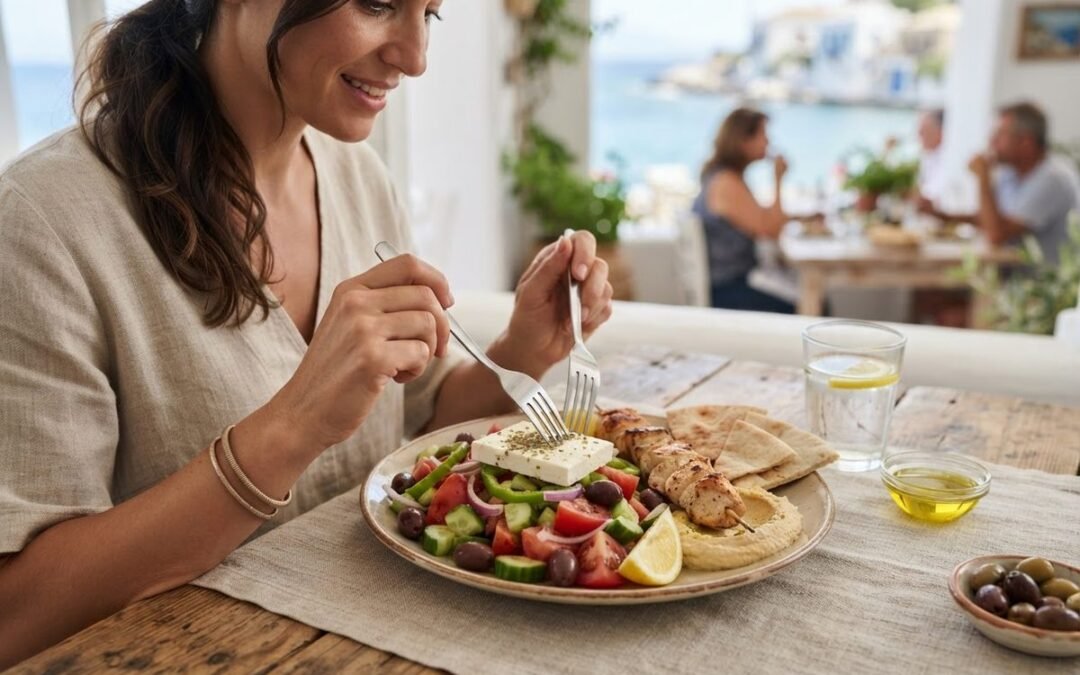
If you’re over 50 and your latest blood test came back with a cholesterol number you didn’t like, you’ve probably asked yourself a quiet question over dinner: is Greek food good for cholesterol? I hear it often, and I understand why. Greek cooking looks generous, with feta, olives and olive oil everywhere, so it’s easy to assume it must be bad news for your arteries. The truth is more interesting, and far more useful, than a plain yes or no.
Is Greek Food Good for Cholesterol?
Yes, traditional Greek meals can support healthier cholesterol levels. The pattern is built on vegetables, legumes, fish and fibre, with olive oil as the main fat. Studies link Mediterranean-style eating to lower LDL and total cholesterol [1], and a Cochrane review reports favourable effects on total cholesterol [2]. It works alongside medical care, not instead of it.
Key takeaways
- Is Greek food good for cholesterol? Traditional Greek meals are one regional version of the Mediterranean pattern, and it’s the whole pattern that studies link to better numbers.
- The benefit comes from the combination of vegetables, legumes, fish and fibre, not from one magic ingredient.
- Saturated fat has a bigger impact on blood cholesterol than dietary cholesterol, so a little feta and yoghurt can still fit [3].
- Research is promising but not conclusive, so keep your doctor in the loop about any prescribed treatment [2].
- Simple swaps, such as olive oil instead of butter and fish instead of red meat, are where most people start.
What Makes Greek Food Heart-Friendly?
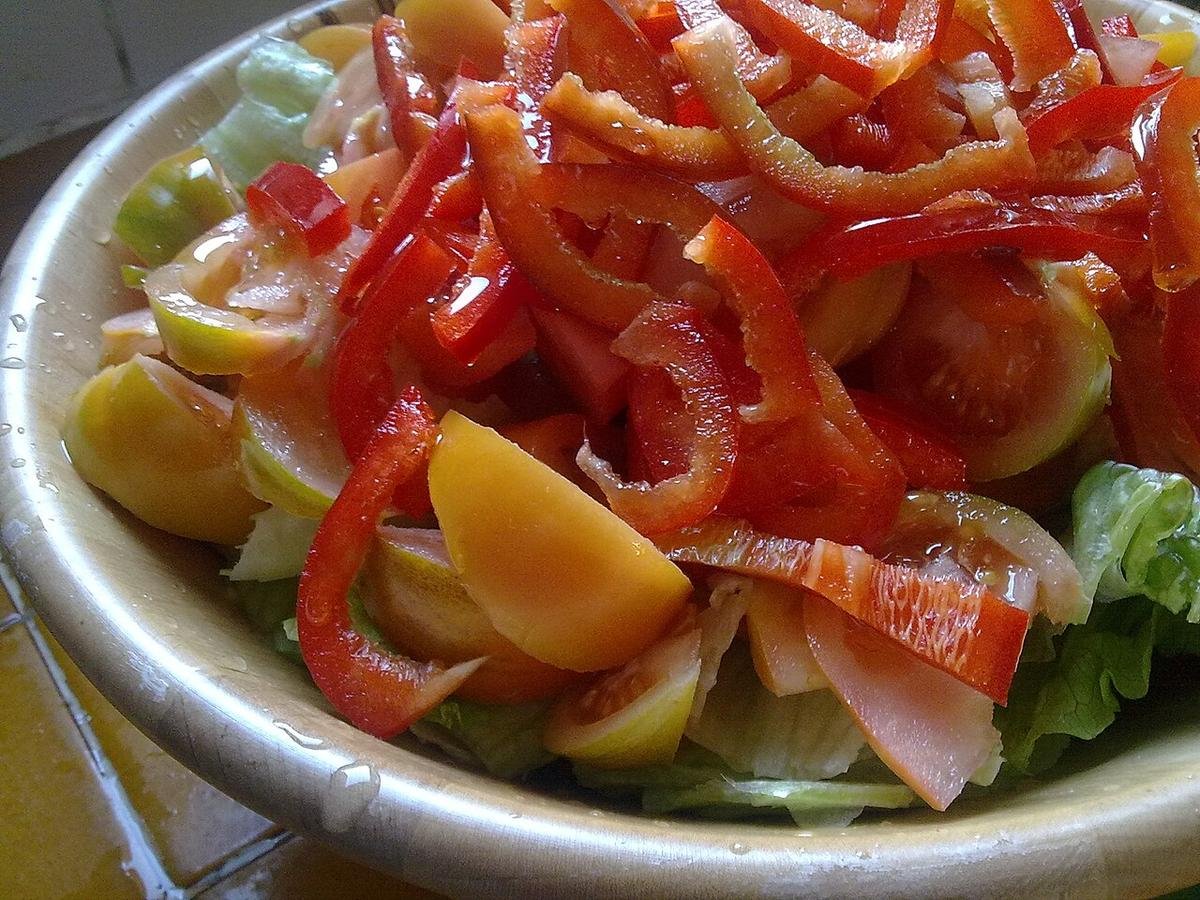
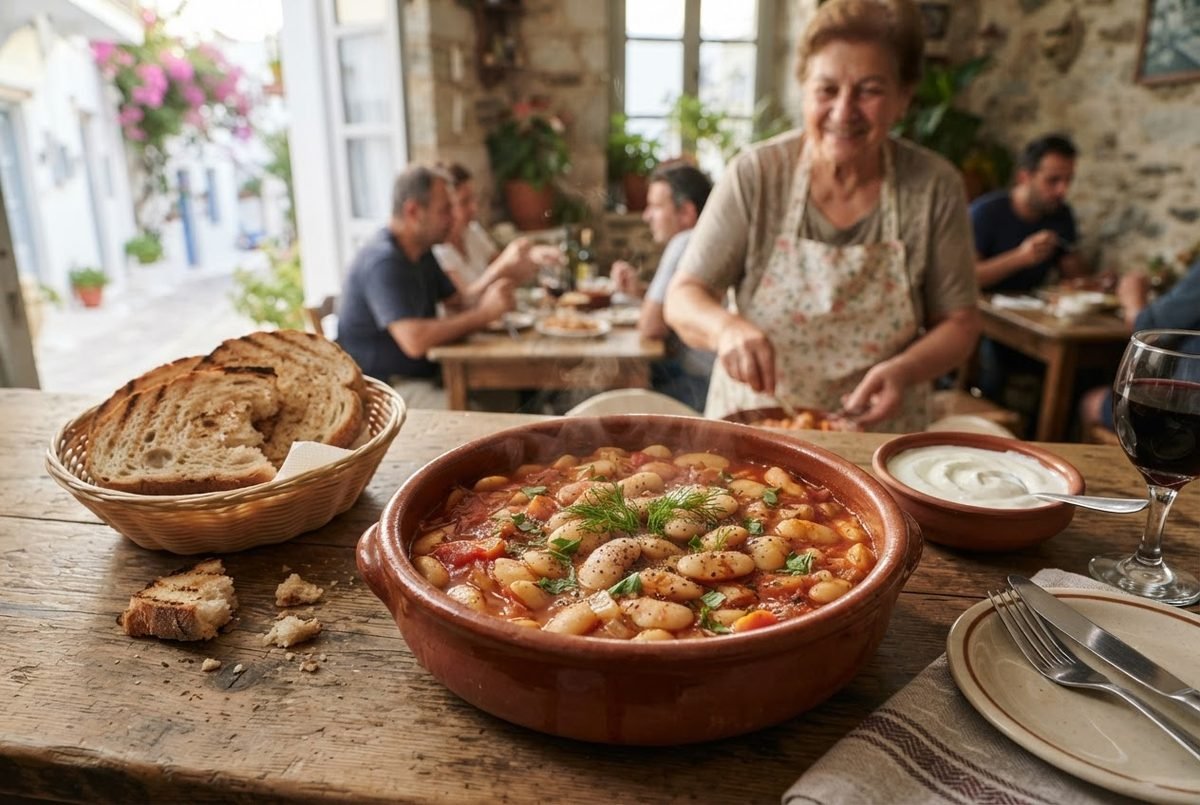
When I picture Greek food, I see a table loaded with horiatiki salad, grilled sardines, a bowl of gigantes beans and a small block of feta. That picture is almost a textbook Mediterranean plate [4]. Greek cooking puts vegetables, legumes, whole grains and fish at the centre, uses olive oil as the main fat, and keeps red meat and sugary sweets for celebrations. The Cleveland Clinic describes this way of eating as emphasising plant-based foods and healthy fats, with extra virgin olive oil as the main source of fat, and notes that a dietitian can help you tailor it to your own medical history [4]. The synergy of those components, the fibre, the antioxidants and the unsaturated fats, is what most studies associate with lower LDL and total cholesterol [1]. So when someone asks me is Greek food good for cholesterol, my answer is that the pattern as a whole is doing the work, not any single dish. If you’re building a heart-friendly plate, our guide to foods for heart health after 50 walks through the same principles.
Does Olive Oil Really Lower Cholesterol?
I’ve watched plenty of people drown their greens in olive oil hoping it will fix their lipid panel overnight. A 2022 systematic review and dose-response meta-analysis of 34 randomised trials found that each extra 10 g per day of olive oil had minimal effects on total cholesterol, LDL cholesterol, HDL cholesterol and triglycerides [5]. The same review noted that total cholesterol rose slightly as olive oil intake increased up to 30 g per day, then appeared to plateau [5]. So olive oil is not a cholesterol drug. What it does well is replace butter, lard and other saturated fats, and that swap matters more than the oil itself. So is Greek food good for cholesterol if the oil itself does little? The answer lies in what the oil replaces. My advice is to pour with a measuring spoon rather than a free hand. For a closer look at the foods that do the heavy lifting, see our article on the Mediterranean diet for high cholesterol.
How Do Greek Legumes and Greens Help?
Lentils, chickpeas and giant beans, along with wild greens, are the backbone of a Greek kitchen, and they earn their place for cholesterol. A 2020 pilot study tested a Mediterranean diet combined with a simple set of cholesterol-lowering foods, including oats or barley, plant sterols, chitosan and green tea, and reported an LDL reduction of about 25% in the short term in people with hypercholesterolemia [6]. Not every Greek meal is that targeted, of course. Even so, the soluble fibre in beans and the plant sterols found in many plant foods gently nudge LDL downward. This is the part of the answer to is Greek food good for cholesterol that people overlook. I keep canned chickpeas and a bag of spinach in the cupboard for exactly this reason. To see more fibre-rich swaps, read our piece on fiber foods for cholesterol.
Is Feta Cheese a Problem for Cholesterol?
Feta is a brined cheese with a moderate amount of saturated fat, but it turns up in the Mediterranean pattern in small amounts, crumbled over salad rather than carved into slabs. A 2023 evidence review from the National Institute for Health and Care Excellence in the United Kingdom concluded that saturated fat intake has a greater impact on a person’s cholesterol profile and cardiovascular risk than dietary cholesterol does [3]. The same review found no evidence to support a limit of 300 mg per day of dietary cholesterol [3]. So the question is Greek food good for cholesterol still gets a positive answer, as long as the feta is a garnish and the rest of the day is full of vegetables, beans and fish. Better cholesterol numbers also tend to travel with better vascular health overall, which we cover in our article on Mediterranean diet and stroke prevention.
What About HDL and Triglycerides?
Most studies looking at how closely people follow a Mediterranean diet reported a decrease in LDL, triglycerides and total cholesterol, and an increase in HDL cholesterol [1]. That sounds wonderful, and it is the trend I would want to see. The same review is careful, though: results from randomised controlled trials were low to modest, or insignificant, and healthy habits such as not smoking and staying active work alongside diet [1]. So I would not expect a dramatic jump in HDL just from switching to Greek food. A modest, steady drift in the right direction is a realistic hope, especially if the rest of your week supports it.
How Can You Eat Greek for Better Cholesterol?
So is Greek food good for cholesterol in practice? You don’t need to move to a Greek island. Small, consistent swaps shift your plate toward a more cholesterol-friendly pattern. Here are five everyday steps I would start with.
- Open most meals with a simple Greek salad. Tomatoes, cucumber, onion, olives and a modest sprinkle of feta give you fibre and antioxidants. Go easy on the oil pour.
- Make extra virgin olive oil your main cooking fat. Replace butter or margarine with a measured spoonful. It is the swap that counts, not a flood.
- Put legumes on the table twice a week. Lentils, chickpeas or giant beans cooked with tomato and herbs bring soluble fibre that helps lower LDL.
- Eat fish often, as the Cleveland Clinic suggests. The clinic’s Mediterranean guide advises a good amount of fish, especially fish rich in omega-3 fatty acids [4]. Sardines and mackerel are the easy Greek choices.
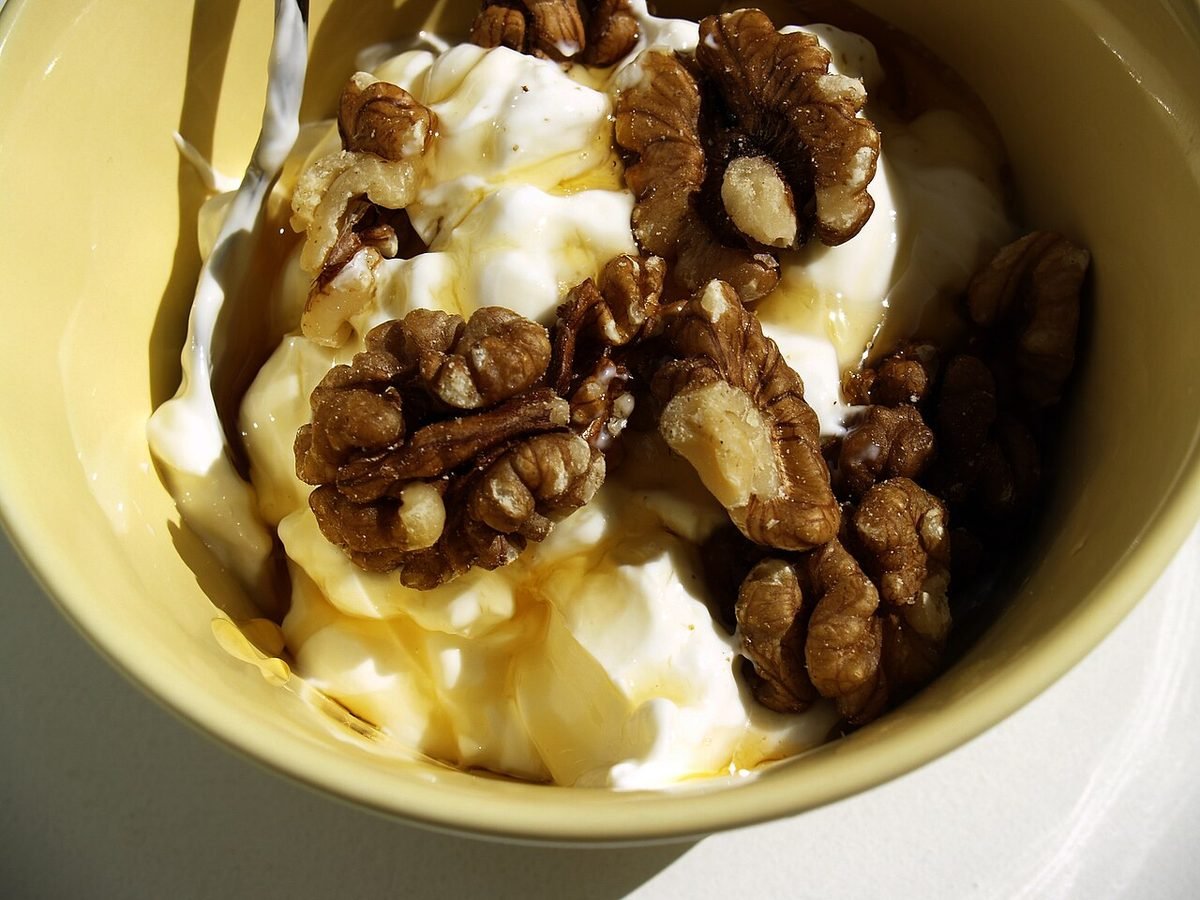
- Choose plain Greek yoghurt with nuts for dessert. A small bowl topped with walnuts and a drizzle of honey gives protein and plant sterols without a sugar load.
Related reading
- Foods for Heart Health After 50 That Fit the Mediterranean Plate: Goes deeper into heart-friendly plate building after 50
- Mediterranean Diet for High Cholesterol: Foods That Support Better Numbers: Lists the specific foods that support better cholesterol numbers
- Fiber Foods for Cholesterol: Mediterranean Choices That Help LDL: Explains how Mediterranean fibre choices help LDL
- Mediterranean Diet and Stroke Prevention: Everyday Foods That Support Vascular Health: Connects cholesterol management to broader vascular health
Frequently asked questions
Is Greek food good for cholesterol if I take statins?
Food and medicine can work together, but never stop or change a prescription on your own. A Mediterranean-style pattern is generally considered supportive of heart health, so ask your doctor how it fits your treatment plan [2].
Will Greek food lower my cholesterol on its own?
It may help improve your numbers, but the evidence is promising rather than conclusive [2]. Treat food as one part of your overall care, alongside whatever your doctor recommends.
Is all olive oil good for my cholesterol?
Extra virgin olive oil is the best everyday choice, but the amount matters. Even good olive oil has minimal direct effect on blood lipids, so its real value is replacing saturated fats [5].
What about Greek pastries like baklava?
Traditional sweets are high in sugar and saturated fat. Keep them for celebrations and reach for fruit or a small bowl of yoghurt when the everyday sweet craving hits.
Does Greek yoghurt help cholesterol?
Plain Greek yoghurt gives you protein and calcium with a moderate amount of saturated fat. In sensible portions it fits a heart-friendly pattern, but it will not lower LDL on its own.
How long before I notice a change?
Cholesterol shifts slowly. The pilot study behind the portfolio approach measured LDL after about 48 days [6], so give any change at least a couple of months before judging it.
Honest take
In my view, is Greek food good for cholesterol is the wrong question to ask in isolation, because no single cuisine fixes a lipid panel. What I like about Greek cooking is that it makes the useful habits taste good: beans, greens, fish, olive oil and a little feta. It is gentle on the budget, easy to cook for two, and it does not feel like a punishment. Keep your appointments, take the medicine you have been given, and let the food do its quieter job in the background.
References
- Impact of Mediterranean Diet on Lipid Composition in the Spanish Population. Nutrients. 2023. https://pmc.ncbi.nlm.nih.gov/articles/PMC10650561/
- Mediterranean-style diet for the prevention of cardiovascular disease. Cochrane. 2023. https://www.cochrane.org/about-us/news/featured-review-mediterranean-style-diet-prevention-cardiovascular-disease
- Evidence review for dietary cholesterol strategies. National Institute for Health and Care Excellence. 2023. https://www.ncbi.nlm.nih.gov/books/NBK602487/
- Mediterranean Diet: Food List & Meal Plan. Cleveland Clinic. Updated March 2024. https://my.clevelandclinic.org/health/articles/16037-mediterranean-diet
- The effects of olive oil consumption on blood lipids: a systematic review and dose-response meta-analysis of randomised controlled trials. British Journal of Nutrition. 2022. https://www.cambridge.org/core/journals/british-journal-of-nutrition/article/effects-of-olive-oil-consumption-on-blood-lipids-a-systematic-review-and-doseresponse-metaanalysis-of-randomised-controlled-trials/E432E54AC39D1708E92FA2DB365EF015
- Effects of a Portfolio-Mediterranean Diet and a Mediterranean Diet with or without a Sterol-Enriched Yogurt in Individuals with Hypercholesterolemia. Nutrients. 2020. https://pmc.ncbi.nlm.nih.gov/articles/PMC7386117/
Get well and stay well,
Ray Baker
