
By Ray Baker
Nearly a quarter of deaths from cancer around the world are tied to tobacco use, alcohol, high body mass index, low fruit and vegetable intake, and lack of physical activity [1]. That is not a scare line at 60 or 70. It is a nudge: what you eat is one piece of the picture. I look at preventive food for cancer as a weekly habit, not a single superfood promise. This article is general information, not medical advice.
What is preventive food for cancer, really?
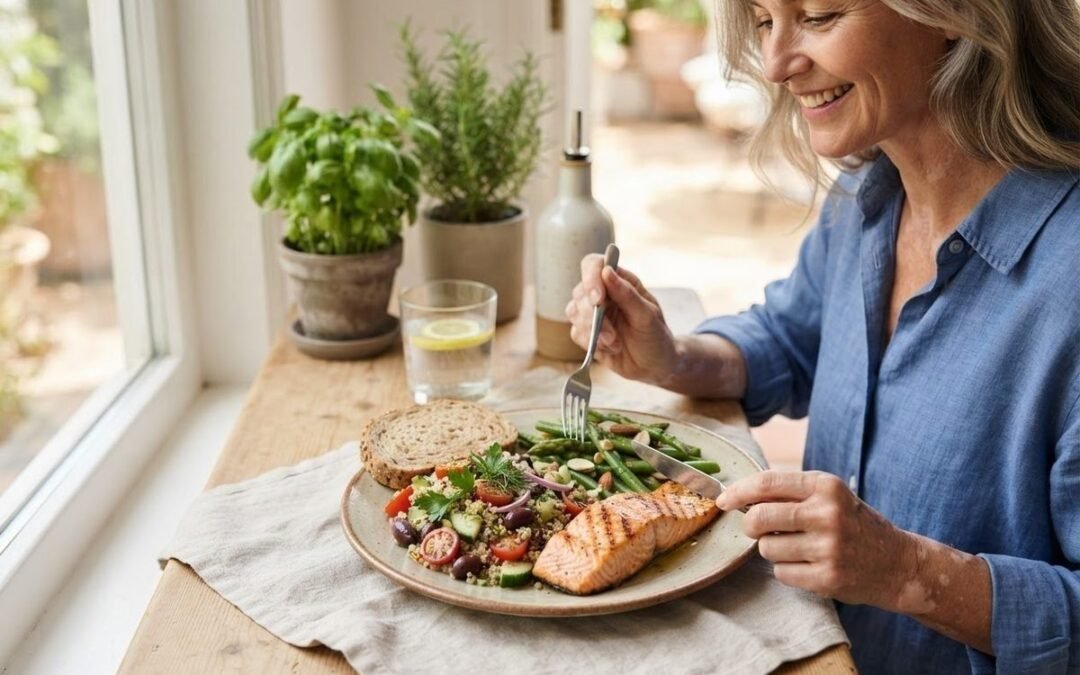
Preventive food for cancer is not one miracle berry or capsule. It is the everyday mix of vegetables, fruit, whole grains, legumes, fish and olive oil that supports overall health. Research shows that specific dietary components or nutrients are associated with increases or decreases in cancer risk, but with few exceptions, studies of human populations have not yet shown definitively that any dietary component causes or protects against cancer [2].
Key takeaways
- Variety is as important as quantity, because no single fruit or vegetable provides all of the nutrients you need to be healthy [3].
- Studies in animals and experiments with cells grown in the laboratory have identified potential ways these compounds may help prevent cancer, but studies in humans have shown mixed results [4].
- Alcohol is a known cause of cancer, even if red wine stories sound appealing [2].
- Carbohydrates in the diet should come primarily from whole grains, vegetables, fruits and pulses [5].
- Keep fruit where you can see it, for example by placing ready-to-eat washed whole fruits in a bowl or storing chopped colorful fruits in a glass bowl in the refrigerator [3].
Do colourful vegetables deserve the hype?
I would say yes, but for a calmer reason than you might think. A diet rich in vegetables and fruits can prevent some types of cancer, and variety is as important as quantity [3]. Different plant families offer different compounds, so a plate with red, green, orange and white is not just pretty. Eating a variety of types and colors of produce gives your body the mix of nutrients it needs [3].
When I talk about preventive food for cancer in the kitchen, cruciferous vegetables are the group many researchers have looked at closely. They include broccoli, cauliflower, cabbage, rocket, kale, Brussels sprouts and radishes. Cruciferous vegetables are a good fiber source and contain vitamins, plus glucosinolates that are broken down during food preparation, chewing, and digestion to form biologically active compounds such as sulforaphane [4]. Indoles and isothiocyanates have been found to inhibit the development of cancer in several organs in rats and mice, including the bladder, breast, colon, liver, lung, and stomach, but studies in humans have shown mixed results [4]. So I treat them as a delicious staple, not a medicine. Rocket and watercress are easy ways to get in that group, and they wilt happily in a pan.
If you want a longer list of study-backed foods, my article on cancer prevention diet foods walks through the details in plain language.
What about antioxidant pills and powders?
Free radicals can damage DNA, and that damage may play a role in cancer development [6]. Antioxidants are chemicals that interact with and neutralize free radicals, and fruits, vegetables, and grains are rich sources of dietary antioxidants [6]. The body also makes its own antioxidants, which is easy to forget when a bottle promises more.
I keep this simple: I would rather spend the money on whole foods than powders. The body relies on external sources, primarily the diet, to obtain the antioxidants it needs, and some dietary antioxidants are also available as dietary supplements [6]. This is general information, not medical advice, and it is worth asking your doctor if you are unsure about any supplement. That is why I keep a bag of frozen berries for plain yoghurt rather than reaching for a supplement tub.
Here is a plain way to think about it: a colourful salad gives you antioxidants, water and chewing time. A powder gives you one or two compounds and skips the rest. I know which one leaves me more satisfied at my age.
Which Mediterranean staples earn their place?
This is where I stop asking what is a “cancer-fighting food” and start asking what makes a plate feel complete. Consuming a healthy diet throughout the life-course helps to prevent malnutrition in all its forms as well as a range of noncommunicable diseases (NCDs) and conditions [5]. Those are the quiet basics, not always the foods that make headlines.
For me, the list looks like this: tinned chickpeas, lentils, oats, extra virgin olive oil, tinned tomatoes, frozen spinach, frozen berries, eggs, sardines, and whatever fresh greens are cheap this week. I do not need to call any of them a miracle. A variety of minimally processed and unprocessed foods low in unhealthy fats, free sugars and sodium are the foundation of any healthy diet [5]. I also keep tinned sardines on hand because they are a low-fuss protein source.
Portion awareness matters as much as the food itself. A Mediterranean plate still has calories, and overeating healthy food is easy with nuts and olive oil. Moderation is one of the four core principles of a healthy diet, described as limited intake of nutrients, ingredients, and foods that may be detrimental to health [5].
Here are five easy tips that make the pattern easier at home:
- Keep fruit where you can see it, and place several ready-to-eat washed whole fruits in a bowl or store chopped colorful fruits in a glass bowl in the refrigerator to tempt a sweet tooth [3].
- Try cooking new recipes that include more vegetables, such as salads, soups, and stir-fries [3].
- Cruciferous vegetables include arugula, bok choy, broccoli, Brussels sprouts, cabbage, cauliflower, collard greens, horseradish, kale, radishes, rutabaga, turnips, watercress, and wasabi [4].
- Base meals on beans or lentils once or twice a week instead of meat, which supports variety and budget.
- Make a big batch of vegetable soup or roasted vegetables so a quick meal is ready when you are tired.
For a broader reset after 50, this sensible food-and-habit reset is worth a read.
Where does the eBook fit?
I wrote Ray’s Mediterranean diet eBook for readers who tell me they know the general idea but struggle with the weekly grind. It includes meal plans, shopping lists and recipes, which means you do not have to guess what to buy or how to use the vegetables once they are in the fridge. The eBook is $27, and it is a calm helper, not a promise that any food will stop cancer.
If your main problem is decision fatigue, the shopping list tied to each week can take some of the aisle guesswork away. If your main problem is boredom, the recipes give you simple ways to use beans, greens and fish without much fuss. I would use it as a starting structure, then adjust portions and swaps to your appetite and budget. If you already batch-cook and love your market routine, you may not need it, and that is fine.
Related reading
- Cancer Prevention Diet, 15 Powerful Foods That Science Links to Lower Risk: A longer list of study-backed cancer prevention foods.
- Prevent Lifestyle Diseases After 50: The Sensible Food-and-Habit Reset That Feels Doable: A calm food-and-habit reset for readers over 50.
Frequently asked questions
Is alcohol a bigger concern than one extra serving of cake?
Alcohol is a known cause of cancer, and heavy or regular alcohol consumption increases the risk of developing cancers of the oral cavity, pharynx, larynx, esophagus, liver, breast, colon, and rectum [2]. Although red wine has been suspected of reducing cancer risk, there is no scientific evidence for such an association [2]. I keep alcohol to small, infrequent amounts.
Can I rely on antioxidant supplements instead of eating vegetables?
No, whole foods are the better first move. Fruits, vegetables, and grains are rich sources of dietary antioxidants, and the body makes some of the antioxidants that it uses to neutralize free radicals [6]. A supplement skips the fibre and variety that whole foods bring.
Does cooking broccoli destroy the good compounds?
Not entirely. During food preparation, chewing, and digestion, the glucosinolates in cruciferous vegetables are broken down to form biologically active compounds such as indoles, nitriles, thiocyanates, and isothiocyanates, including sulforaphane [4]. Light cooking is fine, but I cook until just tender.
What if I only like a handful of vegetables?
Start with the ones you enjoy and add one new one each week. Variety is as important as quantity [3]. Frozen spinach, grated carrot and tinned tomatoes are easy ways to expand without much effort.
Honest take
My honest take is that preventive food for cancer is a pattern, not a product. I would rather see someone eat a simple bean and greens meal three times a week than chase an expensive powder. If you want structure, my eBook can help, but the real win is the same calm plate next week. This is general information, not medical advice.
References
- WHO. Cancer. 3 July 2026. https://www.who.int/news-room/fact-sheets/detail/cancer
- National Cancer Institute. Diet and Cancer Risk. https://www.cancer.gov/about-cancer/causes-prevention/risk/diet
- The Nutrition Source. Vegetables and Fruits. https://nutritionsource.hsph.harvard.edu/what-should-you-eat/vegetables-and-fruits/
- National Cancer Institute. Cruciferous Vegetables and Cancer Prevention. https://www.cancer.gov/about-cancer/causes-prevention/risk/diet/cruciferous-vegetables-fact-sheet
- WHO. Healthy diet. 26 January 2026. https://www.who.int/news-room/fact-sheets/detail/healthy-diet
- National Cancer Institute. Antioxidants and Cancer Prevention. https://www.cancer.gov/about-cancer/causes-prevention/risk/diet/antioxidants-fact-sheet
Get well and stay well,
Ray Baker
