

Have you noticed your jeans are looser? Or carrying groceries up the stairs is hard? It’s easy to think it’s just age. But you don’t have to feel weaker.
As we hit our fifties, we lose muscle and strength. This can make us lose balance and feel less independent. But you can fight this.
By choosing the right sarcopenia prevention diet, you can keep your body strong. It’s not about strict rules or boring food. It’s about eating right to stay strong.
Want to get your strength back? Let’s start your journey to being stronger.
Start Your Strength Journey
Key Takeaways
- Muscle loss after 50 is common but manageable with proactive lifestyle changes.
- A balanced nutritional plan is the foundation of maintaining strength and independence.
- Focusing on protein intake helps combat the natural decline in muscle mass.
- Small, consistent changes to your daily habits yield the best long-term results.
- You have the power to stay active and capable well into your golden years.
Understanding the Sarcopenia Prevention Diet
Keeping your muscles strong after 50 is key. A sarcopenia prevention diet helps fight muscle loss. It’s all about eating right and staying active.
The Quick Answer: What You Need to Know
Stay strong by eating lots of good protein and moving often. Aging happens, but you can slow muscle loss. Try a Mediterranean diet for menopause weight loss or healthy aging tips.
Three Key Takeaways for Muscle Longevity
Keep your body strong with these tips:
- Prioritize protein intake at every meal to support muscle repair.
- Stay active daily to signal your body that muscle tissue is needed.
- Adopt a consistent sarcopenia prevention diet that focuses on whole, nutrient-dense foods.
Why Your Body Needs a Muscle Loss After 50 Diet
Keeping strong after fifty is not just about working out. It’s also about eating the right foods. A muscle loss after 50 diet gives your body what it needs to stay strong. Eating foods rich in nutrients helps your body stay healthy during this time of change.
The Science of Muscle Atrophy
As you get older, your body changes in ways that can make your muscles smaller. This is called sarcopenia. It happens because your cells don’t process protein as well as they used to. Vitamin D receptors in your muscles play a big role in this.
Low vitamin D can make your muscles weak. This can make you walk slower. Eating right can help your body get the nutrients it needs. This can slow down muscle loss.
How Nutrition Impacts Energy and Mood
What you eat does more than just build muscle. It also affects how you feel and have energy. Eating good proteins and fats keeps your energy up all day. This stops the tired feeling many people get in the afternoon.
Good food also helps make chemicals in your brain that affect your mood. Eating well makes you feel more awake and ready to do things. Consistent energy levels come from eating the right foods at the right time.
The Brain-Muscle Connection
There’s a strong connection between your muscles and your brain. Studies show that keeping your muscles strong helps your brain get more blood. This makes you think clearer. A good muscle loss after 50 diet is also good for your brain.
When you’re strong, your brain works better too. Taking care of your muscles helps your brain stay sharp. This is the best way to keep your mind healthy.
Building Your Protein Mediterranean Diet Strategy
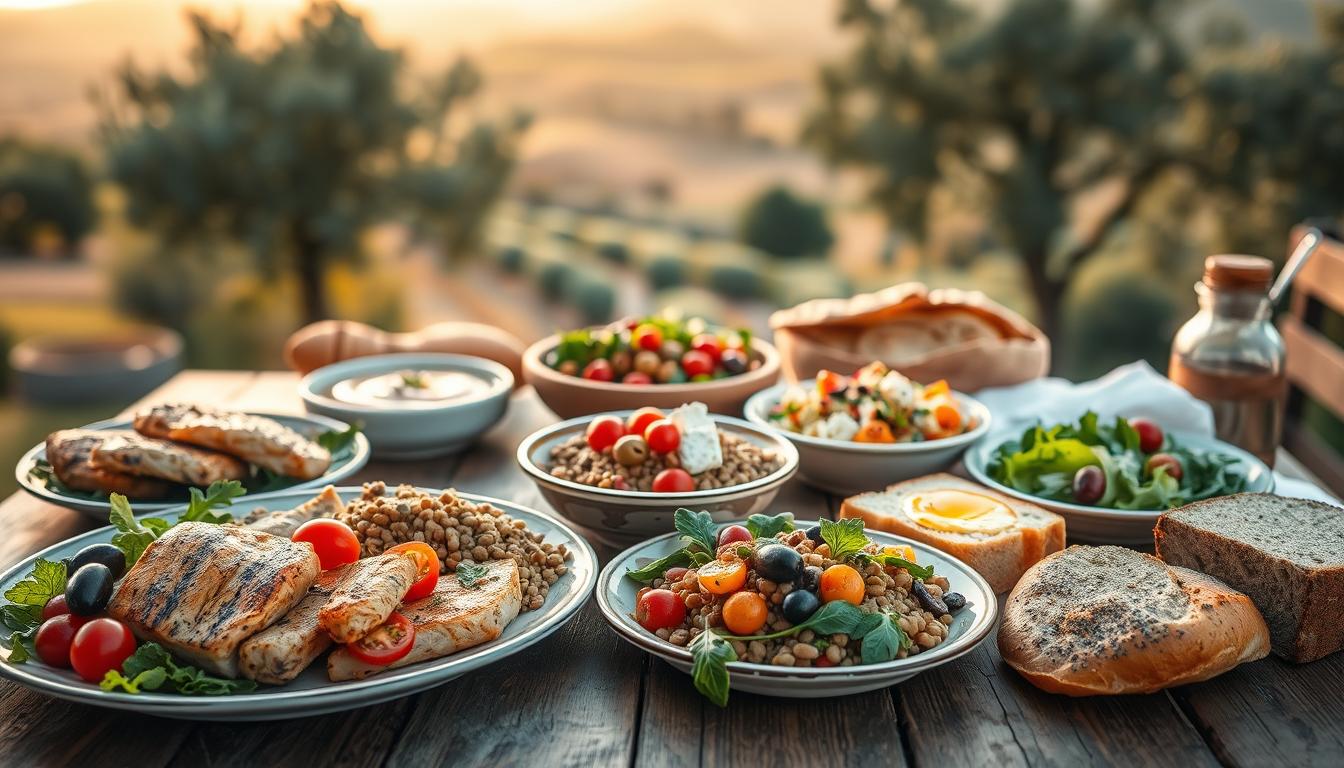
Changing to a diet that helps your muscles doesn’t have to be hard. By choosing a protein Mediterranean diet, you give your body what it needs to stay strong and full of energy after 50. This diet is all about eating whole, healthy foods that help you stay active for a long time.
Essential Protein Sources for Seniors
Older adults need 1.0–1.3 g/kg/day of protein to keep their muscles strong. Eating foods high in protein every day helps your body fix itself. A study on protein needs is found in this link.
Here are some great protein sources to add to your meals:
- Fatty fish: Salmon, sardines, and mackerel give you omega-3s and protein.
- Legumes: Lentils, chickpeas, and black beans are good for fiber and protein.
- Nuts and seeds: Walnuts, almonds, and chia seeds are great for snacks or salads.
- Lean poultry and Greek yogurt: These are perfect for quick, protein-rich meals.
Healthy Fats and Micronutrients for Brain Health
It’s not just about protein; healthy fats are key for your brain and fighting inflammation. Olive oil is the main fat in this diet, which is good for your heart. Eating colorful veggies with these fats gives you lots of antioxidants.
Practical Meal Planning
Staying consistent is key when starting new eating habits. Plan your meals ahead to avoid junk food. Try simple dishes like grilled fish with veggies or a bean salad with feta.
Downloadable Grocery List
| Category | Recommended Items | Benefit |
|---|---|---|
| Proteins | Salmon, Lentils, Eggs | Muscle Repair |
| Healthy Fats | Olive Oil, Walnuts, Avocado | Brain Health |
| Produce | Spinach, Berries, Garlic | Antioxidants |
Your 7-Day Muscle-Preservation Plan
This plan is all about variety and easy meals to keep you on track. Each day, you’ll get a mix of lean proteins and fiber-rich plants to keep your energy up.
- Monday: Greek yogurt with berries and walnuts.
- Tuesday: Lentil soup with mixed greens.
- Wednesday: Baked salmon with asparagus.
- Thursday: Chickpea salad with feta and cucumber.
- Friday: Grilled chicken with quinoa and broccoli.
- Saturday: Sardines on whole-grain toast with avocado.
- Sunday: Vegetable frittata with fresh fruit.
Ready to take charge of your nutrition? Click the button below to get your meal-planning guide and start today.
Lifestyle Habits to Preserve Muscle Seniors Can Adopt

After 50, it’s not just about eating right. You need to make lifestyle choices too. Eating well and moving often helps keep muscles strong for a long time.
The Role of Resistance Training
Resistance training is key for strong muscles. It uses weights or bands to tell your body to keep muscles strong.
You don’t need to spend hours in the gym. Just a few short sessions a week can help keep muscles strong. Choose exercises that work many muscles at once.
Hydration and Sleep for Recovery
Water is important for muscles to work right after exercise. Without enough water, you might feel tired and struggle to keep up with your workout.
Good sleep is also key. It helps your body fix muscles that got hurt during the day. To lose weight naturally after 50, aim for seven to nine hours of sleep.
Sharing the Journey with Friends
Having a workout buddy makes it easier to stay motivated. It turns exercise into a fun activity you can do with friends.
Message Template for Your Workout Buddy
Want to invite a friend to work out? Here’s a simple message:
- “Hi [Name]! I’m trying to stay active to keep my strength up. Want to walk or do some light weights with me this week? It would be great to have you!”
Staying consistent is the key. With a friend by your side, you’re more likely to keep up with your workout plan and reach your health goals.
Conclusion
Small changes in your daily life can make a big difference in your health. You can help seniors keep their muscles strong and stay active. This lets them live independently for many years.
By eating high-quality protein and moving regularly, you can slow down aging. This is good for your body.
Studies on how to keep muscle in seniors show that a mix of care works best. Keep learning about your body and push yourself in fun ways. You’re getting stronger every day.
Frequently Asked Questions
How much protein is enough? Eat 1.0 to 1.2 grams of protein for every kilogram of your weight each day. If you’re frail, you might need even more.
Does exercise matter as much as diet? Yes, both are key. Food gives you the building blocks, and exercise tells your body to use them for muscle.
Can I get enough protein from plants? It’s possible, but you need to plan well. Choose high-quality plant sources to get all the amino acids you need.
How often should I lift weights? Begin with two to three times a week. Being consistent is more important than how hard you work when you’re starting out.
Disclaimer: This content is for informational purposes only. It does not replace professional medical advice, diagnosis, or treatment. Always consult with your physician or a qualified healthcare provider before starting any new diet or exercise program.
