
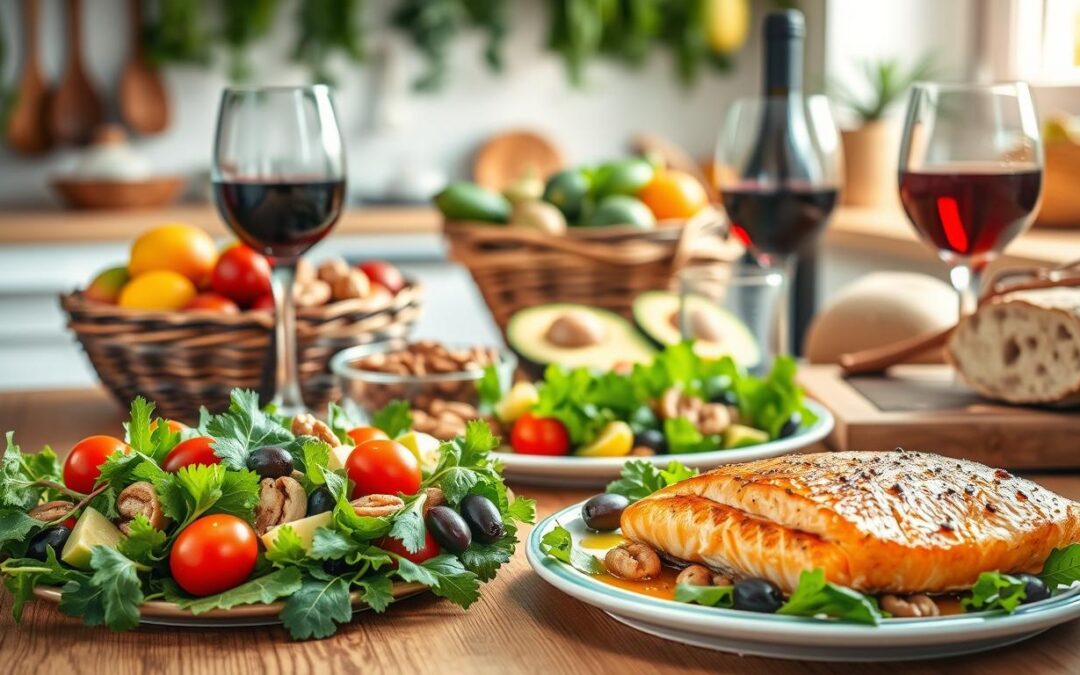
Have you ever sat in a doctor’s office, staring at a clipboard? Wondering if your love for cheese is sabotaging your future? We have all been there, feeling like our favorite meals are suddenly the enemy.
The good news is you don’t have to eat plain rice cakes to see a change. The Mediterranean diet for high cholesterol is a tasty, lasting way to keep your heart healthy. It focuses on whole grains, healthy fats, and fresh produce. This way, you can naturally improve your lipid profile without feeling deprived.
Start Your Heart-Healthy Journey Today
Key Takeaways
- Focusing on plant-based fats helps lower bad lipid levels effectively.
- Whole grains provide essential fiber that supports cardiovascular wellness.
- Consistency matters more than perfection when changing your eating habits.
- This approach is sustainable because it avoids restrictive, joyless rules.
- Small, daily adjustments lead to significant improvements in your blood work.
The Quick Fix: Why Your Numbers Matter
Your heart health is in your hands every day. Blood work numbers guide your wellness. A cholesterol lowering diet helps keep your heart safe.
Understanding the Cholesterol Tug-of-War
Think of cholesterol levels as a tug-of-war in your arteries. LDL, or “bad” cholesterol, can block your arteries. HDL, or “good” cholesterol, helps clear these blocks.
When LDL is high and HDL is low, heart problems can happen. You want LDL to be low and HDL to be high. This balance is key for a cholesterol lowering diet.
Small Changes for Big Results
You don’t need to change everything at once. Eating like the Mediterranean diet can lower heart disease risk. Simple swaps can lead to big health wins.
Here are some easy ways to start:
- Swap butter for olive oil when cooking veggies.
- Incorporate more legumes like lentils or chickpeas in your meals.
- Choose whole grains over white bread for more fiber.
- Enjoy a handful of nuts as a snack instead of chips.
Starting a cholesterol lowering diet is about making progress. Every choice you make helps your heart. Begin today and see the positive changes.
Mediterranean Diet for High Cholesterol: The Science of Better Living
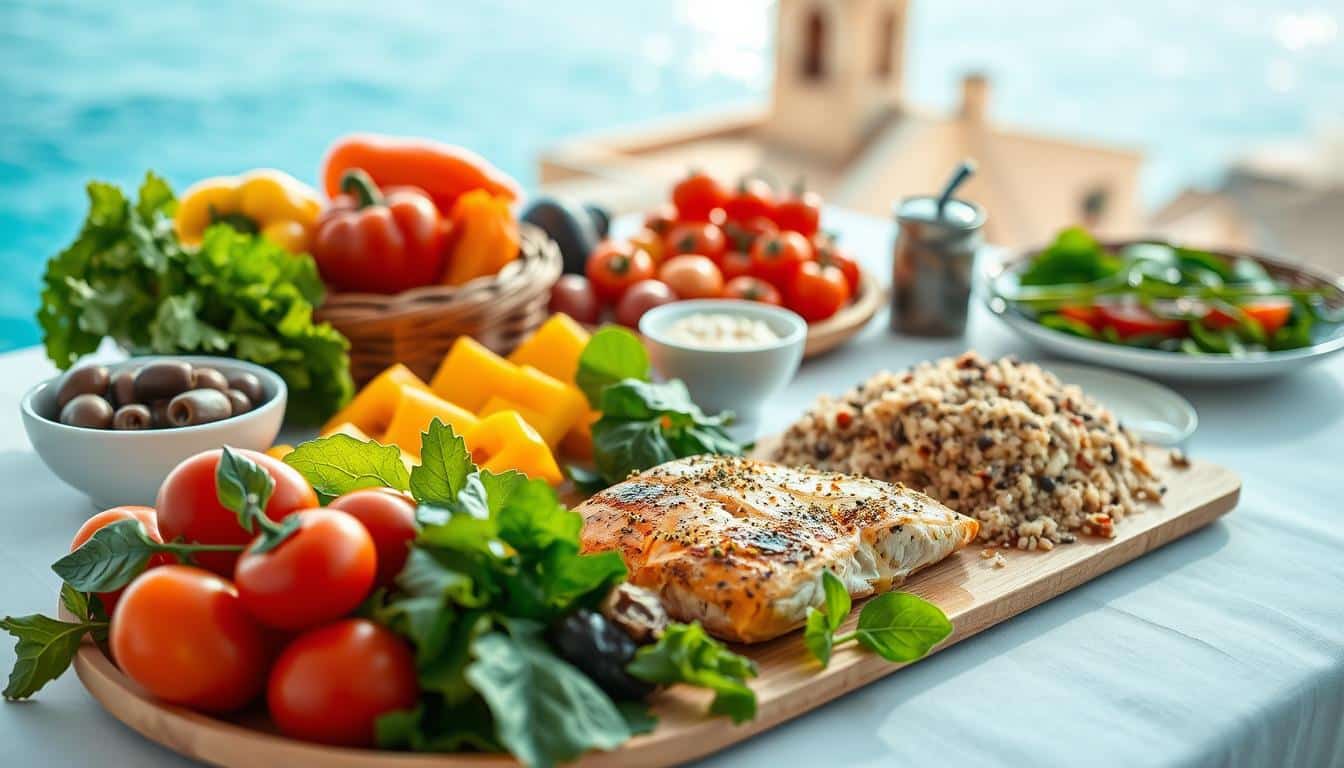
Did you know a centuries-old diet can lower cholesterol? The Mediterranean diet for high cholesterol is more than a trend. It’s a scientifically proven way to keep your heart healthy for life.
Why This Isn’t Just Another Restrictive Diet
Managing cholesterol doesn’t mean cutting out all your favorite foods. Instead, it’s about eating more of what’s good for you. Fill your plate with fruits, veggies, whole grains, and legumes. These foods give your body the fiber and antioxidants it needs.
This diet works because it’s all about balance. Plant-based foods help control cholesterol and keep you full. You’ll feel more energetic all day when you eat these nutrient-rich foods.
The Role of Healthy Fats in Your Daily Routine
The Mediterranean diet focuses on healthy fats. It avoids bad fats in butter and processed meats. Instead, it uses monounsaturated fats like olive oil, which is good for your heart.
Switching to these fats can greatly improve your cholesterol levels. It’s a simple change that supports your heart health without losing flavor. Here’s how different fats affect your body:
| Fat Type | Primary Source | Impact on Cholesterol |
|---|---|---|
| Monounsaturated | Olive Oil | Supports healthy LDL levels |
| Polyunsaturated | Walnuts, Seeds | Helps reduce inflammation |
| Saturated | Butter, Lard | May increase harmful LDL |
| Trans Fats | Processed Snacks | Negative impact on heart health |
Essential Foods to Lower LDL Naturally
Start your heart health journey with simple, tasty choices at the store. Choose foods rich in nutrients to help manage cholesterol. Eating foods to lower LDL naturally is a great way to stay healthy without feeling left out.
The Power of High Fiber Foods for Cholesterol
High fiber foods make managing cholesterol easy. Soluble fiber grabs cholesterol in your gut, then removes it from your blood. This clears your arteries.
Find this fiber in tasty foods. Add these to your meals:
- Oats and barley for breakfast.
- Kidney beans, lentils, and chickpeas in salads.
- Fresh fruits like apples, pears, and berries.
- Cruciferous veggies like broccoli and Brussels sprouts.
Plant-Based Proteins and Heart-Healthy Swaps
Changing to a cholesterol lowering diet doesn’t mean losing flavor. Choose plant-based proteins over processed meats. Legumes and nuts are full of good stuff for your heart.
Small changes in your pantry can make big differences. Use this table for better choices at the store.
| Instead of This | Try This Swap | Heart Benefit |
|---|---|---|
| Butter | Extra Virgin Olive Oil | Healthy Monounsaturated Fats |
| Red Meat | Lentils or Beans | High Fiber, Zero Cholesterol |
| Potato Chips | Raw Almonds or Walnuts | Omega-3 Fatty Acids |
| White Bread | Whole Grain Sourdough | Improved Digestion and Fiber |
Why Olive Oil is Your New Best Friend
Olive oil is key to the Mediterranean diet. It’s full of healthy fats and antioxidants. These protect your heart.
Use it for veggies, salads, or bread. This simple habit boosts your meal’s taste and heart health.
Boosting Brain Health and Mood Through Nutrition
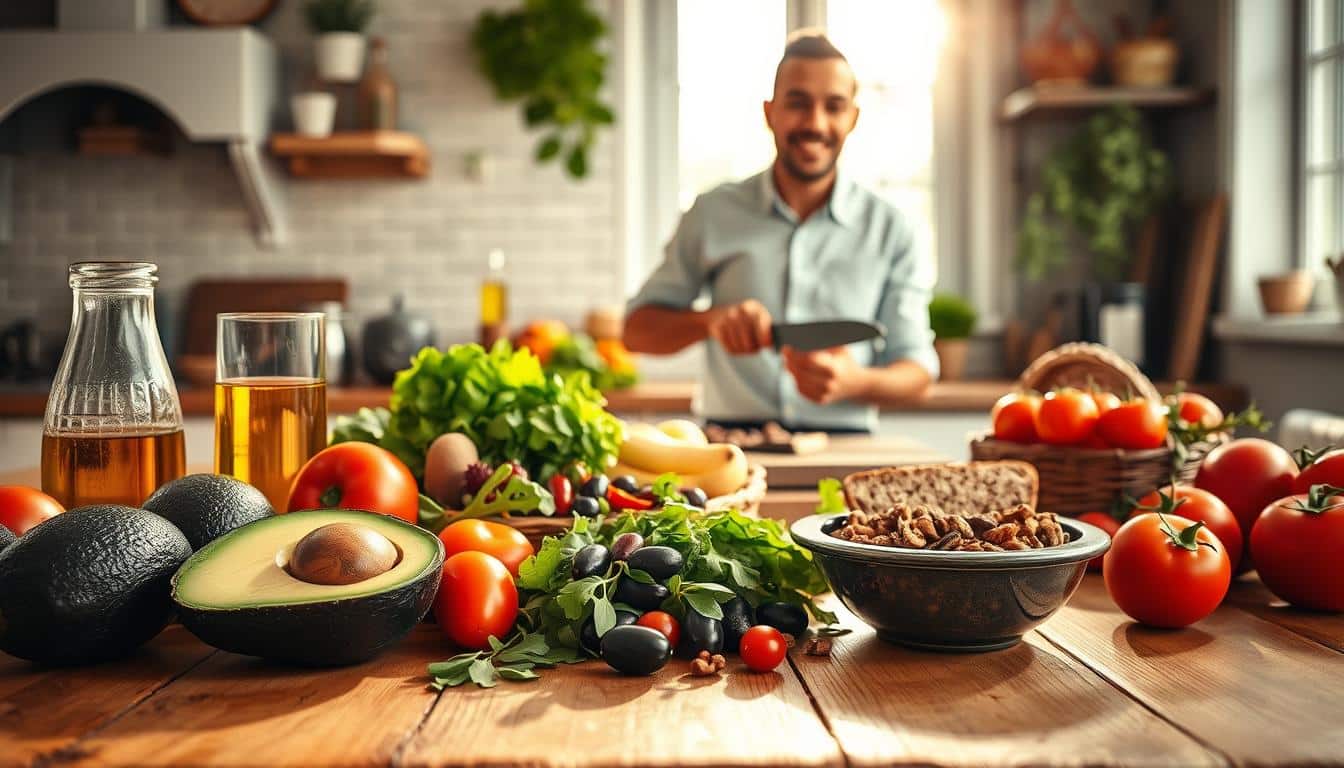
Did you know eating right at 50 can help your brain later? Eating healthy can lower your risk of dementia by almost 90%. Your food choices are key to keeping your mind sharp.
Choosing foods rich in nutrients does more than control cholesterol. It helps your brain work better. This keeps your mind as lively as your body.
Vitamins That Keep Your Mind Sharp
B-vitamins in greens and beans are vital for your nerves and energy. They help remove harmful substances from your blood. This keeps your mind sharp.
Antioxidants in berries and veggies protect your brain. Eating these daily helps fight aging. They help you stay focused and remember things better.
The Gut-Brain Connection and Your Daily Mood
Your gut is like a second brain. It makes a lot of serotonin, which affects your mood. Eating foods rich in fiber and probiotics helps your gut and mood.
A healthy gut means less inflammation. This reduces brain fog and mood swings. Eating right supports healthy gut bacteria. This makes your mood more stable.
| Nutrient Group | Primary Food Sources | Cognitive Benefit |
|---|---|---|
| Omega-3 Fatty Acids | Walnuts, Flaxseeds, Salmon | Supports memory and focus |
| B-Vitamins | Spinach, Beans, Whole Grains | Protects nerve cell integrity |
| Antioxidants | Blueberries, Strawberries | Reduces oxidative brain stress |
| Probiotics | Greek Yogurt, Sauerkraut | Enhances mood and gut-brain axis |
Practical Tools for Your Kitchen
Make your kitchen a place for heart health with simple steps. Organize your space and pick the right ingredients. This makes healthy choices easy.
Your Downloadable Grocery List for Success
Start by filling your pantry with good stuff. Choose foods to lower LDL naturally like oats, legumes, nuts, and veggies. These are the basics for every meal.
Check out our Mediterranean diet for cholesterol support guide. It helps you make smart choices and avoid bad ones.
A Simple 7-Day Plan to Get You Started
Seeing changes takes time and effort. Our 7-day plan focuses on high fiber foods cholesterol to keep you full. You’ll also sleep better and have more energy.
- Day 1-2: Start with plant-based breakfasts and fiber-rich snacks.
- Day 3-5: Add lean proteins and healthy fats to your meals.
- Day 6-7: Make batch meals to stay on track next week.
Sharing the Journey: A Message for Your Friends
Having friends support you makes it more fun. Send this message to a friend: “I’m starting a heart health journey and I’d love your help. Want to try new recipes with me this week?”
Sharing your goals keeps you motivated. It turns your health mission into a fun group effort.
Conclusion
Living a Mediterranean lifestyle is good for your heart. It’s a way to eat well for a long time. You can find healthy Mediterranean snacks that taste great and keep you healthy.
Is this diet difficult to maintain?
It’s easy because it uses whole foods. Just replace bad foods with good ones.
Will I see immediate changes in my cholesterol?
Changes take time. Keep eating well to see results.
Can I eat out while following this plan?
Yes, choose grilled fish and salads. Olive oil is good too. Most places have these options.
Do I need to count calories?
No, focus on what you eat, not how much. Eat when you’re hungry and stop when full.
Disclaimer: This info is for learning only. Always talk to your doctor or dietitian before changing your diet.
